
This article is also available in:繁體中文 · 日本語 · Tiếng Việt
What is a photo booth? It is a machine that lets you take photographs yourself after inserting coins or paying by card, then prints them immediately as small stickers or four-frame photos. The world’s first photo sticker machine was Print Club (プリクラ), jointly developed in July 1995 by the Japanese game companies SEGA and Atlus. In Taiwan, these are usually called photo sticker machines or “big-head sticker” machines. The wave that arrived from Korea after 2020 is more often described as self-service photo studios or four-frame photo booths.
Originally published in Chinese on September 1, 2024. The Chinese source was last updated on October 3, 2026.
Find Photo Booth Research by Country
This article covers Taiwan, with its development history below. To compare countries, start with the World Photo Booth Map: one row per country across 20 markets, with entry points to research on Japan, Korea, Hong Kong, Southeast Asia, Europe, and North America.
- Taiwan’s photo booth industry: this article’s Taiwan history, brand field reports, and registration investigations, alongside the Taiwan industry annual review.
- Major brands: Part Two’s brand identity comparison provides an entry point for brands with official identity images.
Cross-country specifications and adjacent industries are still collected in Part Two of this article.
What distinguishes these machines from ordinary self-service ID photo booths is that you can edit your pictures after taking them: apply frames, add text, retouch your skin, then print stickers you can peel off and share with friends. Before smartphones became widespread, this was an unusual experience, and it explains why photo sticker machines became so popular in Taiwan around 2000. Smartphones and editing apps later replaced that experience, causing the craze to fade, before Korean-style photo booths brought it back from 2020 onward.
This report has two parts. Part One traces the history from the first machine in 1995 through 2026, covering Japan, Korea, and Taiwan. I have continued compiling it since entering the industry in 2022. Part Two is a database that brings together everything I have worked on in this field over the past few years: individual field reports from Taiwan and Korea, parent-company financial analyses, specifications and language, entry costs, adjacent industries, exhibition observations, a field location database containing more than 5,000 entries across 20 markets, and 80 media and collaboration archives for my own brand.
Read from the beginning for the historical context, or jump directly to Part Two for specific information.
Hello, I’m Joe.
This article brings together the industry research and historical timelines I have compiled across different countries since establishing the Korean-style photo booth brand Snapshot妞拍貼 in Taiwan in 2022.
I hope it helps anyone interested in photo booths develop a clear understanding of the industry’s evolution.
A Note from Joe to Readers
As an entrepreneur who entered Taiwan’s Korean-style photo booth industry in 2022, I have seen a continual stream of energy in the local market.
I have also gradually come to see how Taiwan differs from China, Japan, and Korea.
Photo booth manufacturers and brands across these countries keep learning from one another and updating their strategies.
Recording these changes is one way I believe I can leave something useful behind for the industry.
Around 2000, 蓋酷家族 Introduced Japanese-Style Photo Booth Stores and Swept Across Taiwan
This happened when I was a child, before I really understood what people were taking photo stickers for.
I remember the 蓋酷家族 chain, but a session cost NT$100 back then.
That was simply more than I could afford, hahaha.
With that background, it was not until university that I experienced photo sticker machines again. 🙂
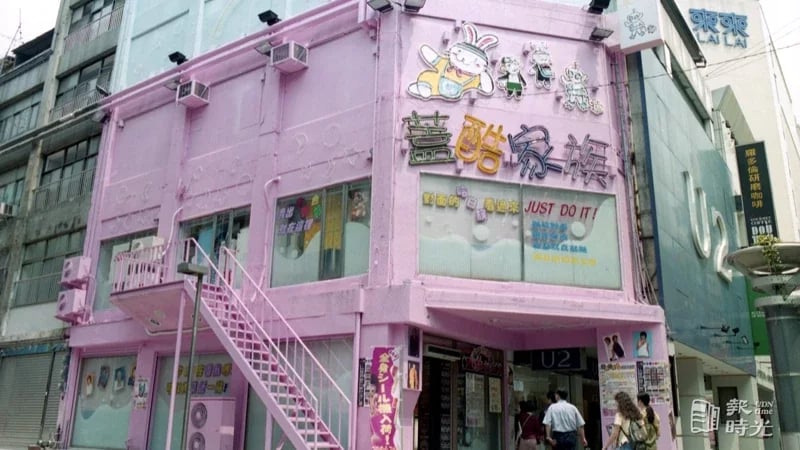
Looking back at the origins of Japanese-style photo stickers, the Japanese game companies SEGA and Atlus jointly developed the world’s first automatic snapshot machine in July 1995 and named it Print Club.
Besides providing space for group photos, it let users freely add borders, patterns, text, and other graphics, instantly generating photo collages in different sizes. In an era before smartphones were widespread, the photo booth craze created remarkable business opportunities, prompting manufacturers to begin researching and producing machines. In the late 1990s, enthusiasm for Japanese culture was strong in Taiwan. Japanese popular culture brought various Japanese-style photo sticker machines with it, and 蓋酷家族 became an emblem of the period.
At its peak, 蓋酷家族 had dozens of stores in Taiwan. Besides importing machines from various Japanese brands, it offered services such as helping customers style their hair and laminating their photos. Its stores quickly became popular destinations for junior and senior high school students after school and on weekends. Even stationery stores started selling albums for photo stickers. As smartphones and social media rose, however, 蓋酷家族 became part of the memories of Taiwanese people born in the 1980s and 1990s.
What Caused the Photo Booth Industry to Go from Boom to Decline Between 2000 and 2022?
Much of the explanation lies in the development of digital cameras and smartphones.
Digital cameras and phone cameras rapidly reduced the cost of photography.
Japanese photo sticker machines’ editing functions were replaced by mobile apps such as 美圖秀秀.
Photo printing was replaced by electronic screens, especially those on phones.
A Representative of the Photo Booth Era: Japan’s Tokyo-Listed Furyu Inc.
This is the leading photo booth company in Japan today, holding more than 90% of the market.
Joe’s Report: The Leading Player with 90% of Japan’s Photo Booth Market: An Introduction to Tokyo Stock Exchange–Listed Furyu Inc.
A Representative of the Photo Booth Era: SEGA
I originally wrote in this section: “I found news announcing a closure, but its social media accounts are still operating, so I’m not sure what happened.” When I checked again in September 2026, I found that this impression had conflated three separate events. Let me separate them here: SEGA did not go out of business. It exited three different businesses at different times.
- SEGA left the photo sticker machine business around 2000. After launching the first Print Club machine on July 25, 1995, the market exceeded ¥100 billion in 1997, with approximately 22,000 machines shipped cumulatively by the end of June that year. But the craze faded even faster than it had risen. SEGA failed to follow up with a second flagship machine and withdrew while holding a large inventory of sticker supplies. Furyu, which did not enter until 1998, took its place.
- SEGA left home console hardware in 2001. After discontinuing the Dreamcast, it became a software-only company. This had nothing to do with photo booths, but it is often folded into the same claim that “SEGA went under.”
- SEGA announced its exit from arcade operations on November 4, 2020, selling an 85.1% stake in its subsidiary SEGA Entertainment, which operated 199 stores across Japan, to GENDA. The deal closed on December 30 that year. In January 2022, storefront signs changed from SEGA to GiGO.
The “closure news” I saw at the time was probably the third event. SEGA signs really did disappear from the streets one by one, but it was the store name that disappeared, not the company. There is therefore no contradiction in its social accounts continuing to operate.
Another, less discussed development went in the opposite direction: SEGA reentered the photo sticker machine market with fiz in October 2020, twenty years after its previous exit. The accurate statement is therefore not simply that “SEGA left photo booths,” but that “SEGA left once and returned twenty years later, by which time the market belonged to someone else.” This illustrates the same point as the 2026 chapters below: who invented the machine has never determined who stays in the market.
One final, often overlooked detail: both プリント倶楽部 and プリクラ are SEGA registered trademarks. This is why the Japanese industry usually uses generic terms such as プリ機 or プリントシール機 rather than simply writing プリクラ—it is another company’s trademark. Quite a few people in Taiwan search for the Japanese term, so I wrote a separate article: How Do You Say Photo Booth in Japanese? A Guide to プリクラ, Usage, Examples, and Finding Machines.
A Representative of the Photo Booth Era: 蓋酷家族
It is a shared memory for Taiwanese people born in the 1980s and 1990s.
Its business model struck me as something like a combination of today’s claw machine arcades and Tom’s World.
I vividly remember having to laminate the photos yourself after taking them, then cut them with a large paper cutter.
I’m not sure whether I remember this correctly, but didn’t they also sell hot-pot egg noodles???
When Did 蓋酷家族 Close? Starting with Trademarks and Company Registrations
蓋酷家族 never issued a formal closure or bankruptcy announcement. Its stores gradually closed one by one, so there is no clear “closure date.” But combining two sets of public records—trademarks and company registrations—allows us to reconstruct a fairly complete timeline. The following information was checked on August 18, 2026.
First, the company. 蓋酷家族 was operated by 蓋酷電子有限公司, business ID 16136783. Its establishment was approved on July 22, 1997. It was registered in Taoyuan District, Taoyuan City, with total capital of NT$6 million, under the registration authority of Taoyuan City Government. Its registered status is “dissolved,” with a dissolution date of August 2, 2010. Its last approved registration amendment was on May 11, 2007.
Its registered business activities are revealing: vending machines and their parts, electric amusement machinery and electronic toys, electronic products, wholesale and retail of books, stationery, toys, and entertainment supplies, and import/export trade. In other words, 蓋酷’s core business was electronic amusement equipment and vending machines. Photo booths were one of its product categories, not its entire business.
The Order in Which Its Trademarks Expired Mirrors Its Exit from the Business
蓋酷電子有限公司 has seven trademark records, all now invalid. The earliest three applications were filed together on August 12, 1997, three weeks after the company was established. At that point, the trademark name was 蓋酷, without 家族 (Family).
| Trademark | Class | Designated goods or services | Registration date | Exclusive-right expiration | Current status |
|---|---|---|---|---|---|
| 蓋酷 | 016 | Stickers, stamps, stamp cases, stamp boxes | 1999-06-16 | 2009-05-15 | Expired |
| 蓋酷家族 | 025 | Clothing, socks, hats, cold-weather earmuffs | 2001-12-01 | 2011-10-31 | Expired |
| 蓋酷家族 | 041 | Electronic amusement arcades | 2003-12-01 | 2013-11-15 | Expired |
| 蓋酷 | 009 | Shutters, lenses, cameras, television game consoles, coin-operated electronic amusement machines, vending machines | 1998-12-16 | 2018-11-15 | Expired |
| 蓋酷 | 028 | Electronic game machines not used with televisions | 1999-08-01 | 2018-11-15 | Expired |
| 蓋酷家族 | 009 | The same class as above, with photo sticker machines added to the goods list | 2003-06-16 | 2018-11-15 | Expired |
Another 蓋酷家族 trademark application, filed in 2000 for paper goods such as stickers, cards, and postcards, was rejected and never registered.
Two points in this table deserve attention. First, the goods listed in the 1997 蓋酷 applications included television game consoles, coin-operated electronic amusement machines, and vending machines, but no photo sticker machines. “Photo sticker machines” did not appear until the 蓋酷家族 Class 009 application filed in 2000. The expansion of the name from 蓋酷 to 蓋酷家族 happened at the same time as the expansion from arcade machines into photo sticker machines. Second, all six registered trademarks eventually expired without renewal. In practice, that usually means the rights holder no longer intends to use the brand.
So, in What Year Did 蓋酷家族 End?
Put the two sets of records together. The company dissolved in August 2010, but each trademark continued through its own ten-year term, so the rights did not all disappear until 2018. Class 041, “electronic amusement arcades,” most closely matched the storefront business; it expired on November 15, 2013. Class 009, covering the machines themselves and explicitly listing photo sticker machines, lasted until November 15, 2018.
This timeline also matches media coverage. An ETtoday report in July 2018 was titled “They’re Still Here! 蓋酷家族 Photo Booths, a Must-Visit for Students Out Shopping.” It described a service that was already hard to find, with only a few locations remaining—just four months before the final trademark expired. In October that same year, Japanese photo booth manufacturer Make Software declared bankruptcy, an event the media described as the end of an era. The retreat in Taiwan and Japan was really two sides of the same development.
The more accurate account, then, is not a single year in which 蓋酷家族 “went under.” The company dissolved in 2010, the trademark for its storefront services was allowed to lapse in 2013, and the machine trademarks lasted until 2018. After the end of 2018, the brand no longer existed either legally or physically.
During the 2020–2022 Pandemic, Korea Added 300 Korean-Style Photo Booth Stores in a Year
A friend shared this figure with me at the time.
Korea’s photo booth stores expanded extensively during the pandemic, particularly around Seoul.
One of the most representative brands, though not the most popular, was Korea’s Life4Cut, known in Chinese as 人生四格.
What the Brand Name Life4Cut Means in Korean
I learned this from Korean people: the name Life4Cut means condensing and displaying life’s finest moments in a photograph.
A Brief Introduction to Life4Cut
Here are some excerpts:
The startup brand is called Life4Cut, and its founder is Lee Ho-ik (이호익), CEO of the Korean venture capital company LK Ventures. After an unsuccessful attempt to promote instant-noodle vending machines, he began looking for his next opportunity.
One day, he saw an ID photo machine in a subway station and was reminded of the photo sticker craze that began in Japan in the early 2000s. That craze quickly faded as everyone acquired a smartphone. Lee believed that many young people, having lived in the digital age from birth, would begin to long for analog things. Printing a photograph is a very analog act, and he thought it would interest them.
In 2017, he installed the first Life4Cut machine on Dongseong-ro in Daegu to test the market. He found that many young people were willing to queue even in hot summers and cold winters. He therefore decided to increase investment and turn photo booths into stores containing several machines.
Life4Cut gradually opened branches in major South Korean shopping districts and tourist areas, becoming increasingly popular. Young people aged 15–25, in particular, treated it as an activity to do together when meeting friends. After 2020, Life4Cut gradually became synonymous with photo stickers.
In 2018, Taiwan’s First Korean-Style Four-Frame Photo Booth Was Already Operating on Yizhong Street
I used to begin Taiwan’s Korean-style photo booth history with rising search volume in 2021 and the first wave of operators in 2022. After rechecking the evidence in August 2026, that starting point needs to move back four years.
On November 2, 2018, a Korean-style four-frame photo booth began operating at No. 239, Yizhong Street, North District, Taichung. Its brand was Photo Story. The evidence is its official Instagram opening post, which explicitly states: “We are a Korean-style retro photo booth,” “You can now take photos in the Yizhong Yimin shopping district,” and “You receive two identical four-frame photo strips; each session costs NT$100 (the machine accepts two NT$50 coins).” I checked the post date using two independent methods: the date displayed on the Instagram page, and decoding the post’s shortcode into its underlying post ID, which contains a timestamp. Both point to November 2, 2018.
Its registered entity is 明幀大發有限公司, business ID 50825289, whose establishment in Xinshe District, Taichung, was approved on July 2, 2018. The company was formed four months before its first operating post, a plausible sequence.
The significance of this date becomes clearer alongside Korea’s timeline: Life4Cut installed its first machine on Daegu’s Dongseong-ro only in 2017, and someone in Taiwan was doing the same thing on Yizhong Street the following year. Taiwan’s market did not really heat up until 2022. Photo Story therefore operated for almost four years in a market where demand had yet to develop.
The sequence is: Photo Story in November 2018; Snapshot妞拍貼 in August 2022; SMILE, Error8, and other first-wave operators in 2022; Life4Cuts’ Taiwan operation in May 2023; and PHOTOISM’s first Taiwanese store in February 2024. Three years and nine months separated the first and second arrivals. After the second, all four subsequent milestones were compressed into two years. Taiwan’s Korean-style photo booth history is therefore not a continuously accelerating curve, but an isolated starting point followed by a collective influx four years later.
To be clear, “earliest” here means the earliest currently verifiable record in public sources. My 2023 investigation of Taiwanese brands, a third party’s nationwide list compiled in 2022, and general online searches did not uncover any Taiwanese Korean-style four-frame booth records before November 2018. But failing to find something does not mean it did not exist. If other physical records from 2017–2018 emerge, this section will change.
The complete subsequent investigation, including trademarks, the contraction from 13 locations to three, and the assessment of its status, is in Taiwanese Brand Photo Story.
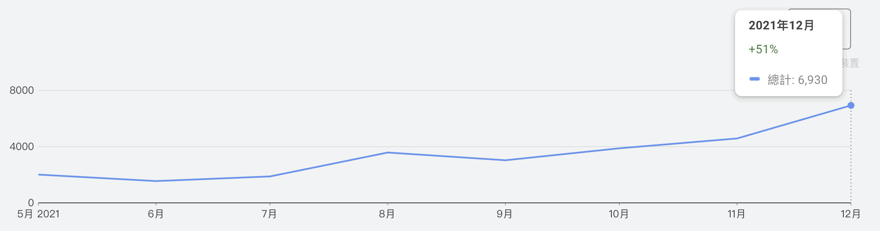
From 2021, Taiwan’s Korean-Style Photo Booth Industry Gradually Heated Up
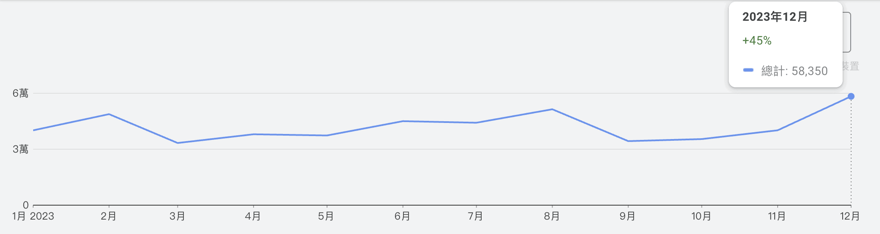
Taiwan Search-Engine Keyword Volume for 「拍貼機」 (Photo Booth) in 2021
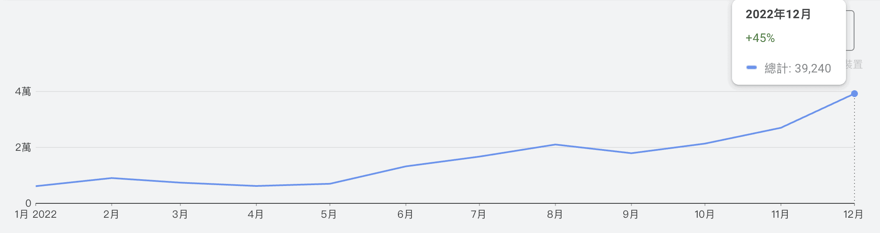
From 2022, Taiwan’s Korean-Style Photo Booth Industry Took Off
2022 was the year Taiwan formally began lifting restrictions following the COVID-19 pandemic.
Taiwan Search-Engine Keyword Volume for 「拍貼機」 (Photo Booth) in 2022
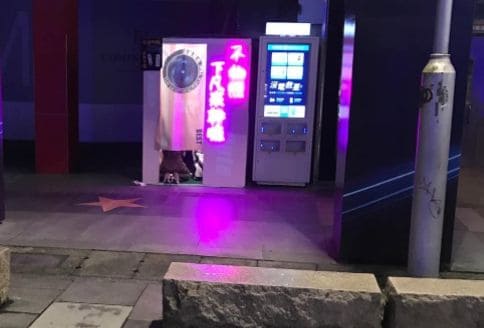
April 21, 2022: “The Nine Heavens Mystic Maiden Descends” in Xinyi! A Woman in Heels Mysteriously Kneels at a Photo Booth Late at Night as 6,000 Watch
Japan’s Latest Photo Booth Trend: Are Doodles, Writing, and Decorations Outdated? Young People Now Prefer Minimalist Blank Backgrounds
With photo sticker machines ten or twenty years ago, friends would enthusiastically alter their facial features after taking pictures, add elaborate background decorations, and finish by doodling or writing together.
But a television program observing young people using photo booths today found that their habits had changed dramatically…

Snapshot妞拍貼 Opened Its Store on August 5, 2022
Two days before opening, my team published its first Xiaohongshu post.
It immediately sparked discussion on social media. Customers repeatedly asked the workers still renovating the store when it would open.
November 17, 2022: Taichung’s Yizhong 嘟嘟茶飲 Shop Closed, and a Photo Booth Operator Took the Lease
Nearby ground-floor storefronts typically rented for NT$150,000–200,000, although rumors put 嘟嘟茶飲’s rent at NT$350,000.
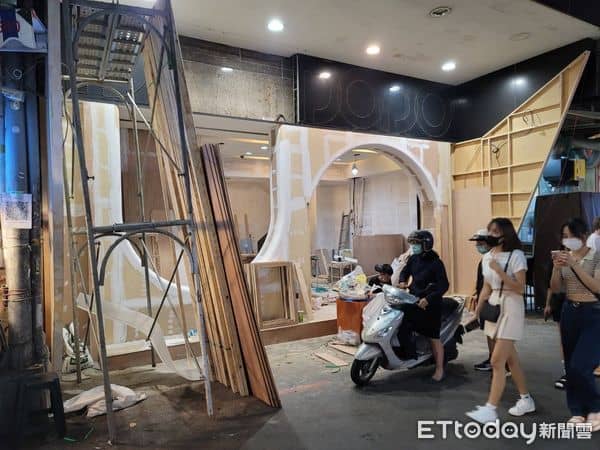
ETtoday: 一中嘟嘟 Closes After 30 Years! Before Taichung’s Tears Have Dried, the Next Tenant Is Ready to Move In
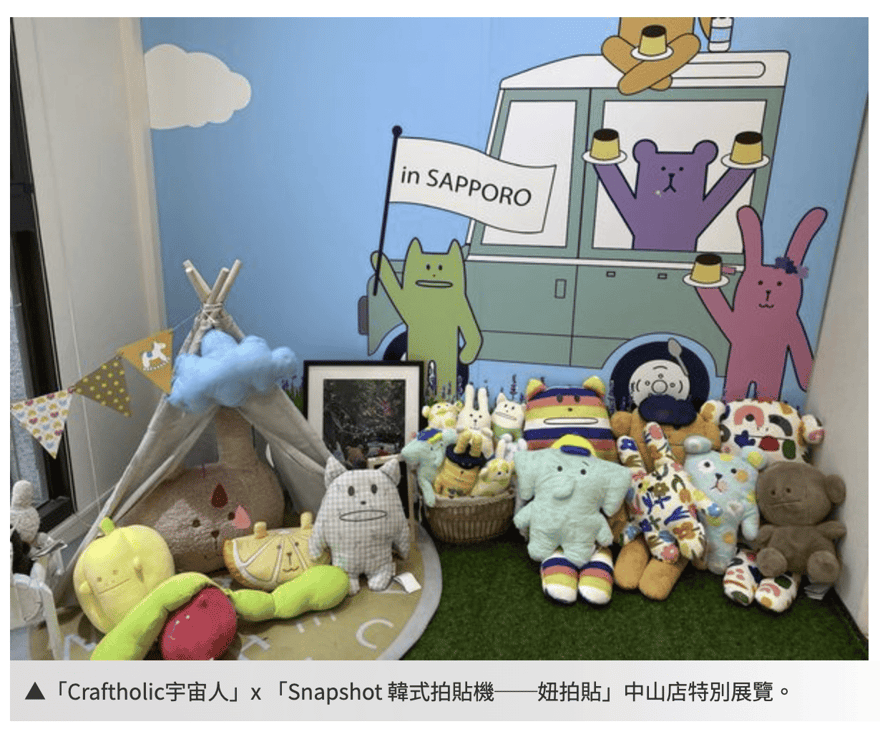
December 15, 2022: Snapshot妞拍貼 First Attracted Digital Media Attention
Korean Women Love Them! Korean-Style Photo Booths Are in Taiwan Too—Collect These Limited-Edition Frames.
My Korean Fieldwork in 2022
Snapshot妞拍貼 opened its first store in August 2022. From December 3 to 8 that year, I went back to Korea: six days across Busan, Cheongju, and Seoul, visiting 18 brands and more than 25 stores.
The timing was fortunate, right at the point when this category took off in Korea. The real surge came after restrictions were lifted in 2022, rather than during the pandemic. Three things I observed later proved to be previews of Taiwan’s trajectory: the machine was not a closed, dedicated appliance but a Windows computer paired with a consumer-grade printer (Photo Slate exposed its entire setup), making the barrier to entry much lower than expected; franchise headquarters were already competing for locations, with some brands printing their franchise hotline directly on their signs; and prices were then ₩4,000–5,000, with the original Life4Cut’s price board offering two prints for ₩4,000 as a 1+1 deal.
Looking back four years later, those stores followed different paths: PHOTO LAB+ grew to 13 stores; MUMUFILM could no longer be found; and Haru Film, once described locally as “the busiest one,” suffered a near-77% collapse in revenue per store.
Those six days became 18 individual reports. Korea’s complete industry history from 1995 to 2026 is covered separately in Thirty Years of Korean Photo Booths: From Sticker Photos in Department Stores to the First Self-Service Photo Studio to Apply for a Stock Market Listing.
Representative Photo Booth Industry Operators in 2022
These were among the earliest operators in Taiwan’s Korean-style photo booth wave. Their milestones all fell in 2022, around the same time Snapshot妞拍貼 opened its first store.
- Taiwanese brand SMILE Korean-Style Photo Booths: its corporate entity is 微微笑有限公司; the earliest registered entity, 微笑商行, was established on September 2, 2022.
- Taiwanese brand Error8 鼬鼠 (Weasel): originated from Tainan’s Error22 curated retail and café space. The machines were imported directly from Korea, but the brand is Taiwanese.
- Taiwanese brand Joy&Ray Korean-Style Photo Studios: has pink and blue store formats. Its Taroko Mall store in Taichung opened on August 30, 2022.
- Taiwanese brand FOURPICS: describes itself in Chinese as “Life Four Cuts: A Korean-Style Photo Booth Specialist.” Its Ximen store opened on November 15, 2022, and its operator is Korean.
- The Store That Displayed a Life4Cut Sign and Changed Its Name to Kr4Cut 15 Days Later: photographed in Taichung’s Yizhong shopping district on December 30, 2022. It is a Taiwanese operator, not the Korean brand.
- Hong Kong brand Snapio.
- Korean-style photo booth brand Joybox: Taiwan’s earliest documented operator of an unattended store format.
The First Half of 2023: The First Wave of Competing Korean-Style Photo Booth Stores
Taiwan Search-Engine Keyword Volume for 「拍貼機」 (Photo Booth) in 2023
The Second Half of 2023: Korean Photo Booth Brands Entered the Competition
The structural change in 2023 was that Korean brands began entering directly. Before then, Korean-style photo booths in Taiwan were mostly operated by Taiwanese teams importing machines and building their own brands. From 2023 onward, the Korean brands themselves began establishing a presence, bringing their store formats, frame content, and collaboration schedules with them.
Representative Photo Booth Industry Operators in 2023
The following were representative operators that year. I list only brands and origins, deliberately omitting store counts: almost every month brought new openings in 2023, so any figure would be outdated the following month.
- Korean brand Plan.B Studio entered Taiwan in 2023, emphasizing lighting techniques designed by photographers. It shares a franchise headquarters with the later PHOTO OBJET. I covered that relationship in a separate company study; the field report from the Ximen store’s opening day is here.
- Korean brand Life4Cuts entered Taiwan in May 2023. It was the most representative brand of Korea’s wave. I wrote a separate company study on the rise and fall of its parent, LK Ventures.
- SerendiPIC opened its first store in Ximending, differentiating itself through different photo-paper finishes—translucent, cream, metallic, and pearl. It is also one of the few operators from this cohort still operating today. Before adopting its current name, it was called THE FILM Seoul. Its five locations belong to four independently registered entities.
- Taiwanese brand TimeStopPhoto 時停拍貼 follows a location-first approach, with night markets its most common sites.
- Taiwanese brand KR4CUT Korean-Style Photo Studio evolved from the Life4Cut sign seen at the end of 2022. Its core corporate entity is 館前卡特有限公司.
- Taiwanese brand More and More started in central Taiwan and emphasizes a retro 2000s style.
- Taiwanese brand PHOTO STORY favors black-and-white and retro aesthetics, positioning itself as a Korean-style retro photo booth. It appears in this year’s list only because it was still operating then; its actual beginning was in 2018, as discussed above. In 2026, its operator was confirmed as Taichung’s 明幀大發有限公司, making it a Taiwanese brand.
- TIMELAB 時光研究室 (Time Laboratory) is operated by a Korean, but has no locations in Korea. It is a brand that developed in Taiwan.
2024: The First Wave of Brand Rises and Falls, as Broader Capabilities Began to Matter
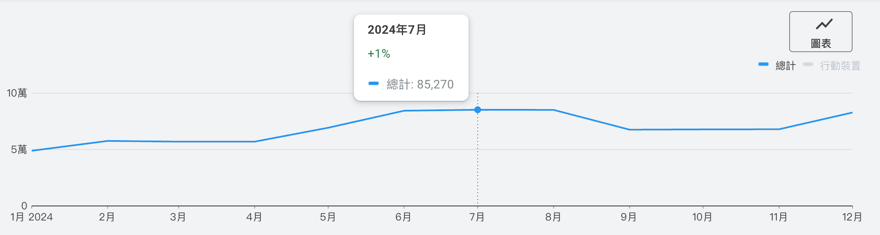
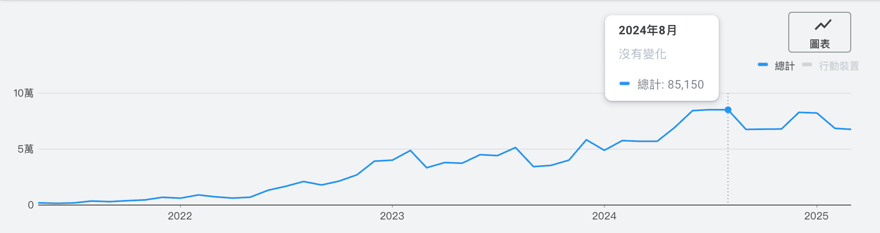
Taiwan Search-Engine Keyword Volume for 「拍貼機」 (Photo Booth) in 2024
January 5, 2024: Korean Photo Booth Brand Life4Cuts Collaborated with FamilyMart
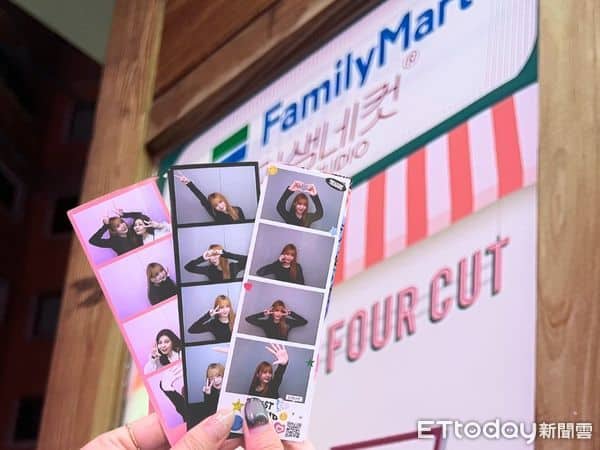
ETtoday: Photos at Just Two Stores! Hugely Popular Korean Photo Booths Move into Taiwanese Convenience Stores
April 2024: I Tried Photo Booths in Okinawa
[Okinawa] Visiting girls mignon, a Store Operated by Japanese Photo Booth Giant Furyu Inc.
A Review of Korean-Style Photo Booth Brand Operations in 2024
Representative Photo Booth Industry Operators in 2024
The most notable change in 2024 was that Korean-origin brands entered themselves, rather than relying solely on Taiwanese agents.
- Korean brand PHOTOISM opened its first Taiwanese store on Taichung’s Yizhong Street on February 8, 2024. I wrote a separate company study on its parent 서북’s financial statements.
- Korean brand PHOTOGRAY entered Taiwan in 2024, starting in the Ximen Underground Mall. Its parent is Korea’s listed beauty group APR; the company study is here.
- Taiwanese brand PHOTOBOOM emphasizes oversized four-frame photos, a local attempt to differentiate through print layout and format.
Competition in Taiwan’s Photo Booth Industry in 2025
Looking at the industry this year, I see “restructuring” as its main theme.
You could view this as the final stage of its initial rise, but whether it will continue growing or contract remains unknown.
Taiwan Search-Engine Keyword Volume for 「拍貼機」 (Photo Booth) in 2025
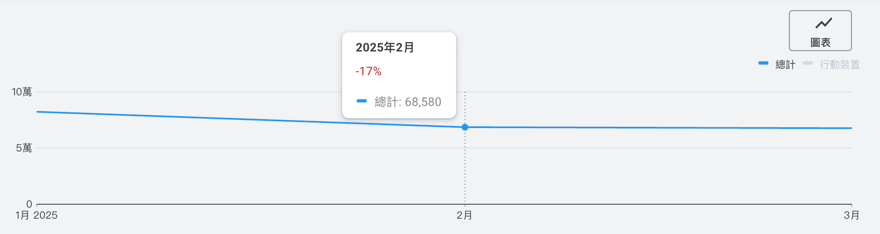
Search Volume Did Not Reach a New High Across the Full Year of 2025
According to the full-year data I recompiled for the annual review, the 2025 peak was 83,500 searches, below the 2024 high. By year-end, volume had fallen to around 55,000.
A decline in searches does not mean demand has disappeared. Search volume is fundamentally about “reasons.” In 2024, many things worth searching for happened at once: Korean brands entered in a concentrated wave, overhead and themed-scene machines went viral on social media, and media coverage and short videos repeatedly amplified the craze. In 2025, those reasons became fewer and more concentrated. The market returned to a more practical question: who could keep creating reasons to search?
I wrote the full review separately: Joe’s 2025 Annual Review of Taiwan’s Photo Booth Industry.
Rent Became 2025’s Harshest Reality Check
The years 2022–2024 were a classic boom: locations multiplied rapidly, media coverage was intense, and new brands kept entering. In that environment, many costs were deliberately left for later. Rent did not have to be fully calculated yet, staffing could be stretched, and equipment depreciation seemed less urgent.
But once monthly rents in prime shopping districts reached NT$200,000–500,000, photo booths became more than a question of generating buzz. They became a business requiring extremely high sales per unit of floor space and sustained public attention. Ximending and other major shopping districts became the most direct stress-test sites. Who could survive and who could not became clear very quickly.
In 2025, the market collectively recognized something for the first time: not every machine was worth keeping.
Why the Local Free-for-All Never Lasted Long
During the influx of local brands from 2023 to mid-2024, differentiation mainly came from machine formats. Overhead photography, themed scenes, exterior designs, unusual installations—someone tried everything.
But when product differences lie only in “how to take the photo,” rather than “why to take it,” competition inevitably becomes exhausting. Machine formats can quickly create buzz, but rarely sustain long-term reasons to search. Once the excitement fades, costs are all that remain, and the market eventually forces those accounts to be settled.
Korean Brands Consolidated, While Local Brands Diverged
By 2025, Korean brands generally chose consolidation over aggressive expansion, adjusting their pace and improving their locations.
Local brands began to diverge. Some tried IP, some tried content, and others reduced their scale to preserve flexibility. Some exited, while others entered a minimal operating mode. This was less a matter of cruelty than the selection process an industry goes through before maturing.
I have always felt that Korean brands’ real strength lies in structure rather than marketing. For them, photo booths are not an independent business but a node in the fan economy and idol-IP system. Following idols, commemorating moments, sharing, and spreading them further form a deliberately designed ritual. When market excitement fades, the brands that remain are generally those deeply connected to cultural IP.
Unbranded and Small Machines Took a Different Commercial Path
Even as the market cooled, photo booths did not disappear entirely. Small machines could still be found in night markets, at events, and in temporary venues. They offered low entry barriers, quick payback, and flexibility, alongside greater uncertainty.
These machines are following a different commercial logic from branded photo booths. They exist, but they are no longer part of the same market.
In 2026, the Focus Shifted from Store Expansion to IP and the Experience Economy
In 2026, I conducted a more comprehensive review, revisiting parent-company financial statements and expansion models for major Korean, Hong Kong, and Japanese operators. My strongest impression afterward was that the industry’s growth engine was no longer “opening a few more stores.”
Brand Research Series: Korea, Hong Kong, and Japan
| Identity | Brand | Parent company | Main point |
|---|---|---|---|
 |
PHOTOISM | 서북 (Seobuk) | Market-share leader, but recorded its first loss in FY2025 |
 |
PHOTOGRAY | APR (KOSPI-listed) | An early pioneer relaunched after five years on ice |
 |
Plan.B Studio, PHOTO OBJET | 리오컴퍼니 (Rio Company) | A handover between brands within one franchise headquarters |
 |
SNAPIO | 香港相機有限公司 (Hong Kong Camera Limited) | Achieves the widest coverage without opening stores |
 |
Life4Cuts | LK Ventures | Synonymous with Korean-style photo booths |
 |
Furyu | Furyu (Tokyo Stock Exchange–listed) | Retail is replacing photo booths as its profit engine |
These companies share one characteristic: photo booths are never their parent company’s entire business, and often are not its most profitable segment. Understanding the parent company’s thinking is more useful for predicting its next move than looking at store counts. The sections below summarize the key points; complete financial analyses are available in their respective articles.
PHOTOISM: The Market Leader Lost Money Last Year
PHOTOISM’s FY2025 revenue rose to ₩60.44 billion, up 13.7% year over year, but it also recorded an operating loss of ₩6.34 billion, its first loss.
The real change was in revenue composition. Content businesses such as IP frames rose from 38% to 68.8% of revenue, while franchise revenue fell 35% over the same period. In other words, it was no longer selling photography itself, but licensed content. Changes in ownership matched that direction: SM Entertainment and a YG-affiliated fund successively invested during 2024–2025, tying in the IP supply side. Overseas, the Japanese subsidiary’s direct operations far outperformed the original distributor, while Taiwan shifted from an agent to direct operation in April 2026.
Full financial analysis: The Market Leader Lost Money Last Year: A Financial Study of PHOTOISM’s Parent Company 서북
PHOTOGRAY: A Pioneer Put on Ice for Five Years, Then Rebooted
PHOTOGRAY launched back in 2017, much earlier than most people assume. It then remained on ice for five years without expansion, before relaunching in 2022 with the concept of an “atmospheric photo studio.”
Its relaunch was disciplined: three months of direct operation to validate the model, followed by franchising, exceeding 100 stores within six months. Its parent APR is a KOSPI-listed beauty group with 2025 consolidated revenue of ₩1.5273 trillion. PHOTOGRAY’s share of group revenue fell from 17.8% to 2.8%, not because photo booths were declining, but because the group’s total revenue had surged to 2.9 times its previous level.
Full financial analysis: Pioneer, Frozen, Rebooted: A Company Study of Korean Photo Booth Brand PHOTOGRAY and Its Parent APR
Plan.B Studio and PHOTO OBJET: Passing the Growth Baton
These two brands actually come from the same small franchise headquarters, 리오컴퍼니, with a team of roughly five people. Plan.B launched in February 2022 and accumulated 136 stores, but stopped announcing openings after May 2025. Over the same period, PHOTO OBJET grew from four stores to 24, nine of them existing Plan.B stores rebranded at the same addresses.
The two brands sell fundamentally different things. Plan.B sells photographers’ lighting know-how; PHOTO OBJET relies on water tanks and a customized retouching system. Taiwan’s 16 stores are actually concentrated among four franchisees and have not followed Korea’s rebranding process.
SNAPIO: In Hong Kong, Machines Go into Malls Instead of Stores
Hong Kong’s SNAPIO brand was established in 2019, while its operating company was registered in June 2020. My item-by-item count found 38 venues and 46 locations, almost all embedded in public circulation routes inside top-tier malls.
Hong Kong’s rent structure makes a self-service studio of roughly 10–20 ping unviable on unit economics. SNAPIO therefore chose to become a customer-attracting facility for malls rather than a tenant. It pays no rent, maintains no store staff, and has almost no cost of failure; the trade-off is weaker brand control. This model is the complete opposite of Taiwan’s and Korea’s store-opening logic.
Full study: Hong Kong’s Photo Booths Don’t Open Stores: SNAPIO and Hong Kong Camera Limited, an Expansion Model Opposite to Korea’s. Why Hong Kong’s selfie booths must enter malls, and why street-level and upstairs stores do not work, is examined separately in Why Hong Kong’s Selfie Booths Concentrate in Malls.
Japan’s Furyu Transformation: Its Profit Engine May Shift from Photo Booths to IP Retail
The last time I studied Furyu comprehensively was in 2022, when Snapshot妞拍貼 was founded. Reviewing it again in 2026 revealed a remarkable transformation.
Although it is not the group’s largest revenue segment, the photo booth division has long been this Tokyo-listed company’s profit engine. Judging by its current direction, tomorrow’s profits may instead come from retail—in other words, licensed-IP merchandise.
Further reading: The Leading Player with 90% of Japan’s Photo Booth Market: An Introduction to Tokyo Stock Exchange–Listed Furyu Inc., and [Okinawa] Visiting girls mignon, a Store Operated by Japanese Photo Booth Giant Furyu Inc.
August 2026: Investigating Taiwan’s Operators One by One
The preceding sections concern parent companies in Korea, Hong Kong, and Japan, where public financial statements are available. Taiwan’s operators do not have such statements, but three other public sources can be used: Ministry of Economic Affairs business registrations, the Ministry of Finance’s nationwide business tax registration file, and the Intellectual Property Office’s trademark search. In August 2026, I investigated these brands individually to match storefront signs to registered entities.
The method needs explaining first, because searching in the wrong direction produces nothing. The correct way to use the nationwide tax file is to match store addresses against its address field, rather than storefront names against its name field. A storefront name and a registered business name are simply different strings. The key industry code for identifying photo booth stores is 760112, photo processing; a secondary code sometimes appears as 760199, other photography activities.
A Storefront Sign Is Not a Registered Entity
| Identity | Brand | Entity found in registration records | Main point |
|---|---|---|---|
| — | Kr4Cut | 館前卡特有限公司 and four 卡特商行 businesses | 卡特 is a transliteration of “Cut”; searches using the brand name produce zero matches |
| — | FOURPICS | 韓新有限公司; its parent is called 韓星國際 | The two names differ by just one Chinese character |
 |
SerendiPIC | Two limited companies and two sole proprietorships | Five locations belong to four registered entities |
| — | Cut Cut+ | 萬昌娛樂企業社 | Registered as a claw machine business |
 |
SMILE | 微微笑有限公司, plus two businesses named 微笑商行 | Identical names, different business IDs |
| — | Freeze Film | The trademark owner is an individual | The brand has no company layer |
The table’s most practical lesson is this: to find who is behind a photo booth store, do not start with the brand name. Taiwanese registration names almost never match the words on the storefront. They may be transliterations, as 卡特 is for Cut; differ by one character from a parent company’s name, as 韓新 does from 韓星國際; or sit entirely within an industry category unrelated to photography. There are only two reliable routes: match the address against tax records, or find the rights holder through an exact-string trademark search.
Two Entry Sequences: Brand-First and Location-First
Ximending’s Cut Cut+ is the clearest example. The operator at that address, 萬昌娛樂企業社, was approved for establishment in July 2018 and registered as a claw machine business. The Korean-style photo studio arrived upstairs only in 2023. Similar arrangements appear elsewhere: Kr4Cut’s Taichung Yizhong and Shilin locations were subleased store-within-a-store formats sharing space with claw machine businesses. At FOURPICS’ Ximen and Shilin addresses, the existing tax-registered entities are toy retailers rather than photography businesses.
There are therefore at least two kinds of operators. Brand-first operators establish a brand and then look for premises. Location-first operators have a location and then change what they offer: when claw machines cool off, they switch to photo booths; when photo booths cool off, they switch again. There is a reason for this. Their real assets are the location and the lease; machines are merely the products placed there. The claw machine model of revenue-sharing between machine owners and venue owners was designed for changing offerings at any time. To judge which type a store belongs to, check its approved establishment year and registered industry. An establishment date well before the photo booth craze and an industry unrelated to photography usually indicate a location-first operator.
Registrations Do Not Close Themselves; Physical Stores Close First
Looking back in 2026 at the operators from 2022–2023, the most consistent phenomenon was the disconnect between registrations and physical stores. All nine of Kr4Cut’s tax-registered locations remained in the current nationwide file in August 2026, and its company and four businesses were still approved as established, but only one physical location remained. FOURPICS’ two corporate entities dissolved on November 20 and December 30, 2024, forty days apart, yet the storefront brand was still operating. Joy&Ray’s official website domain no longer resolved, while only its Xinyi Vieshow location still showed business hours on maps. In March 2023, 咔洽 CAJA told the media it planned to open another 50–100 stores in 2024; the highest number of locations verifiable at any one time was four.
These comparisons require care. Business and tax registrations disappear only when someone actively files the necessary changes. A company’s continued existence does not mean its stores remain open, and dissolution does not mean its brand has closed. Conversely, brands maintain their own store lists, and outdated lists are normal: Freeze Film’s official page listed eight stores, but address-by-address verification in August 2026 confirmed only five operating. All five are now included on the photobooth database’s Freeze Film brand page.
How Many Stores Are There in This Industry?
Counting by industry code, the nationwide tax registration file contains 304 businesses with 760112, photo processing, as either a primary or secondary industry. Establishments peaked in ROC year 112—2023—with 24 records. This cannot be read directly as “Taiwan has 304 photo booth stores.” Other business types also fall under photo processing, while the location-first operators discussed above do not register under that code at all. It is better suited as a lower bound and a measure of the establishment cycle. The peak year it identifies matches the search-volume curve.
To place the figure in a broader context, compare it with the entire photography industry. Ministry of Finance business tax statistics show that Taiwan’s photography industry generated NT$10.08 billion in total sales in 2025. I compiled the historical series in a separate article. Photo booths are only one part of that NT$10.08 billion—the newest part, with the least historical baggage. Their competitors include not just other photo booth stores, but existing categories such as wedding and commercial photography studios, ID photos, and graduation photos. This is another reason why, after 2025, judging a location’s viability requires more than counting rival photo booth stores.
A Generalization I Wrote Three Times, Then Withdrew
In early August 2026, I wrote the same statement in several brand studies: most Taiwanese photo booth stores do not need separate tax registrations, so registration records cannot reconstruct their expansion histories. That statement was wrong, and I overturned it later the same month. Using address-by-address matching and industry codes found four of SerendiPIC’s five addresses. The problem was not missing data, but the wrong search method. The original articles have been corrected. I record it here because the methodological lesson is more useful than the conclusion itself.
Pricing: The NT$100 Line Split Around 2024
This group’s pricing diverged around 2024. Freeze Film maintained a uniform NT$100 price from 2023 to 2026, unchanged for three years. SMILE went from NT$100 in 2023 to NT$200 for two prints in October 2024. Kr4Cut never lowered its NT$200 listed price, but promotions reduced the actual amount paid; in April 2023, it even offered a NT$100 introductory trial price. Around the same period, Error8’s Taipei Taiyuan Road store charged NT$100 per set, included one retake, and charged another NT$100 per additional set of prints.
Brands that sustain the NT$200 price generally have frame content or collaborations to sell. Those remaining at NT$100 tend to rely on customer turnover and location foot traffic. This is the other side of the Korean situation discussed earlier: the ability to raise prices depends on whether the business is selling photography itself or something beyond it.
Individual Reports on This Cohort
The original investigations behind these conclusions are spread across the brand articles, including Taiwanese brand goodtime Photo Booths, Taiwanese brand Foto box, Taiwanese brand 99cfilm, now marked permanently closed on Google Maps, and Taiwanese brand PHOTO STORY, the earliest verifiable Taiwanese operator, active since 2018. For cross-brand comparisons of pricing and franchising, see How Korean-Style Photo Booth Pricing Works in Taiwan and Photo Booth Franchise Options.
The China Strand: I Visited Shanghai in 2023, but Had Never Connected It to This Article
This report covers Japan, Korea, and Taiwan, but China is actually a fourth strand of the same wave. I visited Shanghai in August 2023, and the records had remained in separate articles without being connected to this overview.
I observed three things. The well-known self-service photography store PhotoWith on Xiangyang South Road displayed everything on-site: its price list, darkroom, film vending machine, and even the staff’s handwritten operating manual. That store later closed; the article records it while it was still open. On the same trip, the three brands 時光四刻, JUST.FOTO, and 好好笑 HaoHaoLaugh ranged from RMB29.9 for four consecutive shots to RMB40 for one retro photo sticker, and their operations were already entirely cashless—earlier than Taiwan. By 2024, China’s brand franchise packages and quotations had also taken shape.
For now, this article only points to that strand without developing it further. Comparing it alongside Japan, Korea, and Taiwan requires parent-company financial data. Public financial statements for the corresponding Chinese brands are generally unavailable, so the evidence is not at the same level as the PHOTOISM, APR, and Furyu sections. Forcing them together would reduce the consistency of the article’s evidence.
The Shift to IP Retail Is Irreversible; Growth Lies in the Experience Economy
At the 台灣文博會 in August 2026, many booths spent more than NT$1–1.5 million on inventory and venue setup alone. Working from those costs, their expected seven-day sales were in the NT$3–4.5 million range. This trend was already noticeable in 2023–2024.
The contradiction I have observed over the past few years is that offline sales are becoming stronger, yet online merchandise and products at the retail end, such as photo booths, do not automatically rise with store sales. These entertainment products increasingly struggle to generate sales unless they participate in the event’s broader experience marketing. The IP collaborations at beverage shops over the past few years offer another clue: they have gradually shifted from major international brands toward local Taiwanese, Korean, and Japanese brands.
In plain language, the IP industry’s merchandise-and-licensing model is being overtaken by pop-up stores and exhibitions selling IP owners’ own products. Growth has shifted to the experience economy.
Observations from that period: 台灣文博會 2026, the Shift to IP Retail, and Lessons from Japanese Photo Booth Giant Furyu
Part Two | The Photo Booth Industry Database
The first part provides context. This part provides the material.
I began working on this topic in 2022, and have accumulated far more than one history article can hold: six days of Korean fieldwork covering 18 brands, Taiwanese investigations matching brands to business registrations one by one, financial analyses of four parent companies, practical guides to specifications and language, actual calculations of entry costs, and a location database spanning 20 markets. Scattered across separate pages, each article answers a small question. Brought together, they reveal the industry’s shape.
Part Two is therefore an index laying out the whole subject, rather than merely a further-reading list. Each of the following twelve sections first explains the question it addresses, then lists the material. The final section records the brand I operate myself, with an interest disclosure, and differs in nature from the preceding eleven.
Brand Identity Comparison: Nineteen Brands with Official Identity Images
I have obtained and stored official identity images for these nineteen brands. This table serves as a visual index for Part Two: if you see a sign and cannot identify the brand, return here to compare it.
| Identity | Brand | Origin | Main research on this brand |
|---|---|---|---|
|
PHOTOISM | Korea | Read the study |
|
PHOTOGRAY | Korea | Read the study |
|
Life4Cuts | Korea | Read the study |
|
Plan.B Studio | Korea | Read the study |
 |
Photomatic | Korea | Read the study |
|
FURYU | Japan | Read the study |
 |
girls mignon | Japan | Read the study |
|
SNAPIO | Hong Kong | Read the study |
|
SMILE Korean-Style Photo Booths | Taiwan | Read the study |
 |
Error8 鼬鼠 (Weasel) | Taiwan | Read the study |
|
SerendiPIC | Taiwan | Read the study |
 |
PHOTO OBJET | Korea | Read the study |
 |
SEGA | Japan | Read Japan’s photo booth history |
 |
Joy&Ray* | Taiwan | Read the field report |
 |
Selfie Time | Indonesia | Read the study |
 |
KPIX | Malaysia | Read the study |
 |
Flashback | Thailand | Read the study |
 |
Dollop Print Club | Singapore | Read the study |
 |
Snapshot妞拍貼 | Taiwan | (The brand operated by this page’s author) |
The table contains only nineteen brands, but that does not mean I have studied only these. More than thirty brands appear in this article. I set myself a rule for identity images: include only brand identities—logos or wordmarks—from the brand’s official website or official materials. If no qualifying image is available, leave it blank. Do not substitute a similar logo, a machine manufacturer’s logo, or a generated image, and do not save profile pictures or posts from Instagram or Facebook. The Joy&Ray entry marked * uses the site-name logo from its official website, jrrc-photo.com, which stopped resolving in 2026. It reads Rachel&Cary, the name of the same operator’s blue-format store, which is why it is specifically marked. FOURPICS, Kr4Cut, Cut Cut+, Freeze Film, Photo Story, 咔洽 CAJA, Joybox, TimeStopPhoto, PHOTOBOOM, and 蓋酷家族 appear in the article but not in this table because no official website or official materials could be found. Most operate only social accounts; 蓋酷家族 has ceased business. Their absence is not an oversight.
One | First Understand What It Is: Terminology, Specifications, and Language
This section addresses the questions that stop newcomers on their first day: what is it called, how large are the prints, and what is it called in other countries?
Photo booths use three quite different sets of terminology in three languages, without direct equivalents. Japan’s プリクラ is a SEGA registered trademark; generic industry terms include プリ機 and プリントシール機. Korean uses 셀프사진관, 포토부스, and 네컷사진, which do not refer to exactly the same things. Taiwan’s older terms are photo sticker machines and “big-head sticker” machines; the post-2020 wave is more often called self-service photo studios or four-frame photo booths.
- How Do You Say Photo Booth in Japanese? A Guide to プリクラ, Usage, Examples, and Finding Machines
- How Do You Say Photo Booth in Korean? Differences and Usage of 셀프사진관, 포토부스, and 네컷사진
- How Do You Say Life4Cuts in Korean? Pronouncing 인생네컷, the English “Life Four Cuts,” and the Name’s Meaning
- How Do You Say It in Japanese? Four Japanese Settings Taiwanese People Most Often Search For
The size guides are the most searched material in this topic cluster. Taiwan and Korea share the mainstream 2×6 and 4×6 formats, but those figures connect to an entire system of paper and photographic specifications, including the separate sizing conventions for ID photos, instant photos, postcards, and photocard sleeves.
- Taiwan’s Photo Booth Print Sizes: The Mainstream Formats Are 4×6 and 2×6
- What Size Are Life4Cuts Prints? Taiwan and Korea Both Use 2×6 and 4×6
- Size Comparison Table: Paper, Photos, ID Photos, and Instant Prints—Understanding Nine Specification Systems
- How Many Centimeters Is 4×6? A Six-Inch Photo Measures 10.16 × 15.24 cm
- What Size Are Instant Photos? Instax mini, wide, square, and Polaroid Explained
- How Taiwan’s Photo Sizes Changed: Why 4×6 Replaced 3×5, and Why Japan Did Not Switch
- How to Choose Photocard Sleeve Sizes: 58 × 89 mm Sleeves
How photographs become physical prints is another often overlooked strand. A photo booth is essentially a photo printer, placing it on the same supply side as convenience-store machines and online photo printing.
- Taiwan’s Photo Printing Channels: Comparing Online Printing, Convenience-Store Machines, and Cross-Border Services from Japan
- Can ibon Print Photos? Yes, but Not on Photo Paper
- What Size Are ibon / 7-Eleven Postcards?
- What Size Are Memopresso Photos? All Formats Are 4×6 or Variations of It
Two | Taiwan: Individual Field Reports and Registration Investigations
This section contains the original material behind Part One’s conclusions. Each article covers one brand: what I photographed on-site, prices, differences between official store lists and actual verification, and the August 2026 investigation matching storefronts to business registrations, tax registrations, and trademarks.
Remember that each investigation is dated. Physical stores in this industry change much faster than registrations, so any store count should be read as a snapshot on its verification date, rather than the current situation.
- Taiwanese Brand SMILE Korean-Style Photo Booths—微微笑有限公司; NT$100 in 2023, changed to NT$200 for two prints in October 2024.
- Taiwanese Brand Error8 鼬鼠: Field Report from Taipei’s Taiyuan Road Store—originated from a curated retail and café space in Tainan; Korean-imported machines, Taiwanese brand.
- Taiwanese Brand Joy&Ray: Ximen Store Field Report—pink and blue store formats; its official website domain no longer resolves.
- Taiwanese Brand FOURPICS—a Taiwanese brand established by a Korean owner; registered entity 韓新有限公司.
- A Taiwanese Store with a Life4Cut Sign Changed Its Name to Kr4Cut 15 Days Later—core corporate entity 館前卡特有限公司; 卡特 is a transliteration of Cut.
- SerendiPIC Korean-Style Photo Booths: One Sign, Four Registered Entities—five locations belonging to four independently registered entities.
- Ximending’s Cut Cut+ Korean-Style Photo Studio: Its Owner Is a Claw Machine Operator, Not a Photo Booth Operator—the clearest example of a location-first operator.
- Freeze Film Korean-Style Photo Studios: NT$100 Unchanged for Three Years, and an Outdated Official List of Eight Stores—no company layer; the trademark owner is an individual.
- Taiwanese Brand Photo Story—Taiwan’s earliest verifiable operator, already active in 2018.
- Taiwanese Brand 咔洽 CAJA—claimed in 2023 that Taiwan could support 500 stores; the highest simultaneously verifiable count was four.
- Taiwanese Brand goodtime Photo Booths.
- Taiwanese Brand Foto box.
- Taiwanese Brand 99cfilm—marked permanently closed on Google Maps.
- Korean-Style Photo Booth Brand Joybox—Taiwan’s earliest documented unattended-store operator.
- Korean Brand Plan.B Studio: Ximen Store Opening Field Report.
- Which Photo Booths Are Around Zhongxiao Fuxing?—an example of surveying locations in a single shopping district.
Three | Korea: Six Days and Eighteen Brands in 2022, Plus Thirty Years of Industry History
From December 3 to 8, 2022, four months after Snapshot妞拍貼 opened its first store, I went back to Korea. In six days across Busan, Cheongju, and Seoul, I visited 18 brands and more than 25 stores. The trip coincided with the category’s takeoff. Four years later, those stores had gone in different directions: some had grown to 13 stores, some could no longer be found, and some had suffered a near-77% decline in revenue per store.
The overview is here: Thirty Years of Korean Photo Booths: From Sticker Photos in Department Stores to the First Self-Service Photo Studio to Apply for a Stock Market Listing. The eighteen field reports below are ordered by when the on-site photographs were taken:
- Life4Cut: The Brand That Created the Category, Offering Two Prints for ₩4,000 as a 1+1 Deal, with Tarot Readings in the Store Too
- Photo Slate: The Store That Exposed Its Entire Machine Setup, Showing That a Korean-Style Photo Booth Is a Windows Computer Plus a Printer
- Photo in the Box, Two-Store Field Report: The Franchise Hotline Printed Directly on the Sign
- Photogray RAD, Two Busan Stores: ₩4,000 and ₩5,000, with Signs in Four Languages
- PHOTOISM COLORED: During the World Cup, Korea’s Largest Self-Service Photo Studio Put the National Team into Its Frames
- PHOTO LAB+: The Store with SELFIE STUDIO Across Its Glass Front, Now Operating 13 Stores
- Haru Film: An Owner’s Self-Inspection Checklist on the Wall and a Shoe-Store Collaboration at the Entrance
- MUMUFILM: Artificial Grass and a Christmas Tree at the Entrance; Four Years Later, the Brand Could No Longer Be Found
- Photo Signature: The Brand I Visited Five Times on the Trip, with Four Price Tiers and Four Studio Types
- Myeong Dong Film: The Only Store on This Trip Where I Photographed the Full Menu
- Mono mansion in Busan’s Seomyeon: Its Own Name on the Sign, Another Brand’s Promotion on the Wall
- pic dot, Busan Seomyeon: 24 HOURS and CARD & CASH on the Glass Door
- Cheongju’s 3PIC: Open 24 Hours, with ID Photos and Pet Photos
- insphoto: Red Brick, Yellow Frames, and a Name Matching the Previous Night’s Display
- Oldmoon Self Studio: A Blue Moon That Also Appeared Inside Another Brand’s Store
- PHOTO DRINK: Selling an Orange Photo Album Rather Than Four-Frame Photos
- Photomatic Inside NIKE’s Hongdae Store: A Black-and-White Photo Booth Printing Its Brand Name on Every Photo
- What Brand Are the Lights Inside Photo Booths? On-Site Inspection Revealed Godox
Before that 2022 trip, I also conducted three earlier desk studies of Korean brands. They provide a comparison of the same cohort before my entry: Photo in the box, Mumu Film, and Oldmoon studio.
Four | Japan, Hong Kong, and China: Three Other Strands
Beyond Taiwan and Korea, the same wave has three other strands, each with a completely different logic.
Japan is the originator and the only market with a listed company whose results can be followed quarterly. Most Japanese photo booths are not in dedicated photo booth stores: of the 2,226 Japanese venues in this site’s data on September 25, 2026, 965 were branches of ten arcade chains. Japan therefore needs to be examined through two layers: manufacturers and distribution. Hong Kong follows a model without stores because its rent structure makes stores unviable on unit economics. China was the earliest market in this wave to become entirely cashless, but it lacks accessible parent-company financial statements, so this article provides pointers rather than a side-by-side comparison.
- Thirty Years of Japanese Photo Booths: From Print Club to FURYU’s Dominance, Then to an IP Company—the Japanese overview: a 1996–2023 market series, manufacturers’ entries and exits, a timeline of listed companies in the industry chain, and FURYU’s development from an Omron division into an IP company.
- Japan’s Photo Booth Leader FURYU Changes Course: Users Down 40%, but Selling Photos Generates More Revenue Than Machines.
- Okinawa’s girls mignon Photo Booths: Visiting a Store of Japanese Giant Furyu Inc..
- More Than 40% of Japan’s Photo Booth Locations Are in Arcades: Manufacturers, Distribution, Brands, and the Parents of Ten Chains—Japan’s distribution layer: ten arcade chains including GiGO, namco, and タイトー (Taito), plus their own photo booth brands brooming and eggnam.
- Hong Kong’s Photo Booths Don’t Open Stores: SNAPIO and Hong Kong Camera Limited, an Expansion Model Opposite to Korea’s.
- Why Do Hong Kong’s Selfie Booths Concentrate in Malls? Street-Level Shops, Upstairs Stores, and Taiwanese Photo Booth Stores Through the SNAPIO Network.
- Shanghai’s Well-Known Self-Service Photography Store Photowith—everything was displayed on-site, from the price list, darkroom, and film vending machine to the handwritten operating manual. The store later closed.
- Collecting Shanghai Photo Booth Brands: 時光四刻, JUST.FOTO, and 好好笑 HaoHaoLaugh—prices from RMB29.9 to RMB40; entirely cashless on-site.
- Photo Booth Franchise Packages from Local Chinese Brands.
- Joe’s Shanghai: An Overview of Observations from 2023 to 2026.
Europe and North America form an earlier strand than these three. The photo booth itself was invented in New York in 1925, then developed into ID photo machines and event rentals in Western markets. Japanese-style photo stickers never took root there. The leader is the UK-listed ME Group, formerly Photo-Me; France’s Photomaton is one of its brands.
- A Century of Western Photo Booths: From Broadway’s 25-Cent Photos to Passport Pictures—the Western overview: Photomaton’s 1925 patent and first machine, the shift to ID photos, retro film booths, event rentals, and why photo sticker culture never developed.
- Western Photo Booth Leader ME Group: Photo Booths Remain the Most Profitable Business, but Laundry Machines Are Catching Up—the West’s only listed photo booth company: four businesses, fourteen years of financial data, the effects of ID photo policies, and the beginning and end of the 2025 offer period.
Southeast Asia is the latest strand to develop, and its leading operators take different forms in each country. Among the Indonesian venues included on this site, the largest brand is local Selfie Time, operated by a home-appliance distribution group that opens stores and installs unattended machines. Malaysia’s largest is KPIX, operated by a local company. It hardly opens stores, instead placing individual machines in mall corridors and cinemas across 13 states. Thailand’s largest is local Flashback, which also rarely opens stores: of its 30 official venues, 28 are machines placed in Bangkok cafés and bars. Counting only stores, Photoism ranks first in Thailand. Singapore’s largest is local Dollop Print Club, backed by a company that began with wedding and brand-event photo booths and then moved those event machines into neighborhood malls.
- What Company Is Selfie Time? Indonesia’s Largest Korean-Style Photo Booth Chain Is Backed by a Home-Appliance Distributor—the operating company and parent group, its history from founding in 2022 to a MURI record in 2025, official claims compared with this site’s counted locations, and the dual model of stores and unattended machines.
- The Three-Layer Structure of Indonesia’s Photo Booth Market—the market’s three arrangements: Snapshot Photobox machines inside Timezone arcades; self-service stores operated in four different ways by Photoism, Etive, Kuy Studio, and Photomatics; and local chain Selfie Time’s stores-plus-unattended-machines model. The layers are discussed separately, with official counts and this site’s counts in parallel columns, without adding them together.
- Who Operates KPIX? Malaysia’s Most Widely Distributed Photo Booth Brand—registration records for operator KPIX Venture and same-named companies in Singapore and Australia, four ways of counting locations based on official descriptions, website lists, and this site’s counts, plus its collaboration with cinema chain GSC’s merchandise brand Keepsake.
- Why Are Malaysian Photo Booths in Mall Corridors Rather Than Street-Level Stores?—four market arrangements: single corridor machines, cinemas, small neighborhood-mall units, and small selfie studios; three verifiable dates, an unverified first store, and how to read the two parallel columns of this site’s counts.
- Who Operates Flashback? Thailand’s Photo Booth Brand with the Most Locations Has Only Two Stores of Its Own Among 30 Venues—operator Photon Corporation’s registration with Thailand’s Department of Business Development and five years of financial statements, four directors, four counting methods, and its 2020–2026 development from placing machines in other businesses to opening a flagship.
- Singapore’s Photo Booth Leader Dollop Print Club: A Photo Booth Company That Grew Out of a Wedding Photography Studio—a chain of five ACRA-registered legal entities, from a wedding photography partnership in 2011 to two private companies in 2021 and 2023; four business lines including event rentals, Print Club, and Pit Stop; and an item-by-item reconciliation of three official store-count claims with this site’s 19 venues.
- Why Vietnam Has More Than a Hundred Photo Booth Brands, but None Has Captured the Whole Country—the market’s structure: verifiable beginnings in 2022–2023, simultaneous openings by Korean-introduced brands and local franchises, a long tail supported by machine sales and startup consulting, and official counts alongside this site’s counts. Vietnam’s first store could not be verified.
Five | Parent Companies and Financial Statements: Who Makes Money in This Business?
This section contains the highest level of evidence in the entire topic. Store counts are maintained by brands and become outdated; financial statements do not. The four parent companies share one trait: photo booths are not their entire business and are often not the most profitable part. Understanding what the parent company is thinking predicts its next move better than store counts do.
| Identity | Brand | Parent company | Main point |
|---|---|---|---|
|
PHOTOISM | 서북 (Seobuk) | Market-share leader; first loss in FY2025; IP frames rose to 68.8% of revenue |
|
PHOTOGRAY | APR (KOSPI-listed) | Relaunched after five years on ice; over 100 franchises within six months |
|
Plan.B Studio, PHOTO OBJET | 리오컴퍼니 (Rio Company) | A brand handover within the same roughly five-person headquarters |
|
Life4Cuts | LK Ventures | The pioneer that created the category, then lost |
|
Furyu | Furyu (Tokyo Stock Exchange–listed) | Its profit engine is shifting from photo booths to IP retail |
Every row in this table is backed by a complete financial analysis, rather than a secondhand account:
- The Market Leader Lost Money Last Year: A Financial Study of PHOTOISM’s Parent Company 서북
- Pioneer, Frozen, Rebooted: A Company Study of PHOTOGRAY and Its Parent APR
- Passing the Growth Baton: How One Korean Franchise Headquarters Shifted Its Effort from Plan.B Studio to PHOTO OBJET
- Why Did the Pioneer Lose? A Company Study of Life4Cuts and Its Parent LK Ventures
- Japan’s Photo Booth Leader FURYU Changes Course
Six | Entering the Industry: Machines, Costs, and Franchising
This section answers the most practical questions: how much does a machine cost to buy or rent, is franchising worthwhile, and how much should a photograph sell for?
The prices on these pages all have verification years. Pricing already split around 2024: brands sustaining NT$200 generally have frame content or collaborations to sell, while those staying at NT$100 usually rely on customer turnover and location traffic. When reading a price guide, the year matters more than the number.
- Which Suppliers Sell Korean-Style Photo Booths? Comparing Three Purchasing Routes
- Korean-Style Photo Booth Rental Costs and Suppliers: March 2023 Edition
- Photo Booth Franchise Options: Which Brands Are Strong, and Which Pay Back Faster?
- How Does Korean-Style Photo Booth Pricing Work in Taiwan?
- A Guide to Korean-Style Photo Booth Session Prices
- Which Operators Accept Fan-Support Photo Frame Submissions?
- Social Media Photo Printer Rentals: A Guide to Renting “IG Printers”
One preliminary fact is often overlooked: entry barriers are lower than most people think because the machine is essentially a Windows computer paired with a consumer-grade printer. This was demonstrated directly by an exposed machine setup during the 2022 Korean trip, and the lighting was identified on-site as Godox. Low barriers mean hardware cannot provide lasting differentiation. That is the technical foundation of Part One’s section on why the local free-for-all never lasted long.
Seven | Adjacent Industries: Photo Booths Are Not an Island
Looking at photo booths in isolation leads to mistaken conclusions. On the supply side, they share customers and photo-printing hardware with the broader photography industry. On the distribution side, they share locations and revenue-sharing arrangements with claw machines.
Taiwan’s entire photography industry generated NT$10.08 billion in sales in 2025. Photo booths are only one part of it—the newest part, with the least historical baggage. Judging a location’s viability requires more than counting competing photo booth stores.
- Taiwan Photography Industry Sales, 2001–2025: NT$10.08 Billion Across the Industry in 2025
- A Rising Photography Category: Self-Service Photography
- Self-Service Photo Studio Business Models and Marketing Strategies
- Photography Industry Target Customers: Product Services, Studio Rentals, and Self-Service Photography
- Taiwan’s Korean-Style ID Photo Market: Analysis and Information
- Graduation Photo Prices: Self-Service Studios Versus Photographer-Led Studio Sessions
- A Business Study of 海馬體照相館 (Himo Photo Studio)
- Information on China’s Second-Largest Photography Operator 天真藍 (Naive Blue) and Its Brands 方快 and 方快 Plus
- How Does the Claw Machine Industry Make Money? Machine Owners, Venue Owners, Per-Machine Costs, and Operating Risks—the native structure of location-first operators.
- Photo Companions: Information on a New Form of Socializing Among Young People
Eight | The Demand Side: Why People Want to Take Photos
After discussing supply, we must answer a more fundamental question: who are these photographs for, and on what occasions?
Korean brands’ real strength lies in structure rather than marketing. For them, photo booths are a node in the fan economy and idol-IP system rather than a standalone business. Following idols, commemorating, sharing, and spreading the result form a designed ritual. This section explains that ritual.
- Common Fan-Support Methods: Photo Booths, Lightboxes, Buses, and Cafés, with Birthday Advertising Prices
- How to Organize Birthday Fan Support: Seven Steps from Scheduling and Fundraising to Reporting Results
- What Is a Birthday Fan-Support Café? The Origins, Process, and Costs of Cup-Sleeve Events
- What Is a Fansite Master? Understanding Fansites, Leading Fansites, Idol Accounts, and Support Accounts
- What Is a 誕生祭 Birthday Celebration? Meaning, Usage, and a Full Explanation in Japanese Fan-Support Culture
Nine | Exhibitions and IP Retail: The Growth Engine Has Moved
The biggest change in this industry in 2026 is that growth no longer comes from opening more stores. It has shifted to the experience economy, with pop-up stores and exhibitions selling IP owners’ own merchandise overtaking the merchandise-and-licensing model.
This judgment comes from three consecutive years of observation at 台灣文博會:
- 台灣文博會 2026, the Shift to IP Retail, and Lessons from Japanese Photo Booth Giant Furyu
- Photo Booth Market Observations at 台灣文博會 in Tainan
- Could Garmin Sports Watch Faces Become a New Battleground for Brands and IP? Photo Booths at 台灣文博會
Ten | Who Studies This Industry, and Who Reports on It?
This section differs from the preceding nine. Those cover my research into other operators; this one records others studying the industry: high school shopping-district projects, university feature interviews, graduate thesis interviews, and news-agency industry reports.
There are two reasons to include them. First, the interview questions themselves are a list of information needs, showing what outsiders want to know about the industry. Second, the fact that academia and the media begin treating a field as a research subject is itself evidence that it has developed from a talking point into an industry.
- Chenggong High School Student Research: The Effects of Foreign Culture on Taipei’s Ximen Shopping District
- National Taipei University Graduate Institute of Urban Planning Thesis Interview: The Territorialization of K-Pop Fan Culture in Taiwan’s Urban Spaces
- Chinese Culture University Feature Interview on Korean-Style Photo Booths
- Jingwen High School Business Management Department: Korean-Style Photo Booth Interview Transcript
- Central News Agency Interview: Favored by Digital Natives, Photo Booths Return with Korean Style
- Taiwan Character Brand Licensing Association Talk: Practical Photo Booth Industry Experience and Marketing Taiwan’s Cultural Industries
- National Taiwan Ocean University Cultural and Creative IP Entrepreneurship Strategy Talk: New-Era Distribution Channels for Brands and Creative Businesses
- Brand Licensing Elite Academy: Intermediate Management Class Talk
- Yuan Ze University MBA Talk on Brand-Owned Media Operations
- National Taiwan University Talk: Building, Developing, and Monetizing Personal and Corporate Media
- National Tsing Hua University Career Talk: What Do Marketing Jobs Involve?
Interest disclosure: several of these talks and interviews use my own brand, Snapshot妞拍貼, as a case study. They are included because they document outside research into this industry, not because they are neutral.
Eleven | The Field Database: Twenty Markets and More Than Five Thousand Locations
The preceding ten sections contain articles; this section contains data. I separately maintain a photo booth location database, recording each location’s brand, address, store format, and verification date across twenty countries and territories:
| Market | Locations | Brands included |
|---|---|---|
| Japan | 2,228 | 9 |
| Korea | 1,364 | 7 |
| Vietnam | 464 | 124 |
| Indonesia | 399 | 11 |
| Taiwan | 177 | 16 |
| Malaysia | 82 | 29 |
| Thailand | 73 | 10 |
| Singapore | 57 | 17 |
| Hong Kong | 45 | 15 |
| Philippines | 44 | 15 |
| United States | 32 | 1 |
| Canada | 24 | 1 |
| Cambodia | 21 | 10 |
| United Kingdom | 17 | 1 |
| Myanmar | 16 | 7 |
| Macau | 12 | 9 |
| Brunei | 6 | 5 |
| Laos | 6 | 6 |
| Mongolia | 6 | 6 |
| Timor-Leste | 2 | 2 |
The twenty markets total 5,075 entries, but that total is only a reference for scale, not a basis for comparing market sizes. There are three reasons, all essential to reading this table.
First, the units differ. Taiwan counts individual locations: a store or a machine placed inside another business each counts as one. Other markets count venues: several machines inside one mall still count as one.
Second, collection methods differ by country:
- Most of Japan’s 2,228 venues are inside arcades, and the machines themselves have no brand affiliation. The brand count includes only nine dedicated photo booth brands, which together account for 197 venues. The rest are locations operated by arcade chains or installed by machine manufacturers.
- Korea includes only stores on the official lists of seven major brands, rather than all Korean photo booth stores. Small brands and independent stores absent from official lists are excluded.
- Hong Kong and Macau count venues, with one mall often containing several brands.
- Vietnam, Indonesia, Malaysia, Thailand, and other markets count stores, one per store.
- The United States, United Kingdom, and Canada currently include only Life4Cuts’ official store lists. Those figures describe that one brand’s scale, not each country’s photo booth market.
Third, locations “awaiting confirmation” are included. Locations found in public sources but not yet confirmed as still operating are counted. Thailand has the highest proportion: 35 of its 73 venues are in this category. Malaysia has 23 out of 82.
Taiwan is my home market, so it has the most intensive location-by-location verification, but brand coverage remains incomplete. Its 177 entries were most recently verified on September 30, 2026, and cover 16 brands. Four brands—MORESHOT with nine locations, Freeze Film with five stores, More And More with three stores, and ORG. with one store—were added only on September 30, 2026. The first three are all multi-store brands, yet the site previously had no entries for them. “Incomplete coverage” is not a polite warning: it is an actual gap that missed four brands at once. Alongside the 304 tax records in Part One’s store-count section, these figures provide the closest available upper and lower bounds: 304 tax records as the upper bound, including non-photo-booth businesses while excluding location-first operators registered under other codes, and the individually recorded database as the lower bound, including only brands we can find. The true figure lies between them, and no public source provides an exact count. That limitation belongs in any article citing the number of businesses in this industry.
The brand directory provides a separate store-count card for each country. Individual brand pages also show counts by country and a map of all locations.
Database entry points:
- Taiwan Photo Booth Map—organized by city or county and shopping district.
- Korea, Japan, Hong Kong, Macau, Vietnam, Indonesia, Malaysia, Singapore, Thailand, Philippines, and Cambodia.
- Brand Directory—country-specific brand store-count cards, with one page per brand containing counts by country, location lists, and maps.
- Photo Booth Rental Supplier Directory and How to Calculate Photo Booth Costs.
- Online Photo Booth and Free Photo Booth Websites—the kind you can use without leaving home.
- Self-Service ID Photos—another use for the same hardware.
- Topic Guides.
Twelve | My Own Brand: Snapshot妞拍貼 Media Coverage and Collaboration Records
Interest disclosure first: this entire section records Snapshot妞拍貼, the brand I operate myself. It is not neutral industry observation. The preceding eleven sections contain my research into others; this section records what I have done. I present it separately and label it clearly so readers can decide how much weight to give it.
I include it because it fills a gap the preceding eleven sections cannot. Public registrations identify who opened a store, and financial statements reveal whether a parent company is profitable. But whom a brand actually works with, what themes it uses, and how many collaborations it runs each year are not externally accessible—unless it is your own brand. Some of the original material behind Part One’s argument that the shift to IP retail is irreversible and growth is moving from store expansion to the experience economy is here. By my own classification, 25 of the 58 collaborations were film or television, while only seven involved consumer brands. This classification is subjective and contains many borderline cases, but the disparity is large enough to show that Taiwan’s IP supply in this wave primarily follows television and film release schedules, rather than Korea’s idol-centered fan economy.
These 80 articles are records rather than analyses. Each archives a collaboration or a media report. For analysis, return to Part One and Section Five.
Media Reports and Market Research: 22 Articles
This group shows how outside media described the industry. Its value lies less in who received coverage than in the industry figures preserved by the reports: NT$130,000 rent, 18 store openings in a year, and operators’ descriptions of their methods. Between 2023 and 2024, these figures had no other public sources.
- ETtoday Report: Korean Women Love Them! Korean-Style Photo Booths Are in Taiwan Too—Collect These Limited-Edition Frames
- 華視新聞 | Korean-Style Photo Booth Stores Spring Up Everywhere as Young People Rush to Take Group Photos
- 遠見雜誌 | Photo Booths Rise Rapidly as a New Business Model Spreads from Korea to Taiwan; the Magazine’s Original Title Was “Korean-Style Photo Booths Go Viral—How Long Will the Craze Last This Time?”
- 東森財金新聞 | Are Korean-Style Photo Booths So Profitable They Can Cover NT$130,000 Rent in Ximending?
- EBC News Report
- NOWnews | Exclusive: Are Rapidly Expanding Korean-Style Photo Booths Really Profitable? Operator Reveals Its Methods: Eight Stores Already
- 鏡週刊 | A High-Achieving Graduate Lost About a Million on a Motorcycle Version of Uber, Then Introduced Korean-Style Photo Booths to Build Taiwan’s Largest Chain: A Snapshot妞拍貼 Interview
- NOWnews | Photo Booths Come Back to Life! Five People Founded a Business and Opened 18 Stores in One Year
- EBC News: Korean-Style Photo Booth Stores Flourish in Ximen’s Shopping District, Becoming Major Rent Payers @newsebc
- 網路溫度計 market research: Snapshot妞拍貼 Ranks First in Online Buzz Among Taiwan’s Korean-Style Photo Booth / Four-Cut Brands
- 網路溫度計: Using Only Facebook and Instagram Is Outdated! Ten Things the MZ Generation Must Do When Going Out | April 2024
- 食尚玩家: A Korean-Inspired Taipei New Year’s Eve Guide for Idol Fans, Filmed at Snapshot妞拍貼’s Xinyi Store
- Joeman: A Date with a Woman Twelve Years Younger
- Korean-Style Photo Booths Embrace Costumes and Dream Photos with Idols | 高雄畫刊
- Korean-Style Photo Booths Sweep Taiwan, with Young People Willing to Queue! Why Have Once-Popular Photo Booths Returned from the Dead and Kept Expanding? | 志祺七七
- A New Retro Craze! Choosing Among Six Distinctive Photo Booths from Taiwan, Japan, and Korea | Keeddan
- Where to Buy K-Pop Albums? Eight Physical Stores Across Taiwan, Including Shops with Photocard Machines and Photo Booths | Beauty
- Idol Fandom Is “Fashionably” Fun! MZ Generation Entertainment Evolves Again | 高雄畫刊, udn
- 媚比琳 × Snapshot妞拍貼: A Pink Lip Photo Booth Pop-Up and Heart-Themed Collaboration Frames Captivate Young Women Across Taiwan | Elle, Yahoo, 壹蘋果, Cosme
- A 苗博雅 Craze in Zhongshan! The Collaborative Four-Frame Photo Booth Is a Hit | 苗博雅’s Official Channel, 民視新聞網, 三立新聞台, 北市新聞網
- Japan’s JTB Taiwan Travel Guide: RURUBU Taiwan 2025 | September 2024 Issue
- 鏡週刊: 小虎day by ericoco Arrives! A Collaboration with Kaohsiung’s Youth Bureau Offers Co-Branded Drink Cups and Photo Frames | March 2025
Television, Drama, and Film: 25 Collaborations
- Film 《一直一直都很喜歡你》 × Snapshot妞拍貼!
- iQiyi’s “七時吉祥” × Snapshot妞拍貼: Experience the Trials of Fate at Snapshot
- Snapshot妞拍貼 × LINE TV × BBC: Limited “地球脈動Ⅲ” Themed Frames
- LINE TV × 咻咻熊 × Snapshot妞拍貼 Cross-Industry Marketing Campaign
- “誰是被害者:第2季” × Snapshot妞拍貼: “Truth Edition” Collaboration Frames and a Store-Exclusive Themed Exhibition | June 2024
- “彈一場完美戀愛” × Snapshot妞拍貼: Limited Collaboration Frames
- “愛情城事” | August 2024
- “我想和你一起”: After Watching the Film in Xinyi, Visit Snapshot’s Xinyi Store to Check In and Take Photos | July 2024
- “妳是我的姐妹” × Snapshot Collaboration Frames | September 2024
- “妳是我的姐妹” × Snapshot Collaboration Frames | September 2024
- 《為我辦一場西式的喪禮》 × Snapshot妞拍貼 | October 2024
- 《阿榮與阿玉》 × Snapshot Photo Frames | November 2024
- 《全面管控》 × Snapshot Photo Frames | January 2025
- “夜校女生” × Snapshot妞拍貼 Collaboration Frames | February 2025
- 《火車來去》 × Snapshot妞拍貼 Collaboration Frames | February 2025
- “長相思” × Snapshot妞拍貼 | April 2025
- ◈ “搜查瑠公圳” × Snapshot妞拍貼 ◈ | April 2025
- “刺心切骨” × Snapshot妞拍貼 Collaboration Frames Launch Across Taiwan | April 2025
- 《對立而已》 × Snapshot Photo Frames | April 2025
- 《山忌 黃衣小飛俠》 × Snapshot妞拍貼 | May 2025
- 《成功路上》 × Snapshot妞拍貼 Collaboration Photos Launch Successfully Across Taiwan | May 2025
- 《靈魂約定》 × Snapshot Photo Frames | April 2025
- 《黑白原來是真的》 × Snapshot妞拍貼 Collaboration Frames Launch Across Taiwan | October 2025
- 《ChaO,我代表人類跟人魚結婚了》 × Snapshot Photo Frames | August 2025
- Popular Comic “原子少年”: Limited Photo Frames and a Themed Exhibition
Games, Anime, and Virtual IP: Seven Collaborations
- “戀與深空” Limited Collaboration Frames | July 2024
- Hololive × Snapshot妞拍貼 Limited-Time Photo Frames | December 2024
- 新楓之谷 × Snapshot妞拍貼 | January 2025
- “激鬥峽谷” Crystal Rose Photo Booth Event × Snapshot Frames | August 2025
- “無限暖暖” × Snapshot: Collect Beautiful Moments | May 2025
- “藥師少女的獨語” × Snapshot: Limited Photo Frames Arrive! | October 2025
- “未定事件簿” Marketing Collaboration
Performers, Creators, and KOLs: Ten Collaborations
- Korean Boy Group SF9’s Exclusive Fan-Support Event with Taiwan’s Snapshot妞拍貼
- Performer 鼓鼓 Celebrates His 39th Birthday
- Snapshot妞拍貼 × 再睡5分鐘: 阿滴和滴妹 Appear at the Ximen Themed Store!
- Collaboration with Million-Subscriber YouTubers 黃氏兄弟
- 郭源元: Photo Frame Artwork Collaboration Featuring 三毛與小怪物
- IP Licensing Collaborations with Renowned Illustrators: 馬來膜, 掰掰啾啾, Duncan, and Others
- Come Take Photo Stickers with 彎彎! × Snapshot妞拍貼 | February 2025
- Singer 高爾宣’s Officially Licensed Single-Themed Photo Frames × Snapshot妞拍貼 | June–August 2025
- ▌ “賀瓏夜夜秀” × Snapshot妞拍貼 | January 2025
- Annual Collaboration: 鳥時代 × Snapshot妞拍貼 | July 2025–March 2026
Consumer Goods and Service Brands: Seven Collaborations
- 立頓 × Classic Cartoon 米飛 × Snapshot Korean-Style Photo Booths!
- 味王王子麵 × Snapshot: Limited-Time Co-Branded Frames | June 2024
- Cama Beano & Friends Licensing Collaboration
- 桔子商旅 × Snapshot妞拍貼
- Shared Power Is More Than Charging: ChargeSPOT Launches CheerSPOT Fan-Support Services, Connecting Diverse Venues for Safe, Smart Power | August 2025
- Craftholic × Snapshot妞拍貼 Joint Exhibition
- Dcard’s Dotto friends × Snapshot妞拍貼
Exhibitions, Curatorial Projects, and Arts Institutions: Five Collaborations
- MoCA Taipei | An Intern Editor’s Guide to a Fun Day Around Zhongshan Station
- Up直播 and Snapshot妞拍貼 Special Exhibition
- 台灣文博會 | August 2024
- 新光三越’s “是誰躲貓貓” × Nuomi’s Ten-Year Solo Exhibition | July 2024
- 醜白兔 Special Exhibition | September 2024
Sports and Esports: Four Collaborations
- You Can Take Photos with the 樂天桃猿 at Snapshot | May 2024
- 台鋼雄鷹 Photo Frames Launch Simultaneously at Snapshot妞拍貼 Stores Across Taiwan | August 2024
- 台鋼雄鷹 × Snapshot妞拍貼 | April 2025
- Professional Esports Team 閃電狼 Appears at a Snapshot妞拍貼 Store!
Frequently Asked Questions
When Did Korean-Style Photo Booths Begin in Taiwan?
The earliest record currently verifiable in public sources is November 2, 2018, when Photo Story operated at No. 239, Yizhong Street, North District, Taichung. Its registered entity was 明幀大發有限公司. The market did not really heat up until 2022, meaning the first operator spent almost four years in a market where demand had yet to develop. “Earliest” here means the earliest record we can find, not proof that no earlier operator existed.
In What Year Did 蓋酷家族 Close?
There is no single clear closure date; its stores gradually closed one by one. The verifiable milestones are these: its operating company, 蓋酷電子有限公司, was approved for establishment on July 22, 1997, and dissolved on August 2, 2010, with its last approved registration amendment on May 11, 2007. All seven trademark records are now invalid, with the last batch expiring on November 15, 2018. In practice, this business had already been withdrawing in the late 2000s.
Did SEGA Go Out of Business?
No. Three events are often conflated: SEGA left photo sticker machines around 2000, home console hardware in 2001, and sold an 85.1% stake in SEGA Entertainment, the subsidiary operating 199 arcades, to GENDA in November 2020. Store signs changed to GiGO in January 2022. SEGA signs did disappear from the streets, but the store name disappeared, not the company. SEGA also reentered the photo sticker machine market with fiz in October 2020.
How Many Photo Booth Stores Are There in Taiwan?
There is no exact answer, only upper and lower bounds. The Ministry of Finance’s nationwide business tax registration file contains 304 businesses under industry code 760112, photo processing. This is the upper bound because the code also includes other business types, while location-first operators do not register under it at all. The individual-location database contains 177 Taiwanese locations across 16 brands, verified on September 30, 2026, forming the lower bound. Any claim turning a single figure into “Taiwan has X photo booth stores” should be treated skeptically.
How Much Does It Cost to Open a Korean-Style Photo Booth Store?
The machine itself has a lower entry barrier than most people think: it is essentially a Windows computer paired with a consumer-grade printer, directly demonstrated by an exposed setup in Korea. The real cost lies in the location. By 2025, monthly rent in prime shopping districts reached NT$200,000–500,000, making this a business requiring extremely high sales per unit of floor space and sustained attention, rather than merely buzz. Detailed entry costs are covered in Machine Purchasing, Rental Costs, and Franchise Options.
Is This Industry Still Growing?
It depends on the measure. By store expansion and search volume, Taiwan peaked in 2024. The 2025 search high of 83,500 did not exceed the previous year’s peak, and volume fell to around 55,000 by year-end as the market entered restructuring. But by the industry’s profit structure, growth has simply moved: PHOTOISM’s IP frames rose from 38% to 68.8% of revenue, and Furyu’s profit engine is shifting from machines to IP retail. Selling photography is consolidating; selling things beyond photography is growing.
Nine Conclusions I Have Drawn from These Thirty Years
- The machine’s technical barrier has always been low—so low that Korean stores leave the entire computer setup exposed. Hardware therefore cannot provide lasting differentiation.
- Inventing it and remaining in the market are separate matters. SEGA invented it, withdrew once, and returned twenty years later to a market that already belonged to someone else.
- Taiwan’s starting point was isolated. The first operator arrived in November 2018; the second did not arrive until August 2022, three years and nine months later. The next four milestones were compressed into two years.
- Taiwanese storefront names almost never match business registration names. To identify who is behind a store, start with addresses and trademarks rather than brand names.
- There are at least two kinds of operators: brand-first operators build a brand and then find premises; location-first operators have premises and then change offerings. The latter’s original structure comes from claw machines.
- Registrations and physical stores are disconnected. A company’s continued existence does not mean its stores remain open, and dissolution does not mean the brand has closed. Outdated self-reported store lists are normal.
- 2024 was a pricing watershed. Brands able to raise prices were already selling something beyond photography.
- Rent is the most honest judge. Monthly rents of NT$200,000–500,000 in prime shopping districts in 2025 forced the settlement of costs deliberately deferred in previous years.
- The shift to IP retail is irreversible, and growth has moved from store expansion to the experience economy. Pop-up stores and exhibitions are overtaking merchandise-and-licensing models.
Appendix: Snapshot妞拍貼’s Early Social Media and Product Records, 2022–2023
The first viral post on Xiaohongshu
56 snapfoto-tw published a Xiaohongshu post—come take a look! 😆 3Z8RSiokfmKRBCH 😆 http://xhslink.com/A/sVBeqM — Copy this message and open the Xiaohongshu app to view the content!
How to walk to the store
89 snapfoto-tw published a Xiaohongshu post—come take a look! 😆 NYJ3BM7wQY52uwh 😆 http://xhslink.com/A/sVHeDJ — Copy this message and open the Xiaohongshu app to view the content!
A guide to taking photo stickers
56 snapfoto-tw published a Xiaohongshu post—come take a look! 😆 FGdTqnzkgm9Bl4i 😆 http://xhslink.com/A/sVeekT — Copy this message and open the Xiaohongshu app to view the content!
Introducing a new store opening: Donghai
19 snapfoto-tw published a Xiaohongshu post—come take a look! 😆 GJkTt0pamnnzyBz 😆 http://xhslink.com/C/AuWE9I — Copy this message and open the Xiaohongshu app to view the content!
Directions: Taichung Yizhong
14 snapfoto-tw published a Xiaohongshu post—come take a look! 😆 GSsTe6R9cpask4V 😆 http://xhslink.com/C/J6WE9u — Copy this message and open the Xiaohongshu app to view the content!
Directions: Ximen
4 snapfoto-tw published a Xiaohongshu post—come take a look! 😆 GYyuxLTejdFfrNZ 😆 http://xhslink.com/B/xCDwYA — Copy this message and open the Xiaohongshu app to view the content!
Directions: Donghai
53 snapfoto-tw published a Xiaohongshu post—come take a look! 😆 bHJCh08RyyP4FSW 😆 http://xhslink.com/B/Uw4wYA — Copy this message and open the Xiaohongshu app to view the content!
SF9 licensing collaboration
65 snapfoto-tw published a Xiaohongshu post—come take a look! 😆 nTNjcaEUsIooPeI 😆 http://xhslink.com/A/sV0ehF — Copy this message and open the Xiaohongshu app to view the content!
March 2023: New product—蓋酷家族–style adhesive photo paper.
Walking series: Ximen
95 snapfoto-tw published a Xiaohongshu post—come take a look! 😆 FXOQ07TRH7dTsLf 😆 http://xhslink.com/C/1NvE9y — Copy this message and open the Xiaohongshu app to view the content!
July 2023: Film-industry collaboration with 《一直都很喜歡你》.
August 2023: Snapbook self-service ID photos launched.
October 2023: Snapbook’s Nanjing Fuxing store opened.
Article keywords: photo booths, Korean-style photo booths, photo booth industry, Life4Cuts, self-service photo studios, four-frame photo booths, 蓋酷家族, Print Club, プリクラ, PHOTOISM, PHOTOGRAY, Furyu, Life4Cuts, photo booth franchising, photo booth prices, photo booth locations.
Article overview
This article traces the global development of the photo booth industry from an entrepreneur’s perspective. Research conducted again in August 2026 moved the starting point of Taiwan’s history back four years: Photo Story was already operating a Korean-style four-frame photo booth at No. 239, Yizhong Street, Taichung, on November 2, 2018. This is the earliest verifiable record in Taiwan, almost four years before the first wave of operators in 2022. In 1995, SEGA and Atlus introduced Print Club, the world’s first photo sticker machine. Around 2000, 蓋酷家族 brought Japanese-style photo sticker machines to Taiwan, sparking a craze. The industry subsequently declined as digital cameras, smartphones, and photo-editing apps such as 美圖秀秀 became widespread. Japan’s Furyu Inc. commands more than 90% of its market; Korea expanded against the trend during the 2020–2022 pandemic, adding 300 stores in a year. Joe’s own Snapshot妞拍貼 brand opened its first store in August 2022. Search interest in Taiwan rose rapidly from 2021 and peaked in 2024. The 2025 high of 83,500 did not set a new record, and volume fell to around 55,000 by year-end. The market entered a period of restructuring, with monthly rents of NT$200,000–500,000 in prime shopping districts becoming a practical stress test. A review in 2026 showed the industry’s focus shifting from store expansion to IP and the experience economy: PHOTOISM’s parent company 서북 recorded its first loss in FY2025, while IP frames rose to 68.8% of revenue; PHOTOGRAY’s parent APR is a KOSPI-listed beauty group; Plan.B Studio and PHOTO OBJET share a franchise headquarters that has been passing the baton between brands; Hong Kong’s SNAPIO embeds machines in malls without opening stores; and Japan’s Furyu may be shifting its profit engine from photo booths to licensed-IP retail. In August 2026, Taiwan’s 2022–2023 operators were also matched individually to their registered entities using Ministry of Economic Affairs business registrations, the Ministry of Finance’s nationwide business tax registration file, and trademark searches. Four structural conclusions emerged: storefront names almost never match registered names (Kr4Cut corresponds to 館前卡特, FOURPICS to 韓新, and SerendiPIC’s five locations belong to four entities); operators enter either through a brand-first or a location-first approach, with Ximending’s Cut Cut+, operated by 萬昌娛樂企業社 and registered as a claw machine business, exemplifying the latter; registrations and physical stores are disconnected, with stores closing before registrations disappear; and industry code 760112, photo processing, contains 304 nationwide tax records, with the peak establishment year being ROC year 112, or 2023. Pricing diverged around 2024: Freeze Film kept its NT$100 price for three years, while SMILE changed to NT$200 for two prints in October 2024. In September 2026, this article was reorganized into two parts. Part One contains the development history; Part Two is an industry database organized into eleven sections covering terminology, specifications, and language (including SEGA’s registered Japanese trademark プリクラ, distinctions among three Korean terms, and the 2×6 and 4×6 format systems); 16 Taiwan brand field reports and registration investigations; six days of Korean fieldwork covering 18 brands in 2022 plus a 30-year industry history; separate Japanese, Hong Kong, and Chinese strands; financial analyses of five parent companies; machine purchasing, rental, franchising, and pricing; adjacent industries (Taiwan’s NT$10.08 billion photography industry, ID photos, graduation photos, claw machines, and photo companions); fan-support culture on the demand side; exhibitions and IP retail; academic and media research; and a location database covering 5,075 entries across 20 markets (Taiwan counts individual locations, while other markets count venues, so the units differ). It also includes six FAQs and nine conclusions. Internal links increased from 37 to 102.
- SEGA developed Print Club in 1995.
- Taiwan’s earliest verifiable Korean-style four-frame photo booth was Photo Story on November 2, 2018, almost four years before the first wave of operators in 2022.
- 蓋酷家族 brought photo sticker machines to Taiwan in 2000.
- Furyu Inc. commands 90% of Japan’s market.
- Snapshot opened its first store in August 2022.
- The 2025 search-volume high of 83,500 did not surpass the 2024 peak; volume fell to around 55,000 by year-end.
- Monthly rents of NT$200,000–500,000 in prime shopping districts became a practical stress test during the 2025 restructuring.
- PHOTOISM’s parent 서북 recorded FY2025 revenue of ₩60.44 billion but its first operating loss of ₩6.34 billion; IP frames rose from 38% to 68.8% of revenue.
- PHOTOGRAY launched in 2017, remained on ice for five years, and relaunched in 2022, exceeding 100 franchise stores within six months.
- Plan.B Studio and PHOTO OBJET both belong to 리오컴퍼니; nine Korean stores changed brands at the same addresses.
- Hong Kong’s SNAPIO embeds 46 locations across 38 venues into mall circulation routes, using a model without stores that is the opposite of Taiwan’s and Korea’s.
- Taiwanese photo booth brands’ storefront names almost never match their business registration names: Kr4Cut’s registered entity is 館前卡特有限公司, and FOURPICS is 韓新有限公司.
- Taiwan’s operators fall into brand-first and location-first groups. Ximending’s Cut Cut+ represents the latter; its operator 萬昌娛樂企業社 was established in 2018 and registered as a claw machine business.
- The Ministry of Finance’s nationwide tax registration file contains 304 records under industry code 760112, photo processing; establishments peaked at 24 in ROC year 112, or 2023.
- The generalization that Taiwanese photo booth stores cannot be found in tax registrations was overturned in late August 2026: address-by-address matching combined with industry codes found four of SerendiPIC’s five addresses.
- SEGA did not go out of business: it left photo sticker machines around 2000, home console hardware in 2001, and sold an 85.1% stake in SEGA Entertainment, which operated 199 stores, to GENDA in November 2020 (storefronts changed to GiGO in January 2022). These three events are often conflated as SEGA having gone under.
- SEGA reentered the photo sticker machine market with fiz in October 2020, twenty years after its previous exit; both プリント倶楽部 and プリクラ are SEGA registered trademarks.
- After the first machine launched on July 25, 1995, the photo sticker market exceeded ¥100 billion in 1997, with approximately 22,000 machines shipped cumulatively by the end of June that year. Furyu did not enter until 1998.
- On September 16, 2026, this article was reorganized into two parts: a 1995–2026 history and an eleven-section database index. Internal links increased from 37 to 102.
- Taiwan’s photo booth store count has only upper and lower bounds, not an exact figure: the 304 tax records under code 760112 form the upper bound, while the individual-location database’s 177 Taiwanese locations across 16 brands form the lower bound (verified September 30, 2026).
- The location database covers 5,075 entries across 20 markets (Taiwan counts locations, while others count venues; the total is only a reference for scale): Japan 2,228, Korea 1,364, Vietnam 464, Indonesia 399, Taiwan 177, Malaysia 82, Thailand 73, Singapore 57, Hong Kong 45, the Philippines 44, and the other ten markets combined 142.
- Part Two’s twelfth section contains 80 Snapshot妞拍貼 archives: 22 media reports and 58 licensed collaborations. Joe classifies 25 of those collaborations as film or television and seven as consumer brands. Taiwan’s IP supply primarily follows television and film release schedules, unlike Korea’s idol-centered fan economy.
- Official brand identity images have been obtained for 19 brands: PHOTOISM, PHOTOGRAY, Life4Cuts, Plan.B, PHOTO OBJET, Photomatic, FURYU, girls mignon, SEGA, SNAPIO, SMILE, Error8, SerendiPIC, Joy&Ray, Selfie Time, KPIX, Flashback, Dollop Print Club, and Snapshot. More than 30 brands appear in the article; brands without an official identity image are left blank, without substitutes.
This English version is based on original Traditional Chinese content on joelin.cc. The language and explanations are localised for international readers. The Traditional Chinese original is the authoritative version — for its complete meaning, please read the original article.