
This article is also available in:繁體中文 · 日本語 · Tiếng Việt
Summary
ME TOKYO is an arcade brand created for Gen Z by Japanese pachinko company 株式会社マルハン. Its concept is “a place to let your emotions loose, rather than a place to put game machines” (ME stands for MOVE EMOTION). Its operator, マルハン東日本カンパニー, is an internal business unit established under the internal company system that マルハン introduced in April 2021. It is not a subsidiary; the legal entity remains 株式会社マルハン. ME TOKYO’s official website listed two locations as of September 24, 2026: Shinjuku, which opened in December 2022 on the former site of the マルハン新宿店 pachinko hall, and Ikebukuro, which opened in August 2024. ME TOKYO SHIBUYA Limited, which opened at 西武渋谷店 in October 2024, was no longer listed on the official website; an official interview said it operated for one year. The entire third floor of the Shinjuku location is devoted to purikura photo sticker booths. Its official press release lists costume loans and makeup vanities in both the men’s and women’s restrooms. At Ikebukuro, the photo booths are in the fourth-floor EMOTION LOUNGE. The brand officially follows a gender-inclusive policy, allowing groups of men to use its photo booths. photobooth.joelin.cc lists two ME TOKYO locations with photo booths and a total of 13 machine-model entries. This site classifies ME TOKYO as an arcade operator; its purikura floor has no separate brand name.
Key facts
- ME TOKYO is operated by 株式会社マルハン’s 東日本カンパニー. マルハン introduced its internal company system on April 1, 2021. 東日本カンパニー is an internal business unit, not a subsidiary.
- ME TOKYO’s official website listed two locations as of September 24, 2026: ME TOKYO SHINJUKU, which opened on December 29, 2022, on the former site of マルハン新宿店, and ME TOKYO IKEBUKURO, which opened on August 8, 2024.
- マルハン’s official corporate page states that the company was founded in 1957 and reported sales of ¥1.517 trillion for the fiscal year ended March 2026. Its official website listed 317 pachinko halls as of September 25, 2026.
- The third floor at Shinjuku contains the purikura and café areas. The official opening press release lists costume loans and makeup vanities in both the men’s and women’s restrooms.
- An official マルハン東日本 interview says that many arcades restrict all-male customers from using purikura machines, while ME TOKYO allows groups of men to use them under its gender-inclusive policy.
- ME TOKYO SHIBUYA Limited opened at 西武渋谷店 in October 2024 but was no longer listed on the official website. An official interview published in August 2026 said it operated for one year beginning in 2024.
- A マルハン press release from March 2026 says that ME TOKYO received approximately 7 million visits in the three years since the brand’s launch.
- In an official interview, ME TOKYO employees described the brand’s strength as bringing pachinko-hall hospitality into arcades—for example, proactively collecting empty cups and offering to reposition crane-game prizes.
- photobooth.joelin.cc lists two ME TOKYO locations with photo booths and 13 machine-model entries: 10 models at Shinjuku and three at Ikebukuro. Both locations have machines from Korean brand Photoism.
The original Chinese article was published on September 25, 2026. The research dates and market information below reflect that original snapshot.
ME TOKYO is an arcade brand created by Japanese pachinko company 株式会社マルハン for Gen Z. Its operator is マルハン東日本カンパニー, an internal business unit of マルハン, rather than a separately established subsidiary. ME TOKYO’s official website listed two locations as of September 24, 2026: Shinjuku and Ikebukuro.
For anyone studying Japan’s purikura operators, the Shinjuku location is particularly worth examining. Its entire third floor is devoted to purikura, with costume loans and makeup vanities in both the men’s and women’s restrooms. The company also explicitly states that male customers can use the photo booths as long as they come as a group. Many Japanese arcades do not admit all-male customers to their purikura areas, so this policy has real significance locally.
This article is part of a series on Japan’s purikura operators. For the classification of the ten operators and their respective parent companies, see the series overview: More Than 40% of Japan’s Purikura Machines Are in Arcades.
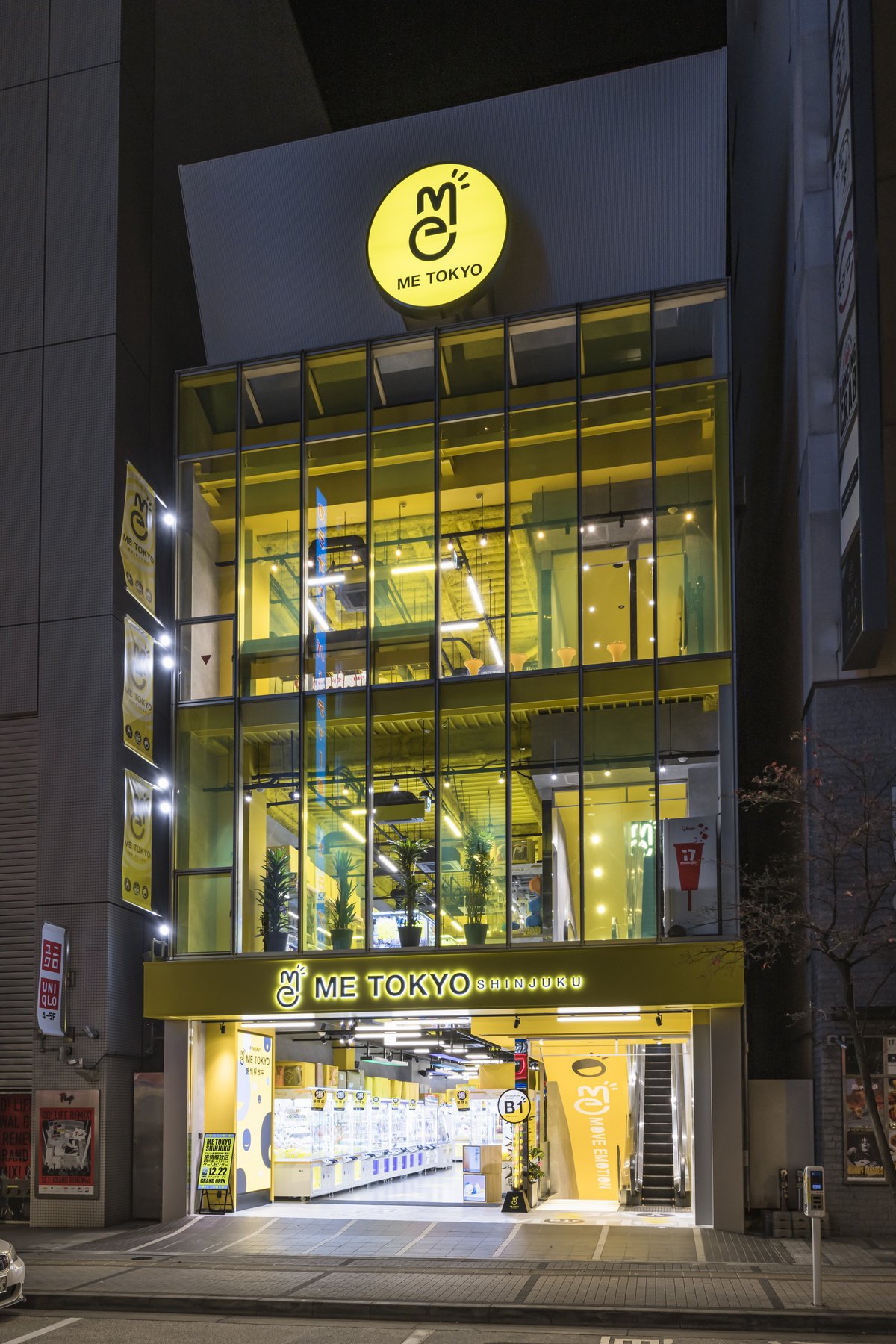
The exterior of ME TOKYO SHINJUKU. This site was formerly マルハン新宿店, a pachinko hall, and reopened as ME TOKYO in December 2022. Image source: 株式会社マルハン’s official press release (March 2026).
Who runs ME TOKYO: マルハン and its internal company system
| Visual identity | Name | Role in this article |
|---|---|---|
 |
株式会社マルハン | Parent company, whose core business is pachinko halls |
 |
ME TOKYO | Arcade brand operated by マルハン東日本カンパニー |
This table simply connects the two names: ME TOKYO is the name on the sign, and マルハン is the company behind it. There is no separate subsidiary between them.
マルハン was founded in 1957 in Mineyama, Kyoto Prefecture. Its core business is pachinko halls. Its official corporate page gives the following figures:
- Sales of ¥1.517 trillion for the fiscal year ended March 2026.
- 317 pachinko halls listed on its official website, checked on September 25, 2026.
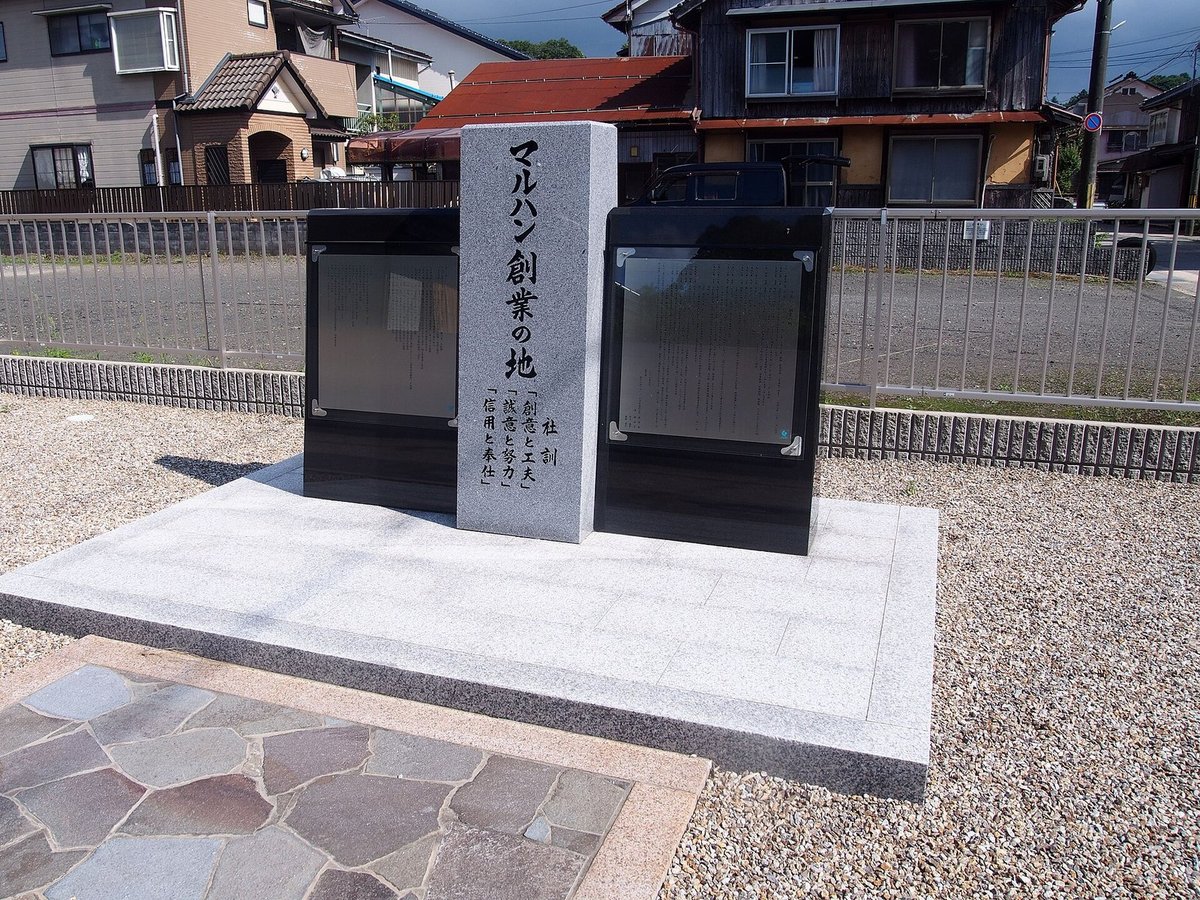
The monument marking マルハン’s founding site in Mineyama, Kyoto Prefecture, photographed in July 2019. Photographer: VinayaMoto, CC BY-SA 4.0, original image.
On April 1, 2021, マルハン introduced an “internal company system,” dividing the company into four internal companies: East Japan, North Japan, West Japan, and Finance. ME TOKYO is operated by 東日本カンパニー, but its legal entity remains 株式会社マルハン itself.
This arrangement is relatively uncommon among the ten operators in the series. タイトー is a wholly owned subsidiary of スクウェア・エニックス. namco is operated by a subsidiary within the バンダイナムコ group. The company operating モーリーファンタジー is a listed subsidiary in which AEON holds a stake. カプコン has the structure closest to ME TOKYO’s: its arcades are also run by the company’s own business division rather than a subsidiary.
Within 東日本カンパニー, ME TOKYO falls under the L&A 営業部, its L&A business department. According to an official マルハン東日本 interview from August 2026, this department oversees crane-game operations, bowling alleys, karaoke venues, cinemas, and other entertainment facilities. It currently operates along two lines: urban locations in Shinjuku and Ikebukuro, and suburban locations such as スーパーウェーブ静岡 and スーパーウェーブ柏. An employee interviewed said that the L&A department’s revenue had “grown sevenfold over these four years.” That sevenfold figure applies to the entire department, not ME TOKYO alone. For ME TOKYO itself, the official March 2026 press release reported approximately 7 million visits in the three years since the brand’s launch.
From a former pachinko hall to a place to let emotions loose
ME TOKYO SHINJUKU opened on December 29, 2022, on the former site of マルハン新宿店. The opening press release explicitly described it as “マルハン新宿店跡地,” meaning the former site of that pachinko hall. A pachinko company opened an arcade for young people on the site of one of its own former pachinko halls.
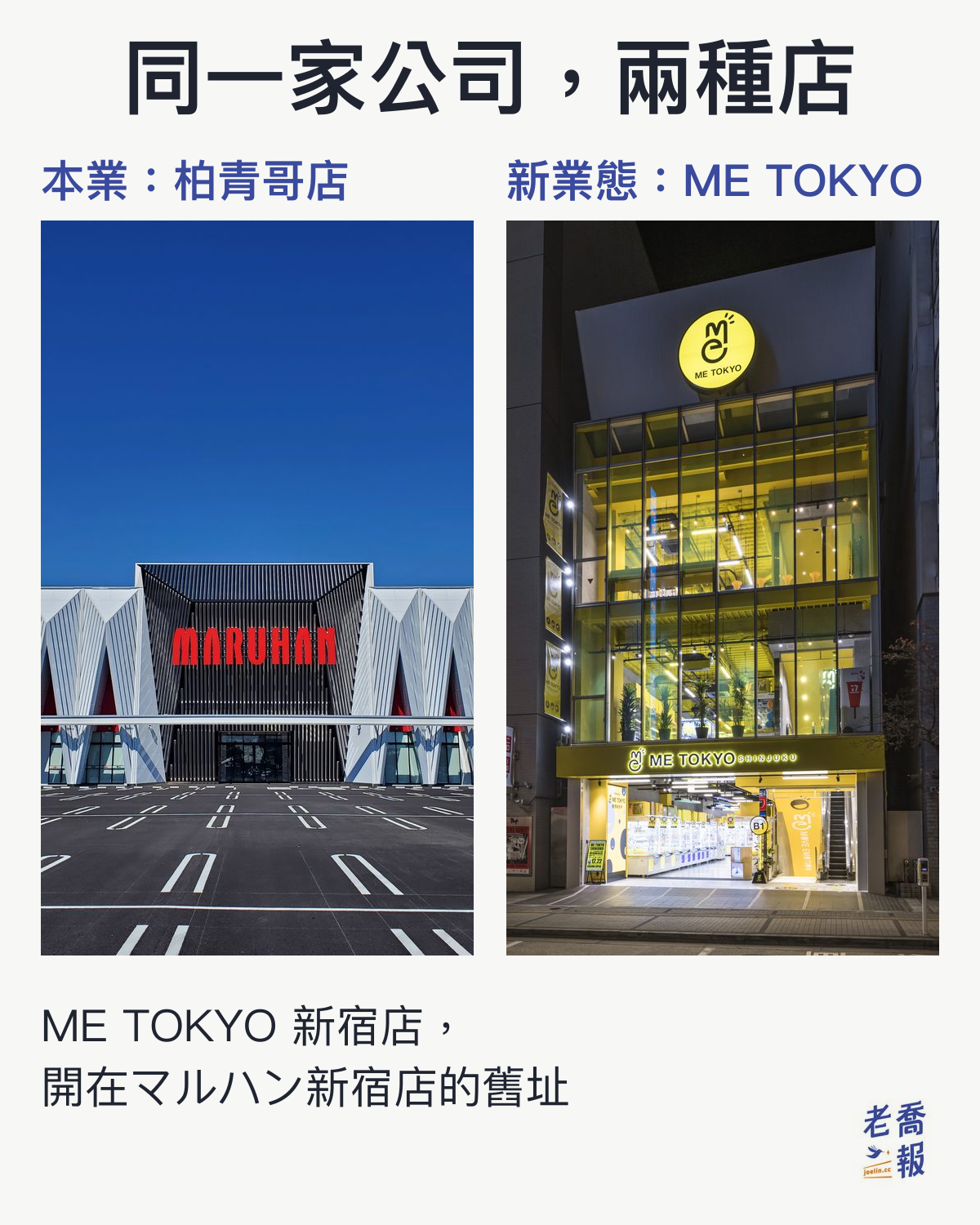
Left: マルハン南宮崎店, which opened in August 2024, showing what a venue in マルハン’s core pachinko business looks like. Right: ME TOKYO’s Shinjuku location. Both photographs come from 株式会社マルハン’s official press releases (the Minami-Miyazaki location and ME TOKYO); this site arranged them side by side.
The company sums up the brand’s positioning in one sentence: ME TOKYO is not a place to put game machines, but a “place to let your emotions loose.” ME comes from MOVE EMOTION.
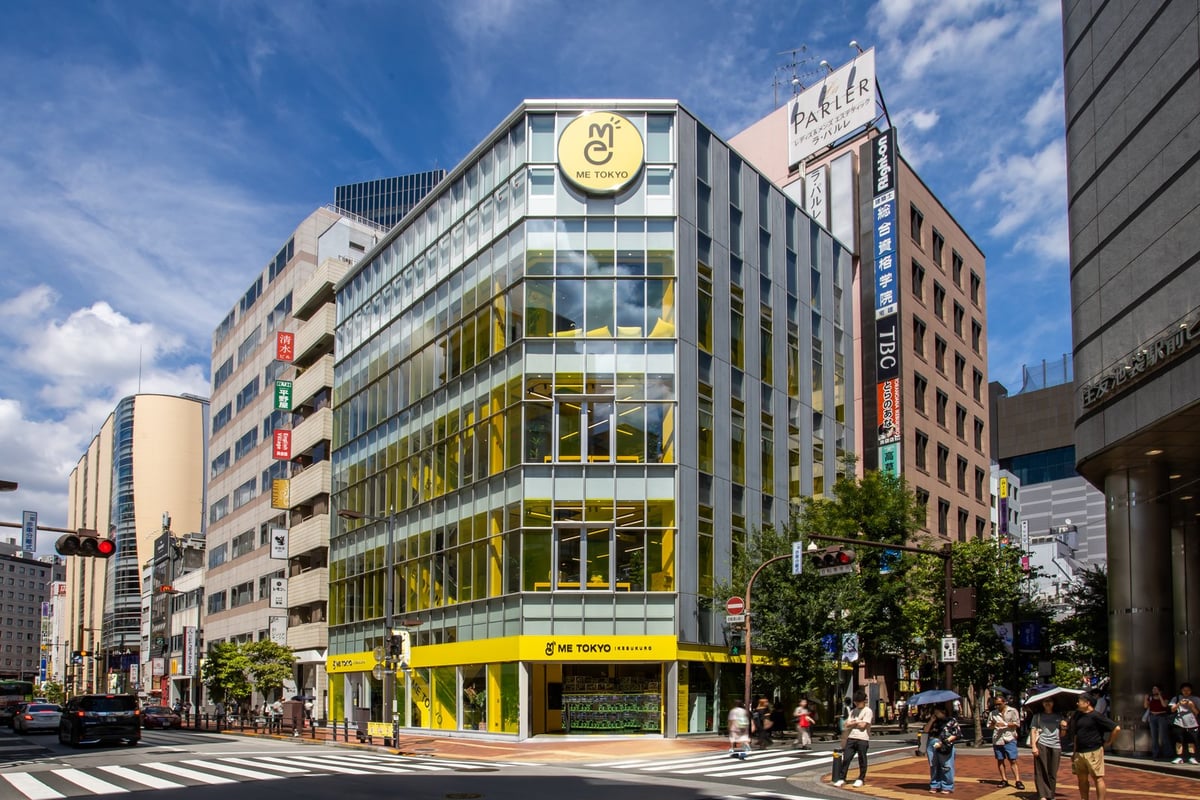
The exterior of ME TOKYO IKEBUKURO, which opened in August 2024. Image source: 株式会社マルハン’s official press release (March 2026).
ME TOKYO IKEBUKURO opened on August 8, 2024. Its top floor, the fourth floor, is called the “EMOTION LOUNGE.” The official press release explicitly identifies Gen Z as its target audience. The floor includes opportunities to try beauty appliances and apply makeup, a cosplay area, an LED video photography studio, and a studio for livestreaming and recording. The purikura machines are also on this floor. Both the men’s and women’s regular restrooms at Ikebukuro have hair-styling facilities, which the company describes as “ジェンダーレス対応,” or gender-inclusive provision.
In October 2024, ME TOKYO also opened “ME TOKYO SHIBUYA Limited” at 西武渋谷店. This location was no longer listed on the official website. In an August 2026 interview, マルハン東日本 looked back on it as having “operated for one year beginning in 2024” and referred to the period “after operations in Shibuya ended.”
What pachinko-hall hospitality means—and how it carries over to arcades
In an official マルハン東日本 interview, employees described ME TOKYO’s strength in a single idea: bringing pachinko-hall “接遇,” or hospitality, into arcades. Taiwanese readers may be unfamiliar with pachinko halls, so the term needs some explanation first.
What a pachinko hall looks like
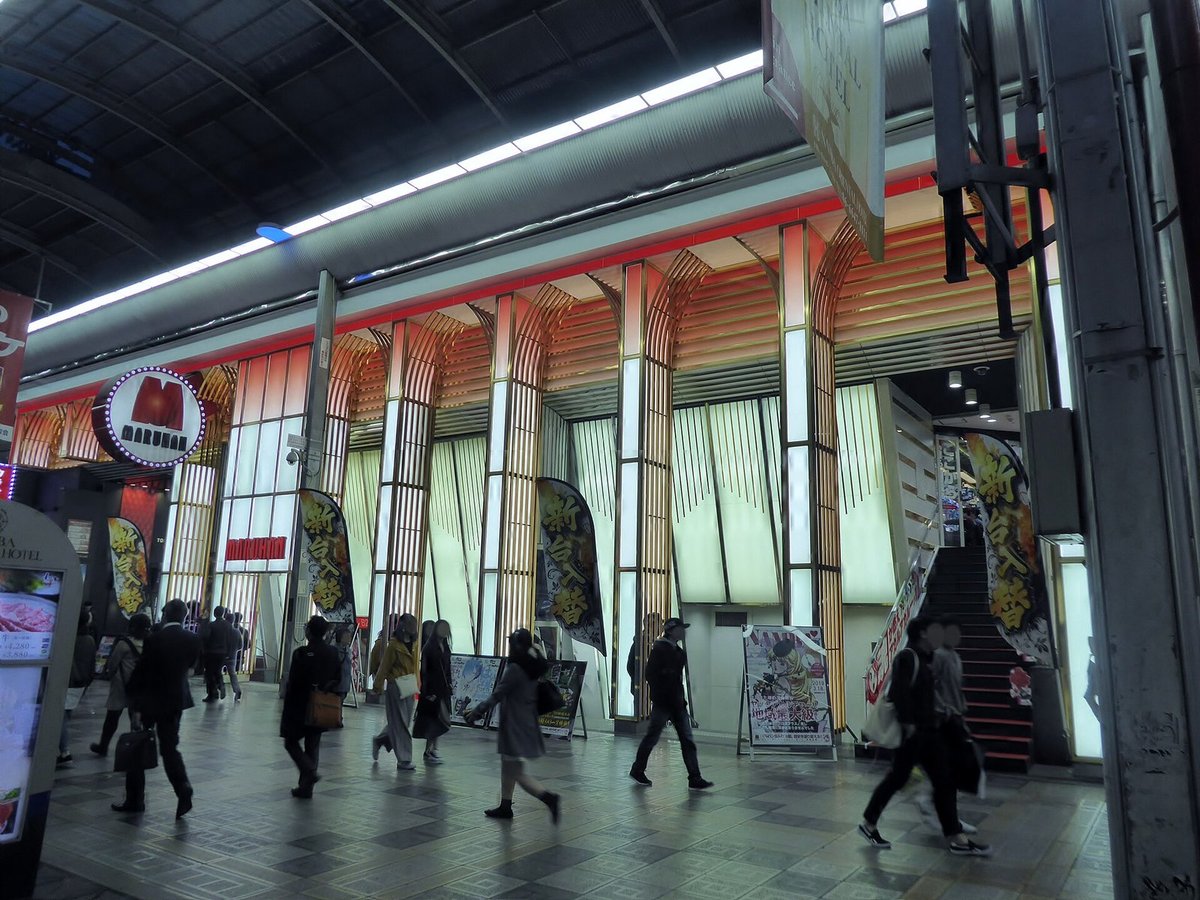
マルハンなんば本店 in Namba, Osaka, in March 2019. This is マルハン’s core business: pachinko halls. Photographer: Tokumeigakarinoaoshima, CC BY-SA 4.0, original image.
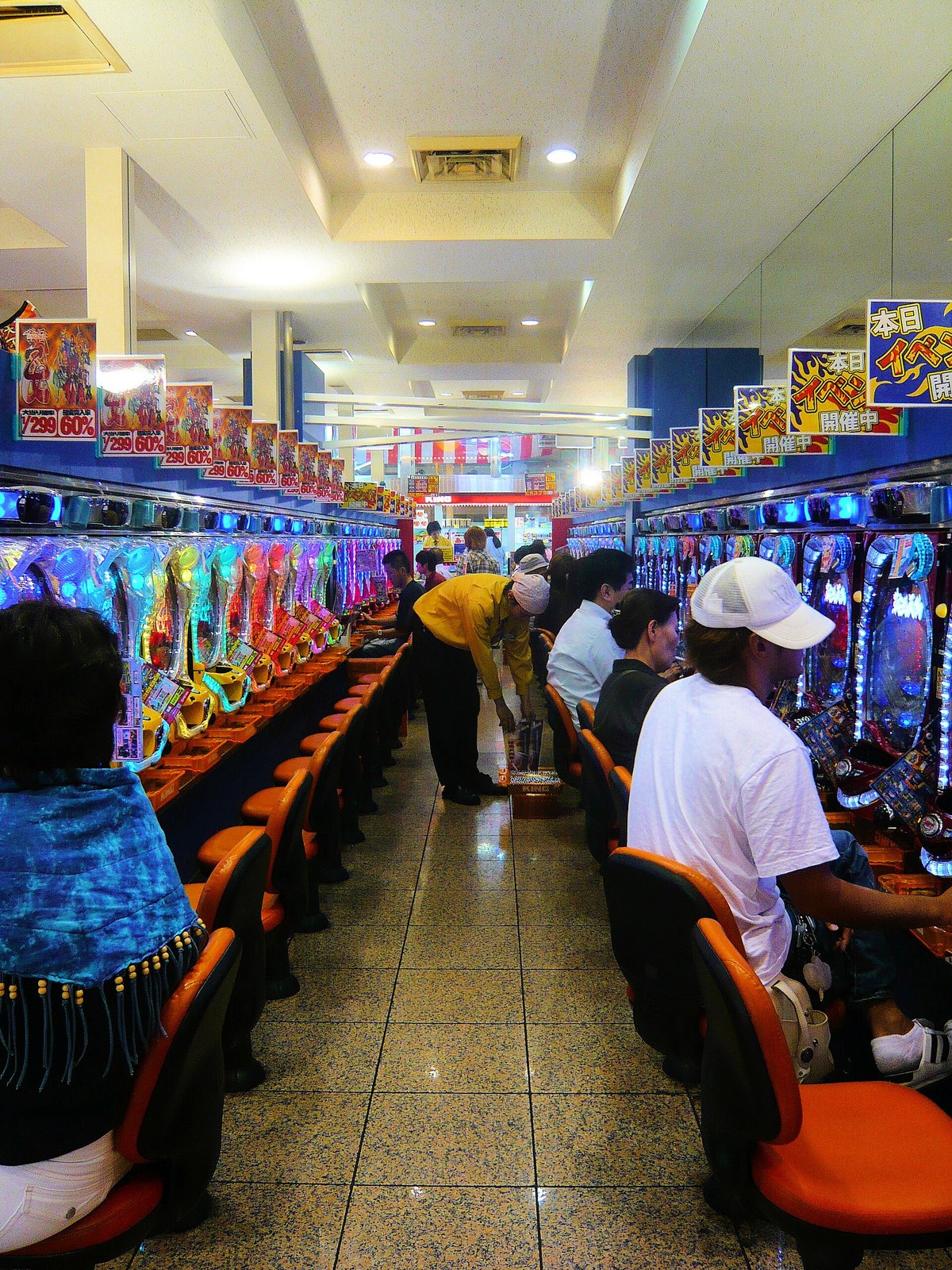
Inside a pachinko hall in 2008; this is not a マルハン location. The employee in the aisle is handling the boxes of balls at a customer’s feet—the “staff carry them for you” step in the process below. Photographer: Stéfan Le Dû, CC BY-SA 2.0, original image.
A pachinko hall contains rows of upright machines played with small metal balls. Customers pay to borrow balls and launch them into the machine. A win causes the machine to dispense more balls.
The process of a visit, according to マルハン’s official guide
マルハン’s website has a “パチンコの遊び方,” or “How to Play Pachinko,” page for first-time visitors. It divides the process into six steps:
- Choose a hall: The price per borrowed ball differs by location. Some halls offer two or more price levels.
- Choose a machine: Machines range from lighter models with a higher probability of winning but fewer balls per win to higher-specification models with a lower probability of winning but more balls per win. You can also choose a machine based on an anime series, TV drama, or singer you like. The official guide explicitly says that staff can help you choose if you are unsure.
- Start playing: Insert money into the ball dispenser on the left side of the machine, press the button to dispense balls, and turn the handle at the lower right to launch them.
- Step away temporarily: When going to the restroom, leave balls in the upper tray to indicate that the machine is in use. If you will be away for 10 minutes or more, press the call button to notify staff.
- Finish: Press the return button to retrieve the card holding your remaining balance, then settle it at the payment machine. If you have won enough balls to fill many boxes, press the call button. Staff will carry the boxes to the counting machine, count the balls, and hand you a card.
- Exchange for prizes: Take the card to the prize area and choose snacks, household goods, toys, or other prizes within the value of the balls you won. Ask staff for help if you cannot carry them.
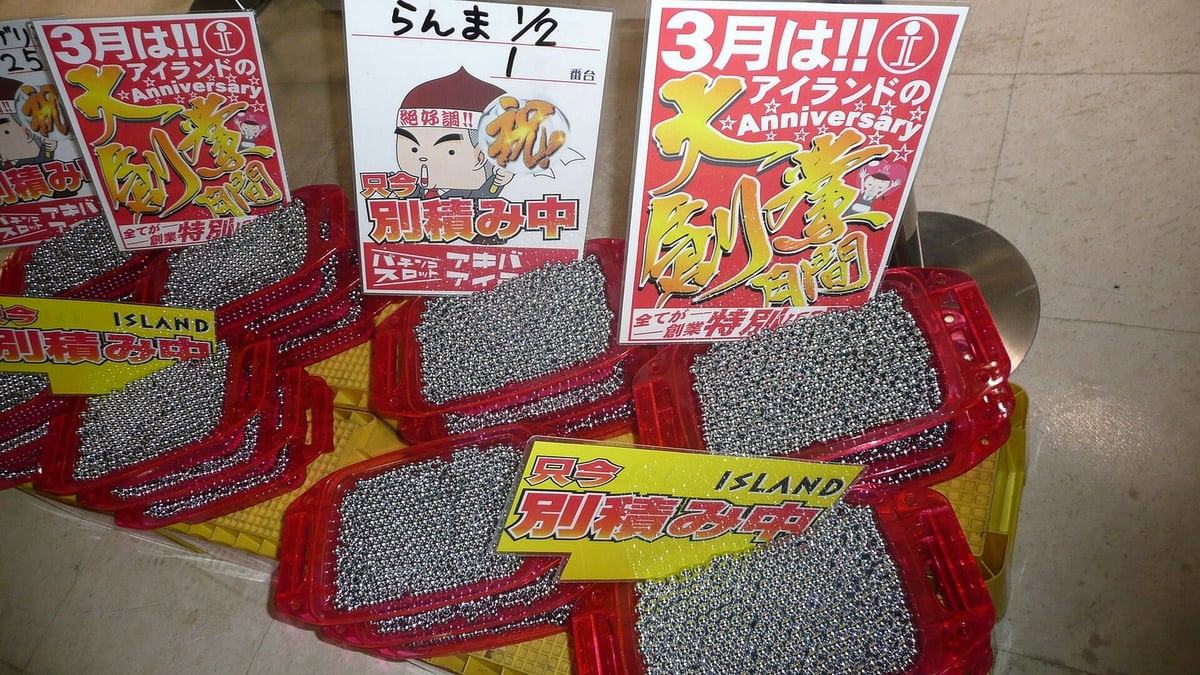
Boxes filled with pachinko balls, called “ドル箱” in Japanese. These are the boxes that staff carry for customers in step five. Photographed in Tokyo in March 2011. Photographer: Brücke-Osteuropa, CC0 public domain dedication, original image.
This process stops at exchanging for prizes. Japanese law prohibits pachinko halls from offering cash or securities as prizes (Article 23, paragraph 1, item 1 of the Entertainment Business Act), and the official guide ends at this step as well.
Where hospitality appears in the process
Looking across these six steps, staff are involved in many places: helping customers choose a machine, recording when they leave their seats, carrying boxes of balls, counting them, and helping carry items in the prize area. マルハン’s official recruitment page defines service as “sensing customers’ expectations and exceeding them.” The first step is to “greet them with a smile,” and staff are encouraged to keep thinking, “What can I do for the customer?” while working in the hall. マルハン東日本 defines hospitality as serving customers with consideration and gratitude while thinking about what they need.
In the interview, ME TOKYO employees said that customers already take these responses for granted in pachinko halls, but that they are still uncommon in arcades. Arcades used to be associated with dim interiors and little interaction with staff.
What it looks like inside an arcade
The interview gives three examples:
- When staff see an empty drink cup in a customer’s hand, they proactively ask whether they can take it away. Customers respond with surprise: “You even help with that?”
- When staff see a customer playing a crane game, they proactively ask, “Would you like me to reposition the prize?” In other words, staff move the prize to a position where it is easier to grab, and they make the offer first rather than waiting for the customer to ask.
- When a customer wins a prize, staff share in the excitement.
The official interview also says that the venue uses bright yellow as its base color to make it easier for women to feel comfortable walking in. Employees’ explanation was that arcade machines and prizes do not differ much from one operator to another, including competitors, so staff hospitality has to provide the distinction.
Shinjuku’s third floor: an entire floor devoted to purikura
The official opening press release describes Shinjuku’s third floor as a “プリクラフロア,” or purikura floor, and a “カフェフロア,” or café floor. It lists three kinds of items available to borrow in the purikura area:
- Small accessories.
- Cosplay costumes, which customers can keep wearing while playing elsewhere inside the venue.
- Jerseys from different periods of Belgian football club シント=トロイデン VV’s history. マルハン has an equity partnership with the club through a subsidiary.
Makeup vanities are not limited to the women’s restroom. The press release explicitly states that, with Gen Z in mind, vanities were installed in both the men’s and women’s restrooms.
No usable large official images of Shinjuku’s third floor were publicly available. The three photographs below are official images of the fourth-floor EMOTION LOUNGE at Ikebukuro, showing the same brand’s purikura area, costume loans, and restroom vanities.
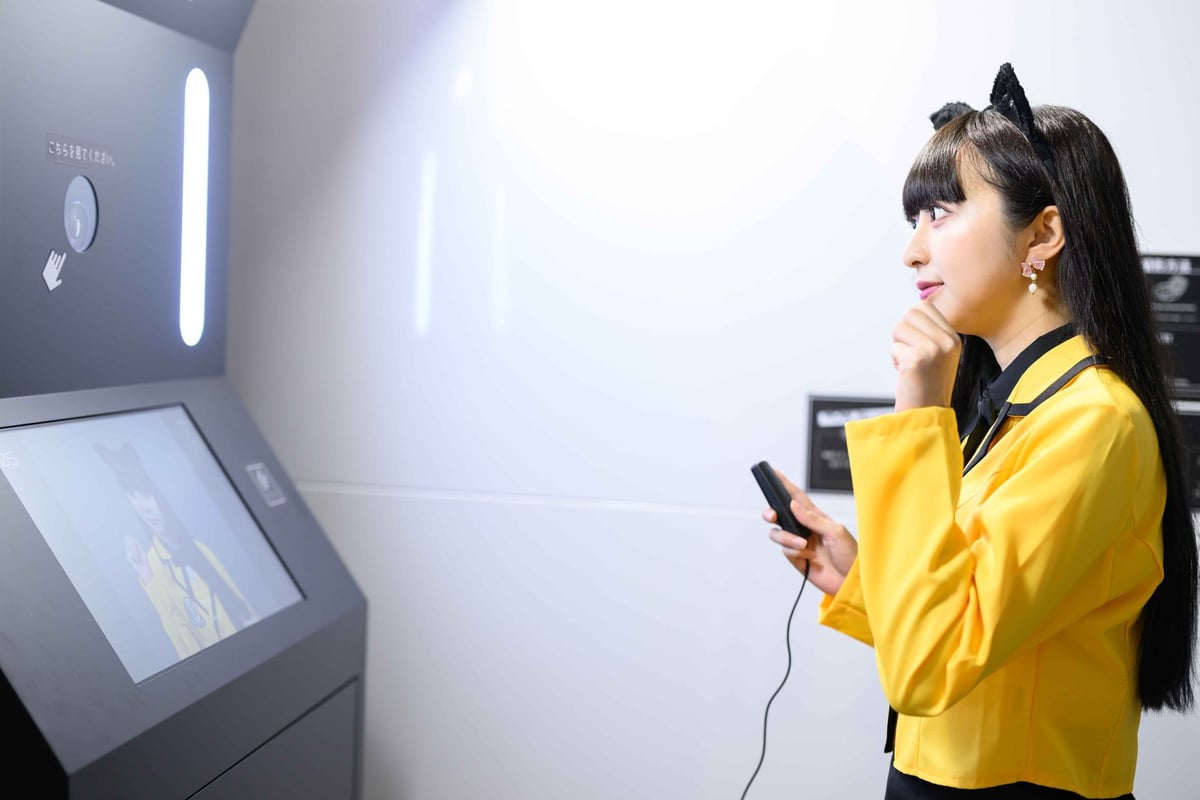
The purikura area at Ikebukuro. The official press release captions it “プリクラ風景,” or a scene from the purikura area. Image source: 株式会社マルハン’s official opening press release (August 2024).
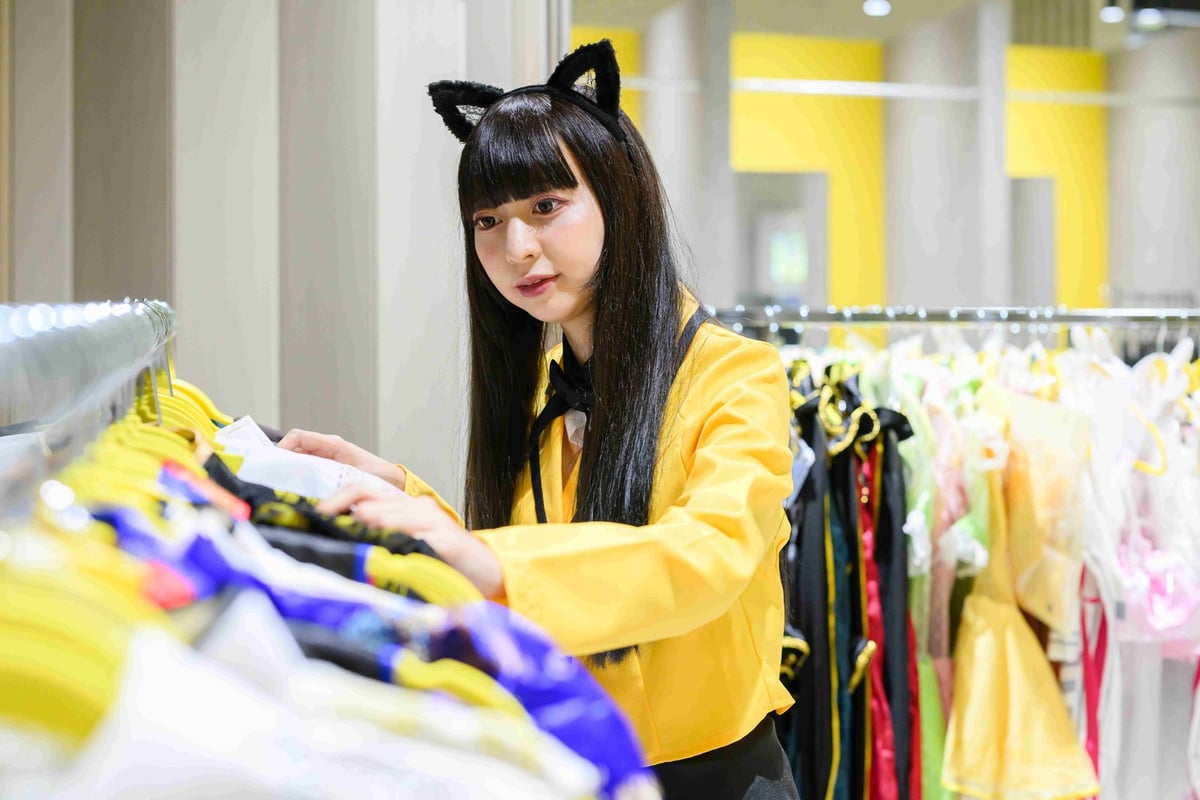
The costume-loan area at Ikebukuro. The official press release captions it “コスプレ風景,” or a scene from the cosplay area. Image source: 株式会社マルハン’s official opening press release (August 2024).
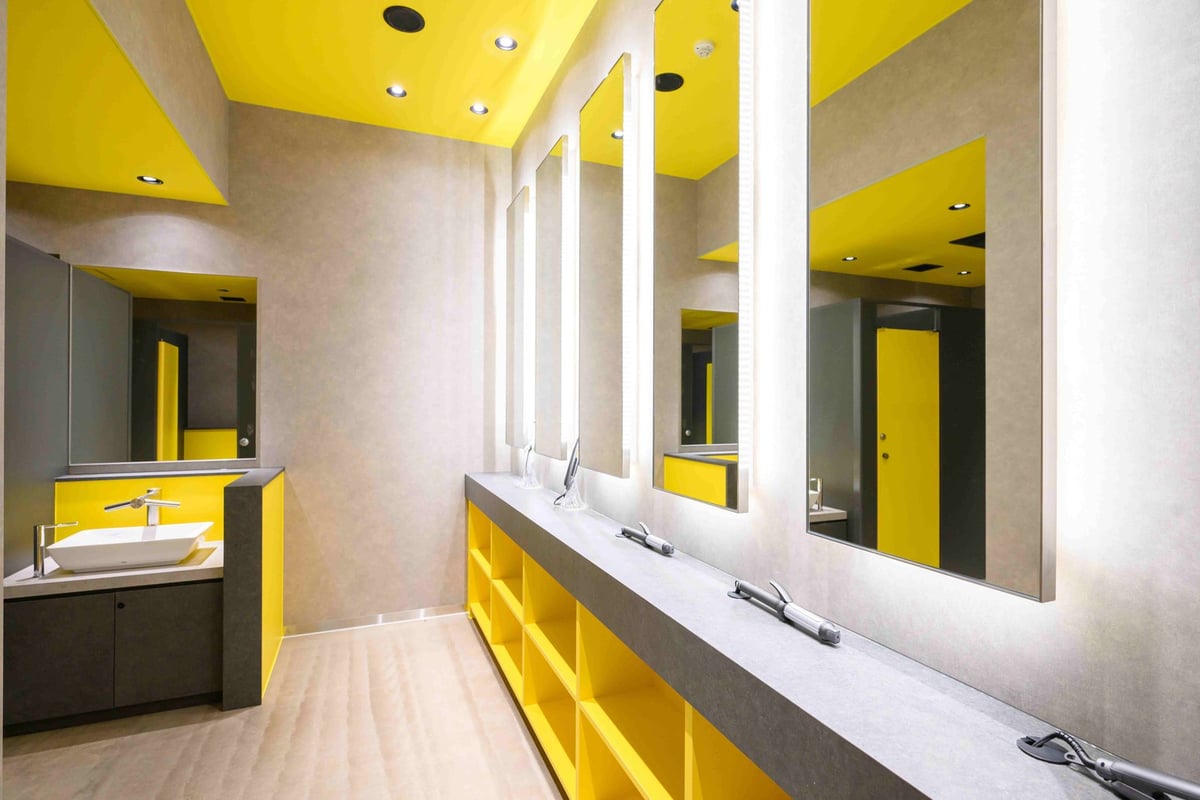


The restroom makeup area at Ikebukuro. The company describes it as “ジェンダーレス対応,” or gender-inclusive provision, with hair-styling facilities in both the men’s and women’s restrooms. Image source: 株式会社マルハン’s official opening press release (August 2024).
The ME TOKYO page on photobooth.joelin.cc, the photo booth database I maintain, lists two ME TOKYO locations with photo booths: Shinjuku and Ikebukuro. It contains 13 machine-model entries in total: 10 models at Shinjuku and three at Ikebukuro. Both locations have machines from Korean brand Photoism. A list of models does not indicate the number of individual machines; the actual equipment at the venue takes precedence.
| Item | Shinjuku (SHINJUKU) | Ikebukuro (IKEBUKURO) |
|---|---|---|
| Purikura machines | Yes, on an entire third floor devoted to purikura | Yes, inside the fourth-floor EMOTION LOUNGE |
| Costume loans | Yes, according to the 2022 opening press release | A cosplay area is provided, according to the 2024 opening press release |
| Makeup vanities | Yes, in both the men’s and women’s restrooms | Yes, with hair-styling facilities in both the men’s and women’s restrooms |
| Male customers using purikura machines | Groups are allowed | Groups are allowed |
| Curling-iron loans and changing rooms | Not found in official materials | Not found in official materials |
| Costume-loan fees | A fee applies; check the venue for current prices | Not listed in the official press release |
| Opening hours | Published on the official website | Published on the official website |
The table shows the difference between the two locations. Shinjuku operates purikura as an entire floor, while Ikebukuro places it within an experience floor centered on makeup, dressing up, and filming videos. Both locations provide restroom makeup facilities for men and women and allow groups of men to use the photo booths. Fees and opening hours change frequently, so this article does not give figures. Before visiting, check the ME TOKYO official website and each location’s official social media accounts.
Why “groups of men can use the photo booths” deserves mention
For Taiwanese readers, allowing men to use photo booths may sound like a given. In Japan, however, many arcade purikura areas display notices saying that all-male customers cannot enter and must be accompanied by a woman. Operators typically cite preventing unauthorized photography, harassment, and unwanted advances as their reasons. The origins of this rule and the dates for which evidence can be found are covered in a dedicated section of Thirty Years of Japan’s Purikura Industry.
Against that background, ME TOKYO’s wording becomes clear. The official マルハン東日本 interview says that many arcades restrict all-male customers from using purikura machines, but that male customers at ME TOKYO can use them as long as they come as a group. The company discusses this under its policy of being “gender-inclusive, so everyone can enjoy themselves equally.”
Two points need attention:
- The official wording says “groups.” Official materials do not state whether a man visiting alone can use the machines, and this article does not speculate.
- This is ME TOKYO’s venue policy. Other chains—and even different locations within the same chain—may have different rules. Follow the notices displayed at each venue.
Among the ten operators examined in the series overview, ME TOKYO was the one for which an explicit position on this issue could be found in official materials. No uniform rule on this issue was found in the other nine operators’ official materials.
Putting ME TOKYO back into Japan’s purikura landscape
In the series overview, I divide Japan’s purikura industry into three layers:
- Manufacturers make the machines, such as FURYU and SEGA.
- Operators install the machines in arcades, where purikura is just one of many types of machine.
- Brands open dedicated purikura stores, such as girls mignon, along with brooming and eggnam, which grew out of arcade businesses.
ME TOKYO belongs in the operator layer. Its venues are still called ME TOKYO, and the purikura floor has no separate brand name. That differs from タイトー’s brooming and バンダイナムコ’s eggnam. Still, the supporting facilities on Shinjuku’s third floor already approach those of a dedicated purikura store: an entire floor, costume loans, and makeup vanities.
The parent companies of the ten operators have core businesses spanning games and intellectual property, entertainment platforms, retail groups, and combined leisure facilities. マルハン is the pachinko company among them. Official materials suggest that its approach to arcades is to bring in pachinko-hall service standards, then expand activities that young people spend time on, such as purikura, makeup, and dressing up. It also explicitly includes “groups of men can use the photo booths” and “makeup vanities in the men’s restroom too” in its official descriptions. Its official website listed two locations as of September 24, 2026. The operation is small, but both locations organize their purikura offering at the scale of a floor.
The photo booth machines themselves mostly come from manufacturers. For how business has changed at the Japanese manufacturer level, see the FURYU company study. For the broader context of the photo booth industries in Taiwan, South Korea, and Japan, see the main photo booth industry article.
Related reading
- More Than 40% of Japan’s Purikura Machines Are in Arcades: Manufacturers, Operators, and Brands, and the Parent Companies of Ten Chains—The overview for this series, comparing the ten operators’ parent companies and costume-loan offerings.
- Thirty Years of Japan’s Purikura Industry—The development of Japanese purikura from 1995 to the article’s present, including a section on restrictions against men entering alone.
- The Transformation of FURYU, Japan’s Leading Purikura Manufacturer—Financial results and transformation at the manufacturer level.
- A Report on the History of Taiwan’s Photo Booth and Korean-Style Photo Booth Industries—The main photo booth industry article.
- ME TOKYO Locations in Japan with Photo Booths—Machine models and addresses for the Shinjuku and Ikebukuro locations.
- A List of Cosplay Purikura Venues in Japan—Places in Japan where you can borrow costumes for photo booth sessions.
Sources: ME TOKYO official website (checked September 24, 2026), マルハン corporate information (checked September 25, 2026), ME TOKYO SHINJUKU opening press release (2022), ME TOKYO IKEBUKURO opening press release (2024), ME TOKYO EMOTION RESEARCH press release (March 2026), マルハン東日本 interview, “The Challenge of ME TOKYO, a Place to Let Emotions Loose” (August 8, 2026), マルハン’s “How to Play Pachinko” (checked September 25, 2026), マルハン official recruitment page (checked September 25, 2026), and the Japan data layer of this site’s photobooth.joelin.cc database.
Article keywords: ME TOKYO, マルハン, マルハン東日本カンパニー, ME TOKYO SHINJUKU, ME TOKYO IKEBUKURO, Japanese arcades, Japanese photo sticker booths, purikura, cosplay purikura, pachinko companies, pachinko halls, hospitality, Gen Z
FAQ
Which company runs ME TOKYO?
Japanese pachinko company 株式会社マルハン. Its operating unit is マルハン東日本カンパニー, an internal business unit created under the internal company system that マルハン introduced in April 2021. It is not a separately established subsidiary; the legal entity remains 株式会社マルハン.
How many ME TOKYO locations are there?
ME TOKYO’s official website listed two locations as of September 24, 2026: Shinjuku and Ikebukuro. ME TOKYO SHIBUYA Limited opened at 西武渋谷店 in October 2024 but was no longer listed on the official website.
What does the purikura area at ME TOKYO Shinjuku offer?
The entire third floor at Shinjuku is devoted to purikura. The official opening press release lists costume loans and makeup vanities in both the men’s and women’s restrooms. Fees and opening hours change frequently; check ME TOKYO’s official website and the location’s official social media accounts.
Can men use the photo booths at ME TOKYO?
Yes, but they must come as a group. An official マルハン東日本 interview says that many arcades restrict all-male customers from using purikura machines. ME TOKYO follows a gender-inclusive policy and allows male customers to use them as long as they are in a group.
What does ME TOKYO mean by bringing pachinko-hall hospitality into arcades?
In a pachinko hall, staff assist at each stage, from choosing a machine and handling a customer’s temporary absence to carrying boxes of balls and exchanging them for prizes. An official マルハン東日本 interview says that this proactive service is taken for granted in pachinko halls but is still uncommon in arcades. Examples at ME TOKYO include staff proactively collecting empty cups and offering to move crane-game prizes into positions where they are easier to grab.
This English version is based on original Traditional Chinese content on joelin.cc. The language and explanations are localised for international readers. The Traditional Chinese original is the authoritative version — for its complete meaning, please read the original article.