
This article is also available in: 繁體中文 · 日本語
Contents (15)
Summary
Arclight Inc. (株式会社アークライト, founded 1998) is a Japanese analog games company with three lines of business: board games (developing its own titles and Japanese editions of overseas board games, manufacturing and wholesale, organizing Game Market (ゲームマーケット), plus one board game specialty shop, Board Game Station (ボードゲームステーション)), TRPGs (the magazine Role&Roll, Call of Cthulhu TRPG (クトゥルフ神話TRPG) with KADOKAWA, and the subsidiary Shinkigensha (新紀元社)), and TCG (the trading card shop Hobby Station (ホビーステーション), plus planning cards for publishers and running card events). Hobby Station opened its first store in Akihabara in 2003 and had 26 stores by 2009, then stayed near 30 for more than a decade; the official store list on November 18, 2026 shows 32 stores in Japan, plus 6 in Indonesia (the announcement of the first one says it is run by a local partner). The company website gives annual revenue of ¥5.6 billion for the year ended June 2019, ¥7.5 billion for June 2023, ¥7.8 billion for June 2024 and ¥9.1 billion for March 2026; the financial statement notices in the Official Gazette show net income of ¥338 million for June 2024 and ¥206 million for March 2026 (a net margin of about 2.3%). It became a KADOKAWA subsidiary on May 31, 2024 (100% held, purchase price not disclosed), and its fiscal year-end moved from June to March. Revenue and profit by business, and for Hobby Station, are not disclosed.
Key points
- Annual revenue (company website): ¥5.6 billion for FY6/2019, ¥5.6 billion for FY6/2021, ¥7.5 billion for FY6/2023, ¥7.8 billion for FY6/2024 and ¥9.1 billion for FY3/2026; FY3/2025 (9 months) not published
- Net income from Official Gazette notices: ¥20 million for FY6/2018, ¥338 million for FY6/2024, ¥135 million for FY3/2025 (9 months) and ¥206 million for FY3/2026; for FY3/2026, retained earnings ¥1.09 billion and total assets ¥3.183 billion
- Hobby Station has 32 stores in Japan (official list of 2026-11-18, including the Akihabara buyback center), plus 6 in Indonesia (the 2024 company history listed 4 overseas stores as franchise stores); first store in Akihabara in 2003, 26 stores by 2009
- Became a KADOKAWA subsidiary on May 31, 2024; KADOKAWA’s securities report for FY3/2026 records 100% ownership; the purchase price is not disclosed, and KADOKAWA said the effect on that year’s results was minor
- Three lines of business: board games (development, Japanese editions of overseas board games, wholesale, organizing Game Market), TRPGs (Role&Roll, Call of Cthulhu TRPG, subsidiary Shinkigensha) and TCG (Hobby Station, card planning and event operations); revenue by business not disclosed
- 154 full-time employees (March 2026); paid-in capital ¥50 million
Hobby Station is a trading card shop chain in Japan, and its operator Arclight does more than open stores: it is also a board game publisher, a TRPG publisher and the organizer of Game Market, one of Japan’s largest analog games shows. The company website gives revenue of ¥9.1 billion for the year ended March 2026, and the Official Gazette notice shows net income of ¥206 million for the same period, a net margin of about 2.3%. In May 2024 it became a wholly owned subsidiary of KADOKAWA. The official store list on November 18, 2026 shows 32 Hobby Station stores in Japan; how much the card shops earn is not broken out by the company.
This article is the last downstream piece in the “Japan Trading Card Industry Research” series. The downstream article compared the published figures at each layer, and the Hareruya article looked at how a pure card shop company splits its stores by game; this one looks at the other kind: a games company that also runs card shops.

What it offers: one company, three kinds of analog games
Arclight splits its business into three lines, all “unplugged” games:
- Board games: developing its own titles (ito, Love Letter (ラブレター) and others), making Japanese editions of overseas board games (Wingspan (ウイングスパン), Terraforming Mars (テラフォーミング・マーズ) and others), and since 2008 board game wholesale and logistics; it has organized Game Market since 2010 and runs one board game specialty shop, Board Game Station.
- TRPGs: publishing the information magazine Role&Roll and TRPG books, releasing Call of Cthulhu TRPG together with KADOKAWA since 2004, and making the publisher Shinkigensha a subsidiary in 2020.
- TCG: running the Hobby Station card specialty shops; it also plans and develops card games for publishers and takes on card tournament operations and event secretariat work. The clients its website lists are KADOKAWA, Square Enix, Takara Tomy, Bandai and Bushiroad.
Hobby Station calls itself a “card game communication shop” (カードゲームコミュニケーションショップ): it sells cards, buys cards, and has duel spaces (デュエルスペース) in its stores, with one store selling many kinds of card games. Its customers, like Hareruya’s, are card players who come to play and to collect.
Shops first, overseas board games later
When planning this article, this site first filed Arclight as “a board game publisher that moved down into card shops”; the company history shows the order was different:
| Year | Event |
|---|---|
| 1998 | Company founded |
| 1999 | Starts planning card games |
| 2001 | Shifts focus to card and board games |
| 2003 | Hobby Station opens in Akihabara |
| 2004 | Starts importing overseas board games |
| 2005 | Starts Japanese editions (business page says 2004) |
| 2008 | Starts analog games wholesale |
| 2010 | Takes over Game Market |
| 2024 | Becomes a KADOKAWA subsidiary |
The analog games development that began in 2001 already included board games, but the card shop came before the imports and Japanese editions of overseas board games. Arclight is a company that grew from game planning and developed a shop line and a publishing line together, not a publisher that went downstream to open shops.
Position in the chain: cards only at retail, board games from start to finish
flowchart TD
    A["Publishers<br>Pokémon, Takara Tomy"] --> B["Supply<br>Route not disclosed"]
    B --> C["Hobby Station<br>32 stores in Japan"]
    C --> D["Players"]
    D -- Sell singles back --> C
Diagram: joelin.cc · Joe Lin
On the card line, Arclight stands only at retail.
flowchart TD
    E["Arclight<br>Develop, localize"] --> F["Arclight<br>Wholesale, logistics"]
    F --> G["Board game shops, retailers"]
    F --> H["Board Game Station"]
    E --> I["Game Market"]
Diagram: joelin.cc · Joe Lin
On the board game line, it runs from development and wholesale through to its own stores and shows.
Image source: compiled by this site from the business pages of Arclight’s website.
The two lines sit at different positions in the chain. On the card side, Arclight stands only at retail: Hobby Station sells other publishers’ cards, and where it buys them is not disclosed; planning cards for publishers is contract work; the website also mentions original goods, but this site judges they are not the main products sold into its own stores. On the board game side, it develops, obtains overseas licenses, makes Japanese editions, wholesales, and runs its own show and store, so it really is upstream moving into downstream.
When KADOKAWA announced the acquisition in April 2024, it first spoke about the growth of the TCG and board game markets (Japan’s domestic TCG market went from ¥113.3 billion in FY2019 to ¥234.8 billion in FY2022) and said that Hobby Station is one of the card industry’s top store networks in Japan; it then said it would use Arclight’s development strength to turn KADOKAWA’s IP into analog games and use Game Market to find new game creators.
How it makes money and the figures: revenue is public, profit is thin
Arclight is not listed, but the company profile on its website has always shown the latest year’s revenue; this site retrieved the earlier versions from web archives (Internet Archive) and set them against net income from the Official Gazette notices:
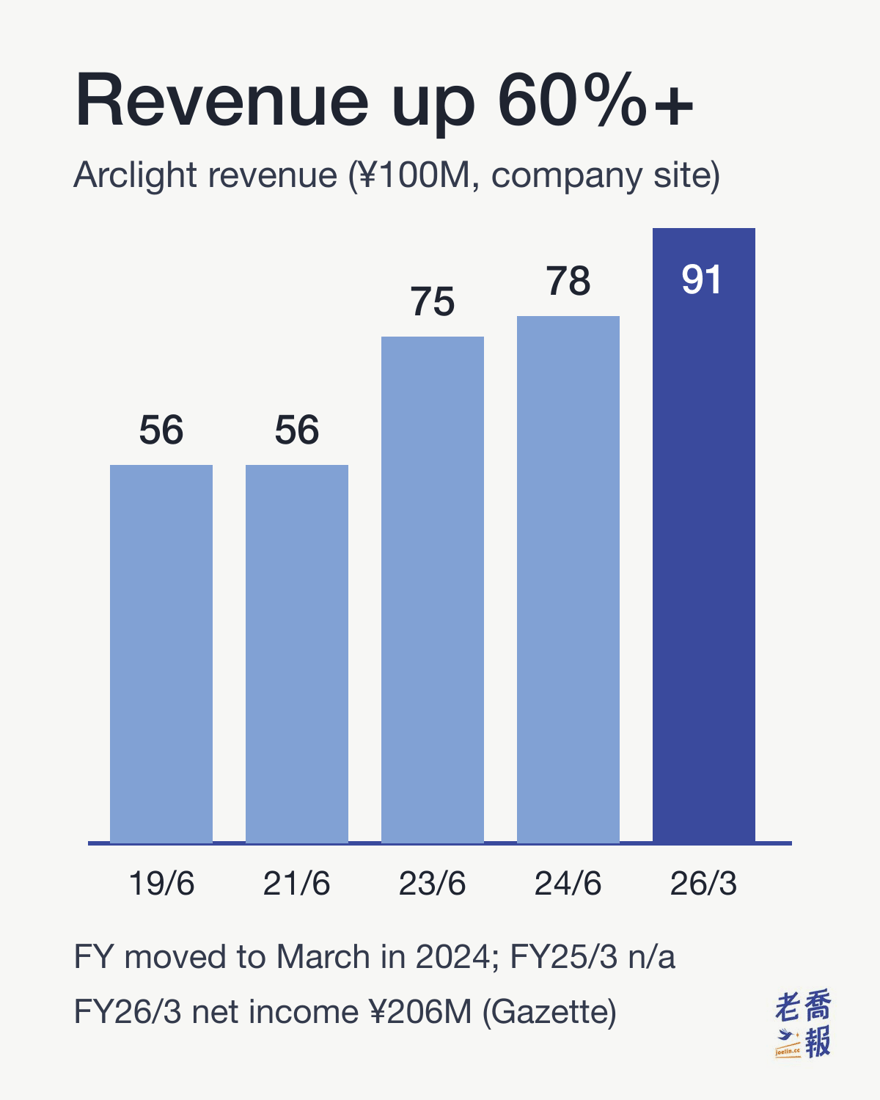
Revenue is the company website’s figure, in units of ¥100 million with no decimals, and net income is from the Official Gazette; “n/a” means not disclosed.
| FY | Revenue | Net |
|---|---|---|
| 6/2018 | n/a | ¥20 million |
| 6/2019 | ¥5.6 billion | n/a |
| 6/2023 | ¥7.5 billion | n/a |
| 6/2024 | ¥7.8 billion | ¥338 million |
| 3/2025 | n/a | ¥135 million |
| 3/2026 | ¥9.1 billion | ¥206 million |
The year ended June 2024 and the year ended March 2025 are only 9 months apart: after becoming a KADOKAWA subsidiary, the company moved its year-end to March like KADOKAWA’s, so the year ended March 2025 is a 9-month irregular fiscal period and cannot be compared with the years before or after it. Website revenue for the year ended June 2021 was also ¥5.6 billion; the Official Gazette settlement database (catr) holds only four periods: the year ended June 2018 and the three from the year ended June 2024 on, so net income for the years in between cannot be found.
Only two periods allow a net margin: about 4.3% for the year ended June 2024 and about 2.3% for the year ended March 2026. For the year ended March 2026, retained earnings were ¥1.09 billion and total assets ¥3.183 billion. Full-time employees were 122 in June 2019, 134 in June 2021 and 108 in June 2023, and rose to 154 in March 2026. How much revenue comes from board games, TRPGs and card shops is not published; KADOKAWA’s results put the company inside “Publishing & IP Creation” (出版・IP創出事業) and do not break it out either.
This site’s reading is that the ¥9.1 billion of revenue includes wholesale, which earns a thin spread on other people’s goods, so revenue is large and margins are low; add the rent and staff of retail stores, and a company-wide net margin of 2% to 4% is not surprising. How much Hobby Station accounts for, and earns, cannot be seen from outside.
Hobby Station: 17 years near 30 stores
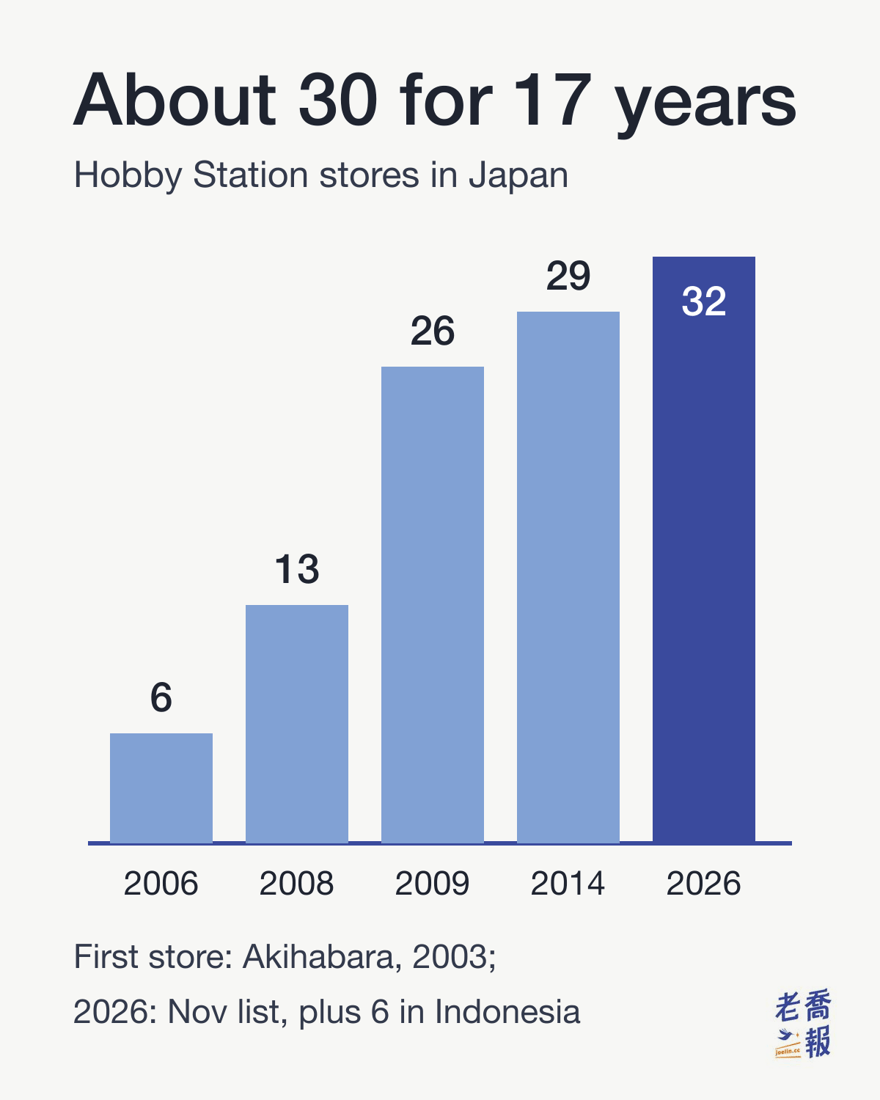
Hobby Station grew fast in its first six years: 6 stores in 2006, 13 in 2008, 26 in 2009. After that it stayed near 30: the company history gives 31 to 35 for 2015 to 2024, but those years include 1 or 2 online-only shops, so they cannot be compared directly with the physical stores on today’s official list. The official list on November 18, 2026 shows 32 stores in Japan, including the Akihabara buyback center; the Niigata and Fukuoka Tenjin stores opened in July 2026.
Overseas it works differently. The first store opened in Jakarta, Indonesia, in November 2023, and the announcement says it is not directly run but operated by a local partner; the 2024 company history listed the 4 overseas stores at the time as franchise stores (plus 1 franchise store in Japan). The 6th store (BSD, inside a large store of the Indonesian bookstore chain Gramedia) opened on November 7, 2026; the announcements for the 5th and 6th do not say how they are operated.
Over the same period, Hareruya went from 1 store in 2010 to 52 in 2026, and from its 30th store to its 50th in under two years (cumulative). Hobby Station already had 26 stores in 2009, a chain that started earlier, and its store count in Japan has not grown much since. The company has not explained why, and this site does not guess.
Against its peers: the only card shop with company-wide revenue and a board game core
Operators’ full names are Arclight Inc. (Hobby Station), Hareruya Co., Ltd., Jiraffe Inc. (magi) and the BOOKOFF Group (Japan TCG Center). “Data” shows the financial figures each has made public.
| Chain | Operator | Stores | Data |
|---|---|---|---|
| Hobby Station | Arclight | 32 | Revenue, net |
| Hareruya | Hareruya | 52 | Net |
| magi | Jiraffe | 21 | Revenue |
| Japan TCG Center | BOOKOFF | 9 | Segment total |
None of the four discloses the revenue and profit of the card shops themselves; Hobby Station’s operator is one that publishes both revenue and net income. How each figure is measured:
- Arclight: revenue of ¥9.1 billion and net income of ¥206 million for the year ended March 2026, including board games and TRPGs.
- Hareruya: net income of ¥787 million for the year ended March 2025 in the Official Gazette notice, revenue not disclosed (see the Hareruya article).
- magi: its operator Jiraffe had company-wide revenue of ¥9 billion for the year ended July 2025, profit not disclosed (see the magi article).
- Japan TCG Center: listed in BOOKOFF’s “Other” segment, combined with services such as home clearance (see the BOOKOFF article).
Store counts: Hobby Station and Hareruya are from the official lists of November 18, 2026, magi is the Japan store count of November 14, and Japan TCG Center is as of October 2026.
This site’s view is that Arclight’s and magi’s company-wide revenue are both around ¥9 billion, but one includes board game wholesale and publishing and the other a secondhand app, and neither is the revenue of a pure card shop, so they cannot be used directly to compare store businesses. Of the two with net income figures, Hareruya’s is higher (¥787 million for the year ended March 2025), while Arclight’s revenue scale is visible and its net margin is about 2% (year ended March 2026); the periods differ. For card readers, the two things worth remembering from this article are that Hobby Station is a chain that took shape earlier than Hareruya, and that what the company behind it really runs from upstream to downstream is board games, not cards.
Where to buy in Japan
Hobby Station’s 32 stores in Japan are concentrated in Tokyo, Kanagawa, Chiba, Saitama, Aichi, Osaka and nearby areas; for each store’s address and floor, see the Hobby Station page of the directory of trading card shops in Japan run by Joe Lin; for other chains and independent shops, see the directory of trading card shops in Japan.
Frequently asked questions
Which company runs Hobby Station?
Arclight Inc. (株式会社アークライト). It is an analog (unplugged) games company founded in 1998 that opened its first Hobby Station in Akihabara in 2003; on May 31, 2024 it became a subsidiary of KADOKAWA. The official store list on November 18, 2026 shows 32 stores in Japan, plus 6 in Indonesia, and the announcement of the first one says it is run by a local partner.
How much revenue does Arclight make, and how much does it earn?
The company website gives revenue of ¥9.1 billion for the year ended March 2026; the financial statement notice in Japan’s Official Gazette (kanpō) shows net income of ¥206 million for the same period, a net margin of about 2.3%. For the year ended June 2024, revenue was ¥7.8 billion and net income ¥338 million. How much comes from board games, TRPGs and card shops is not disclosed, and Hobby Station’s own revenue and profit cannot be found.
Did Arclight start with board games or with card shops?
The card shop came before the imports and Japanese editions of overseas board games. The company history says it began planning card games in 1999, shifted its development focus to analog games such as card games and board games in 2001, and opened the first Hobby Station in Akihabara in 2003; it began selling imported overseas board games in 2004, and Japanese-edition production is dated 2005 in the history and 2004 on the board game business page. So it did not start as a board game publisher and then open shops; one games company grew a shop line and a publishing line at the same time.
How does Hobby Station differ from Hareruya?
One Hobby Station store sells many kinds of card games, and the store count has stayed near 30 since 2009; Hareruya splits its shops into three brands by game, and the official list on November 18, 2026 shows 52 stores, going from its 30th to its 50th in under two years (cumulative). On finances, Arclight has company-wide revenue published on its website (including board games and TRPGs), while Hareruya has only the net income from Gazette notices.
Related reading
- Japan Trading Card Industry Research: series guide—the full series contents, key figures from each article and how the figures are measured
- Hareruya: one company, three shop brands—a pure card shop company that splits its stores by game
- Who makes the money on a Japanese trading card?—the downstream article: published figures for wholesalers, specialty shops and the secondhand layer
- magi: from a trading card app to physical stores—an online platform walking into physical stores
- BOOKOFF sells more trading cards & hobby goods than books—the leading secondhand bookstore chain opens card specialty stores as well
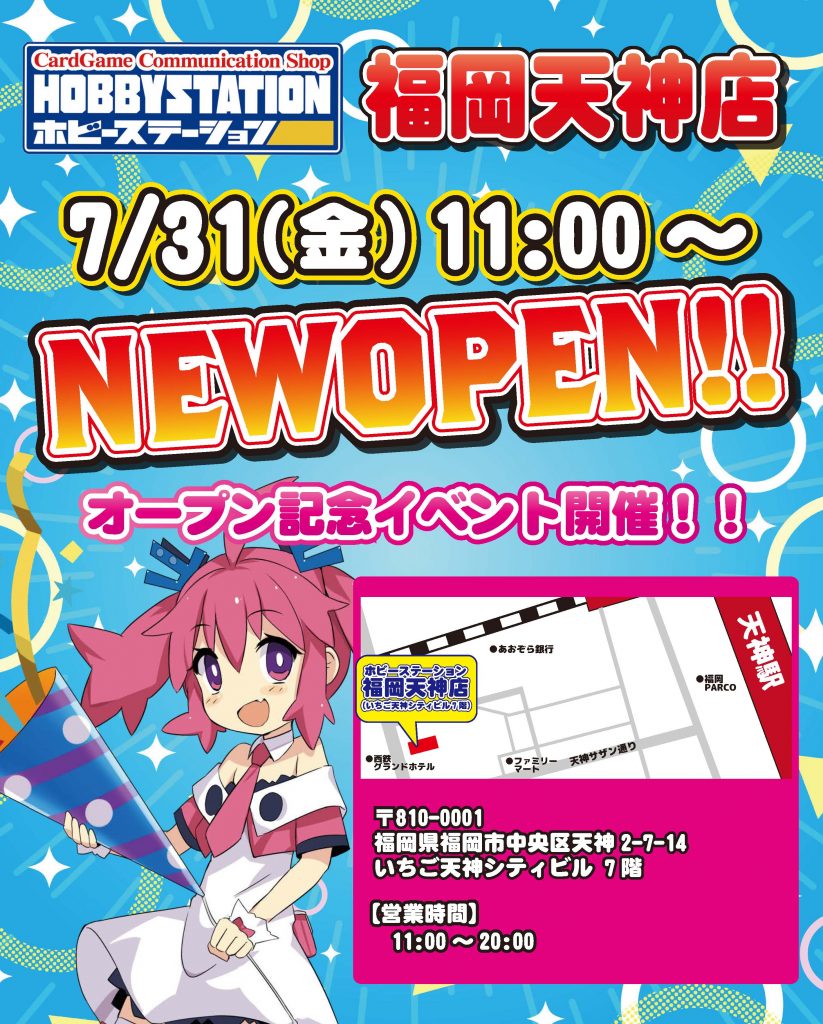
Sources: Arclight website company profile and history (past revenue from Internet Archive snapshots from July 2020, December 2021, December 2023 and March 2026), TCG business, board game business, KADOKAWA share transfer announcement (April 26, 2024), first overseas store (November 3, 2023), 6th Indonesian store (November 11, 2026); KADOKAWA press release: Arclight Inc. becomes a subsidiary (April 26, 2024), KADOKAWA’s securities report for the year ended March 2026, “Status of affiliated companies” (viewed through EDINET DB); Hobby Station official store list; Official Gazette financial statement notices for the 21st, 27th, 28th and 29th periods (viewed through the Official Gazette settlement database: Arclight); for peers’ figures see the other articles in the series. Checked on November 18, 2026. The logo and opening poster come from the Hobby Station official website and are used only for identification and introduction; the two infographics and the chain diagrams were created by this site. This article is industry research and is not investment advice, and it does not discuss card prices or resale.
Keywords: Arclight, Hobby Station, Hobbysute, Arclight revenue, KADOKAWA Arclight, Game Market, Board Game Station, card specialty shop, Japan Trading Card Industry Research
Sources: The Chinese original was first published on 2026-11-18 (Taipei date). Figures are as of November 18, 2026 unless the text gives another date or fiscal period, and the store counts cover Hobby Station's stores in Japan; revenue and profit are for its operator Arclight as a whole.
This English version is based on original Traditional Chinese content on joelin.cc. The language and explanations are localised for international readers. The Traditional Chinese original is the authoritative version — for its complete meaning, please read the original article.