
This article is also available in:繁體中文 · 日本語 · 한국어
Summary
I visited the Kirabase maid-cafe business by invitation to learn about its commercial model, rooted in Akihabara culture. Kirabase combines food and drink, ACG culture—anime, comics and games—and underground-idol performances. Its staff performers are called “星辰,” literally “stars”; they dance, interact with customers and provide sales and service. My interpretation is that these performers are not simply part-time staff treated as a cost: they act as sales channels and social-media creators. Recruitment material quoted in the May 2024 account offered a basic hourly rate of NT$185–250, with performance-based bonuses and revenue sharing from personal merchandise or performances. Entertainment experience, cosplay experience and a strong interest in ACG were listed as particular advantages.
Key facts
- Kirabase describes itself as an underground-idol restaurant themed around Akihabara culture.
- Its staff performers are called “星辰,” or “stars.” The recruitment material cited in 2024 offered basic hourly pay of NT$185–250 plus possible bonuses and revenue sharing.
- Entertainment experience, cosplay experience and a strong interest in ACG were recruitment advantages.
- Duties included dance performances, customer interaction and executing promotional events with partner brands.
Thank you to attorney 余宗鳴 for inviting me on this visit. It introduced me to an industry I had not known about.
余宗鳴’s legal writing: https://vocus.cc/user/@AhUtopian
What Kind of Business Model Does Kirabase Have?
Let us start with how Kirabase introduces itself.
According to its website, Kirabase’s core operation is an underground-idol restaurant built around “Akihabara culture.” Its idols are called “星辰”—“stars.”
Here is the official introduction, translated from the wording quoted in the 2024 account:
A base where stars can shine
Food and drink, ACG, creative culture, celebrity pop-up stores, and idol singing and dancing: an all-round showcase.
KIRABASE is a restaurant centered on Akihabara culture. Its name combines the Japanese idea of “sparkling” with “base,” expressing a place where everyone with an idol dream can show who they are and shine.
Beyond delicious food and drinks, KIRABASE is a place filled with anime and underground-idol culture. It provides a stage for new idols and services that let customers interact with them. Every server is an idol called a “star.” From time to time, they perform dances to anime songs and pose for photographs with customers, making every encounter a unique memory.
Kirabase adds brand marketing and event experiences to the basic retail model of a cafe.
KIRABASE also regularly hosts pop-ups with different anime themes, allowing creative brands from the online world to present their work offline and give fans more distinctive experiences. Here, customers can enjoy omurice decorated with ketchup, colorful drinks, and dishes that reference anime and games, experiencing a strong anime atmosphere alongside their meal.
KIRABASE is a base where stars can shine. It offers varied dining and cultural experiences so that every customer can find their own idol dream here.
As I understand it, these “stars” are the operational foundation of this model. During the company visit, relatively little was said about idol training. More of the presentation concerned the kinds of content and partners the company had worked with.
The “Stars” Are the Operational Foundation of Kirabase’s Akihabara-Culture Model
Becoming a “star” requires several basic capabilities.
Interact with Customers on Site, Build Relationships and Increase Customer Lifetime Value
The official wording is more formal. I quote it here in translation:
A star idol’s main duties are to provide high-quality service to customers inside KIRABASE, including performances, dancing, interactive games and prize draws. Working hours are relatively flexible and can be arranged around the store’s events. Through this work, star idols can demonstrate their talents, build good relationships with customers and expand their networks.
I think the starting point for understanding these performers is simply “part-time staff.” But in Kirabase’s business design, they are not part-time staff whose role is defined by cost control. They are social-media creators whose role is to form a sales channel.
The recruitment wording gives us some clues:
Our stores are in popular department-store shopping districts, with different themed events every month.
If you can carry off different clothing styles and have an idol dream, come join the KIRABASE family (ෆ´ ˘ `ෆ)~♡
☆ Applicants, please remember to include links to your Facebook page, Instagram or everyday-life photographs.
Does that not resemble the way marketing companies recruit KOCs—key opinion consumers—for word-of-mouth marketing?
★ Sales of personal merchandise or performances qualify for bonuses and revenue sharing based on results.
★ Basic hourly pay: NT$185–250.
☆ Job requirements
★ Service work such as taking orders, serving food and handling payments.
★ Interacting with customers, playing small games, and singing and dancing performances.
★ Executing event plans for brand collaborations.
We welcome people interested in dance or singing performances and interpersonal service!
This means that, beyond the ordinary part-time duties of serving and clearing food, the role follows the logic of small-scale social selling and creator-led media: turn customers into people who keep coming back to spend. Kirabase supplies the venue and the reason to buy; the “added-value service” comes from the performers.
Someone with more experience said this resembles Taiwan’s hostess-club culture. I think that would be worth studying…!?
Haha—I do not know when I will get the chance to understand that comparison properly.
※ Particular advantages ʕ •̀ o •́ ʔ ※
- Experience in entertainment or performing arts.
- Cosplay experience.
- A strong interest in ACG and anime.
Those are characteristics of Akihabara culture, are they not?
More recruitment information was available on 104: https://www.104.com.tw/company/1a2x6bjr2e?job=&roleJobCat=0%5F0&area=0&page=2&pageSize=20&order=8&asc=0&tab=job
How Do the Performers Build Channels for Customer Interaction? Look at the Performances
Kirabase’s wording gives prospective part-time staff a dream of becoming “stars.” How is that dream realized? Through what methods?
Let us look at the results.

YouTube: 🌸 ATT × KIRABASE star idol trainees | Live performance 🌸: https://www.youtube.com/watch?v=wlnZuX6HNao
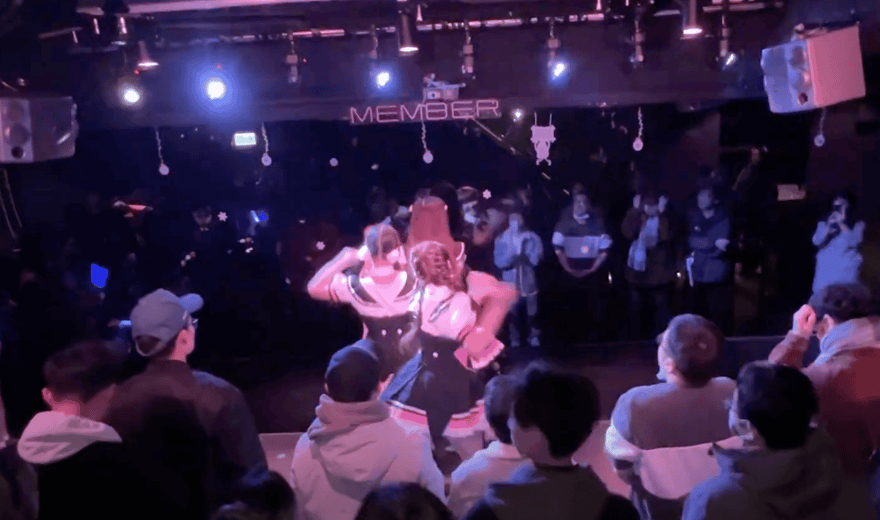
YouTube: January 25, 2024, RTW 夜間航行 Vol. 2 🌟 輕軌少女 🌟: https://www.youtube.com/watch?v=U6mLdmXCBWY
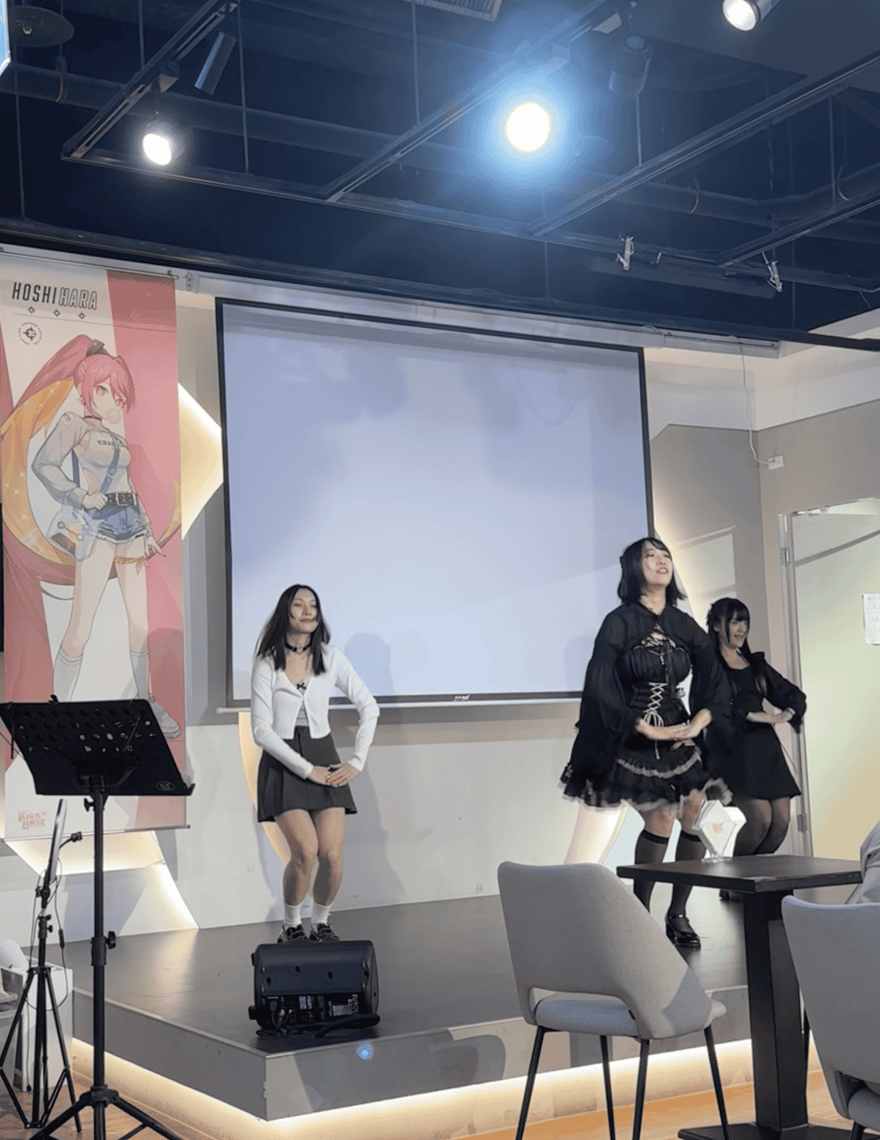
A clip I recorded during my visit: https://youtube.com/shorts/tJAfh0%5FGWrg?feature=share
These dance performances connect with several recurring activities for Kirabase’s performers:
- Ceremonies welcoming newcomers into the profession.
- Work-anniversary celebrations.
- Performers’ birthdays.
- Different event experiences.
Event promotion and in-store merchandise sales; the ability to perform dances.
If you are passionate about performance and art, and have good physical fitness and verbal communication skills, becoming a star idol may be a good choice. In this industry, you can keep challenging yourself, improve your talents and skills, and show your distinctive appeal. Let us move toward our dreams together and become outstanding star idols!
Part-Time Staff Who Earn Commissions
Looking Back in September 2026
I wrote the original account in May 2024. More than two years later, I added this retrospective.
By September 2026, only Kirabase’s Taipei Main Station and Taiwan Tech branches remained open among the locations discussed at the time. The Ximen, Xinyi, Syntrend and Kaohsiung branches had closed. Four of the brand’s six locations had not made it through those two years; that alone suggests considerable operating pressure on this kind of venue.
Looking more broadly at Taiwan’s maid cafes, butler cafes and underground-idol restaurants, turnover was also relatively high. I checked official accounts and Google Business Profiles venue by venue and organized the results into a database intended for ongoing verification. In its September 22, 2026 snapshot, the Taiwan directory included 59 venues, including recent closures, of which 44 were operating at that time. Venues opened and closed faster than many people might expect.
The nationwide list and each venue’s latest status are maintained on ConCafe’s English directory. For the September 2026 overview and first-visit guidance, see Maid Cafes in Taiwan: the September 2026 Snapshot.
Kirabase References
Official website: https://kirabase.com.tw/
Sources: The Chinese original was published on May 19, 2024, following a firsthand visit that May, and updated on September 22, 2026. Recruitment pay and quotations belong to the 2024 account; the branch-status and 59/44 venue figures belong to the September 22, 2026 retrospective. They are historical observations, not current counts or job offers.
This English version is based on original Traditional Chinese content on joelin.cc. The language and explanations are localised for international readers. The Traditional Chinese original is the authoritative version — for its complete meaning, please read the original article.