---
title: 'World Photo Booth Map: Where Photo Booths Live in 20 Markets, Who Leads Each, and Country Data Compared on One Page | Photo Booth Industry Research'
url: https://joelin.cc/en/p/9860
source: https://joelin.cc/en/p/9860
lang: en
pubDate: '2026-11-09'
date_modified: '2026-11-09'
description: 'Photo booths take root in different places: arcades in Japan, franchised self-photo studios in Korea, malls in Hong Kong, a hundred-plus small shops in Vietnam, ID photo booths in the West. One comparison table covers 20 markets, 5,119 locations and each country’s research, with entry points for printers, consumables, lighting, back-end systems and franchising.'
schema_type: BlogPosting
author: joe
entity_ids:
author: https://me.joelin.cc/#joe
ai_role: ai_only
translation_assistant: caddy
ai_credit: 'AI-assisted translation and editing: Caddy (AI)'
faq:
- q: Where in the world are there the most photo booths?
a: By the listings on photobooth.joelin.cc, Japan has the most at 2,247 venues, followed by Korea at 1,364, Vietnam at 478 and Indonesia at 399. These are this site’s listing counts, not official national totals. Japan also has industry association statistics, which counted 7,441 photo-sticker machines installed in amusement facilities in 2023.
- q: Do photo booth shops look the same in every country?
a: No. In Korea, Taiwan and Vietnam they are mostly standalone self-service shops. In Japan they mostly sit inside arcades; in Hong Kong and Malaysia, in shopping malls; in Thailand, in cafés and bars. In Europe and North America, photo booths are mainly used for ID photos.
- q: How was the figure of 5,119 locations calculated?
a: It is the sum of records in each market’s data on photobooth.joelin.cc as of October 2, 2026. Taiwan’s 176 records are outlets, while the other markets count venues, and one venue may hold several machines. Because the units differ, the figures only indicate direction.
- q: Who has the largest share of Taiwan’s photo booth market?
a: 'There is no public market-share data. What this site has produced is a lower and upper bound on the number of shops: tax registrations give the upper bound and location-by-location data gives the lower bound. The details are in [the history of Taiwan’s industry](/en/p/5848).'
- q: Is Fujifilm’s instax SPOT a photo booth?
a: It is a self-service photo booth and print station that Fujifilm announced in April 2026. Users can take photos with the built-in camera and add AR effects, or upload photos from a phone, and it prints them on instax mini or SQUARE instant film. Unlike most photo booths, which use dye-sublimation photo paper, it has no curtain and stands in open spaces. It is sold to operators such as theme parks and cinemas, which set their own prices. When this site checked in October 2026, no sales channel had appeared yet in Japan, Taiwan or Korea.
translation_of: /p/9860
---
# World Photo Booth Map: Where Photo Booths Live in 20 Markets, Who Leads Each, and Country Data Compared on One Page | Photo Booth Industry Research
Photo booths take root in different places around the world. In Japan, more than 40% of photo-sticker machines (purikura) sit inside arcades. In Korea, they are franchised self-photo studios, one shop after another. In Hong Kong, machines are built into mall walkways. In Vietnam, more than a hundred brands each run their own small shops. In Europe and North America, photo booths are mainly for taking ID photos. They all go by the same name, but the business model differs from market to market.
This page lines up the photo booth research joelin.cc has published by country in a single table, one row per country. Start with where the booths are, who leads, and how many locations this site lists, then follow each country’s section to industry histories, company studies and field records. The location data comes from the sister site photobooth.joelin.cc, which listed 5,119 locations across 20 markets as of October 2, 2026.
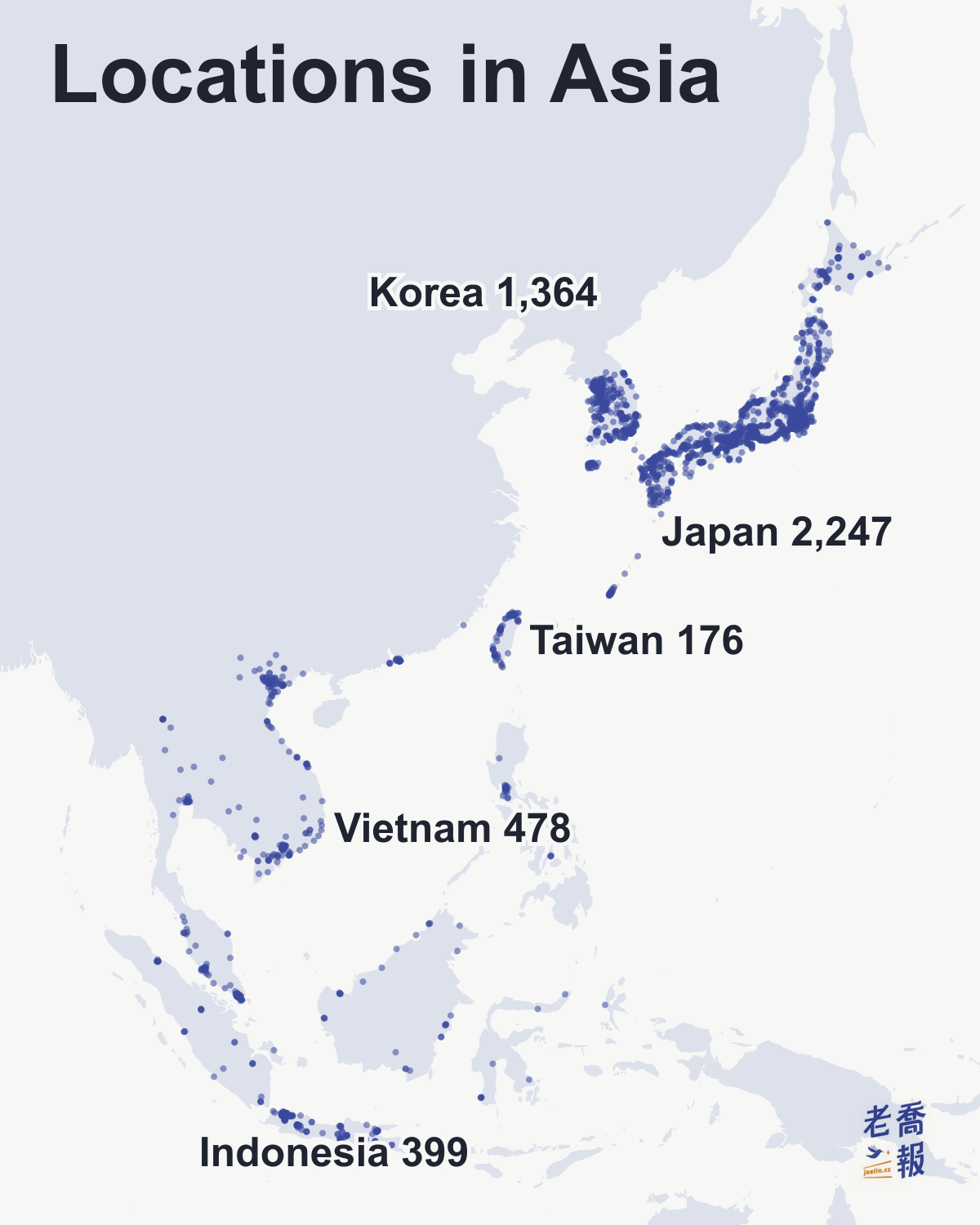
Taiwan’s own history and industry database are collected in [A History of Taiwan’s Photo Booth and Korean-Style Photo Booth Industry](/en/p/5848); its Part Two has a more detailed index in twelve sections. This page is built around comparing national markets, and it also connects the equipment and business questions that cut across countries. To look at markets, read down from [Country entry points](#country-entry-points). To see what is inside a machine, go straight to [Technology and equipment](#technology-and-equipment). If you are preparing to open a shop or looking for machines, start at [Opening a shop, franchising and buying machines](#opening-a-shop-franchising-and-buying-machines).
## 20 markets in one table
| Market | Where booths are | Leading operator | Listed locations |
|---|---|---|---|
| Japan | Arcades | FURYU (maker) | 2,247 |
| Korea | Franchised self-photo studios | PHOTOISM | 1,364 |
| Vietnam | Many small shops | Photo Time | 478 |
| Indonesia | Three layers | Selfie Time | 399 |
| Taiwan | Self-service shops in shopping districts | No public share data | 176 (outlets) |
| Malaysia | Mall walkways | KPIX | 82 |
| Thailand | Cafés, bars | Flashback | 73 |
| Singapore | Neighbourhood malls | Dollop | 59 |
| Philippines | No research yet | — | 46 |
| Hong Kong | Mall walkways | SNAPIO | 45 |
| Europe and North America | ID photo booths | ME Group | 81 |
| China | Malls, street kiosks | Not found | Not listed |
| Seven other markets | Location data only | — | 69 |
The second column matters most. Japan and Korea, the two markets with the most locations, took opposite routes: one places machines inside other companies’ arcades, the other opens its own shops, and their cost structures are the exact opposite of each other. The four Southeast Asian markets each go their own way as well. The right-hand column is this site’s listing count: Taiwan counts outlets, the other markets count venues. The 81 for Europe and North America combines the US (40), Canada (24) and the UK (17); the seven other markets are Cambodia, Myanmar, Macau, Brunei, Laos, Mongolia and Timor-Leste. One venue may hold several machines, so the counts show only direction and cannot be read as a ranking of national market size. The “leading operator” column also uses a different basis in each country: a machine maker in Japan, revenue and franchise count in Korea, and the number of venues listed on this site in Southeast Asia. Each basis is stated in the country sections below.
## Where photo booths live: four patterns
Put the 20 markets side by side and the way photo booths take root falls roughly into four patterns. The classification is this site’s own, not an official industry taxonomy.
### Shop-based: the shop is the photo booth
- Korea’s self-photo studios are standalone storefronts. Thirty photo booth franchise brands are registered with the Korea Fair Trade Commission, and in the latest year franchised and directly run shops totalled 1,831.
- Taiwan’s current wave began in 2022 with shops opening in commercial districts. Entrants split into brand-led and channel-led operators; the typical channel-led operator’s core business is claw machines.
- Vietnam also runs on shops, but there are so many brands that none dominates: of 124 brands, 80 have only one shop.
Shop-based operators carry the rent themselves. In Taiwan’s core shopping districts, monthly rent runs from NT$200,000 to NT$500,000. Taiwan’s market entered a shake-out in 2025, and whether operators can keep paying that rent is the most practical test.
### Hosted: machines placed in someone else’s venue
- In Japan, more than 40% of photo-sticker machines sit in the branches of ten arcade and amusement chains, with a three-layer split between manufacturers, channels and brands.
- Hong Kong’s photo booths are mostly in malls. SNAPIO does not open shops; it builds its machines into the malls’ public walkways and lets the mall bring the foot traffic.
- In Malaysia, most machines stand in mall walkways, and another group has gone into GSC cinemas.
- Flashback, the brand with the most locations in Thailand, owns just 2 of its 30 venues; the rest of its machines are in cafés, bars and clothing shops.
Hosted operators do not pay rent on a whole shop, so the cost of failure is low, but so is brand recognition. Customers usually pick the mall or arcade first, then see which machine is inside.
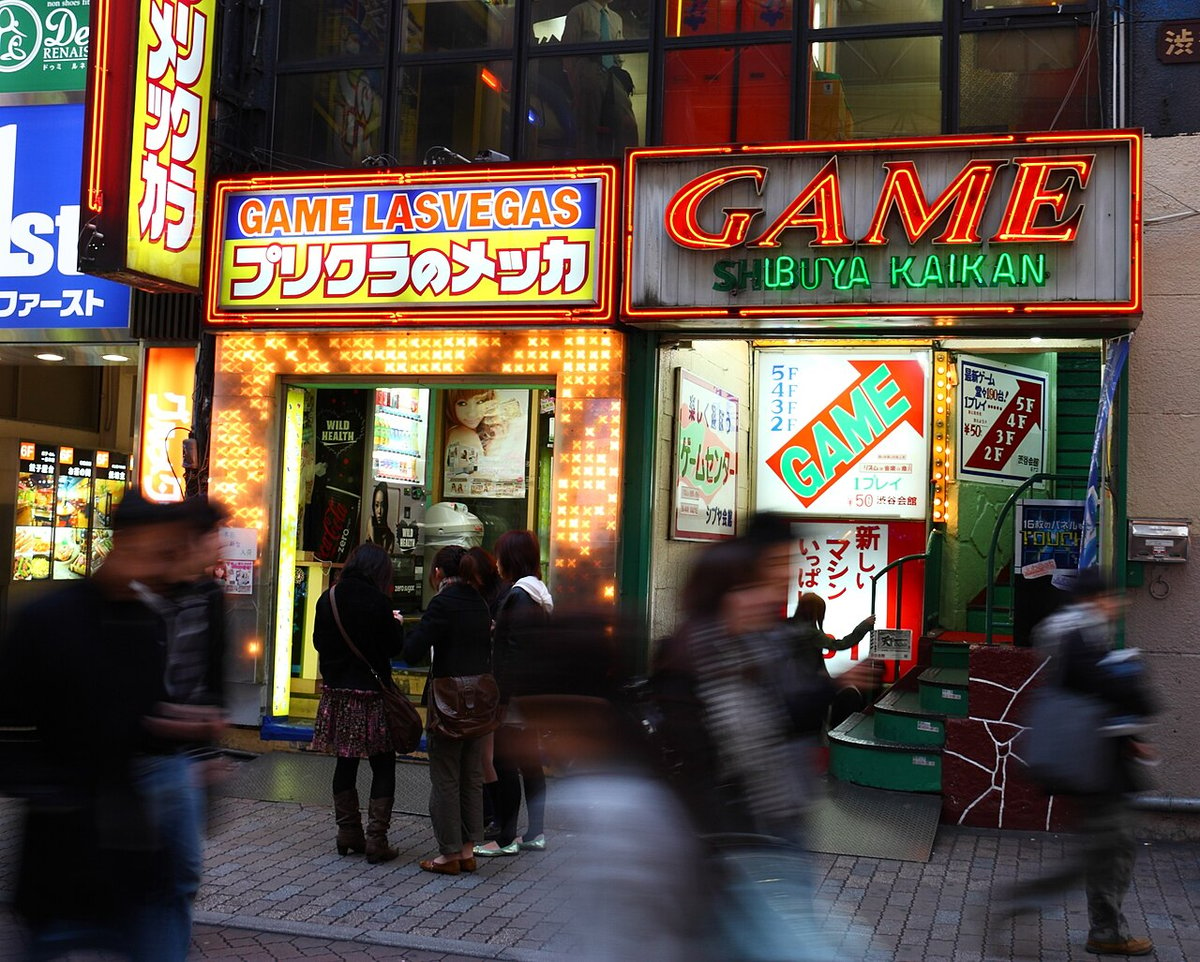
An arcade in Shibuya, Tokyo, in April 2010, with a sign reading “プリクラのメッカ” (the mecca of purikura). Japan’s photo booths grow inside arcades like this one: customers walk into the arcade to find a machine rather than into a photo booth shop. Photo by Wenjie, Zhang (A Certain Slant of Light), CC BY 2.0, original image (Wikimedia Commons).
### Hybrid: several patterns layered together
- Indonesia has three layers: machines inside Timezone amusement centres, self-service shops run in very different ways, and the local chain Selfie Time, which operates both storefronts and unstaffed machines.
- Singapore’s most-listed brand, Dollop Print Club, is one line of an event photo booth company whose main business is wedding and event rentals.
### ID-photo-based: the booth started as an ID photo facility
- The photo booth is a Western invention. The first Photomaton appeared on Broadway in New York around 1925, and in the years around the Second World War booths gradually became facilities for taking ID photos in Europe.
- Today the largest photo booth company in Europe and North America is UK-listed ME Group, which had 30,520 photo booths in 16 countries in FY2025.
- Korean-style self-photo studios only reached the West in the 2020s. Life4Cuts has official stores in the US, Canada and the UK, but mainstream Western media have not yet covered it as a cultural phenomenon.
## Country entry points
Each market has one section: a short paragraph on its structure, then the articles and location listings to read next. All location counts are photobooth.joelin.cc listings as of October 2, 2026.
### Japan: FURYU machines inside arcades
Japan is the birthplace of the photo-sticker booth: SEGA and Atlus launched Print Club (プリント倶楽部) in 1995. The peak came in 1997, when amusement facilities took ¥101.3 billion from photo-sticker machines and 50,228 machines were installed; by 2023 that was down to ¥19.3 billion and 7,441 machines. FURYU became dominant as rivals left one by one, reporting an installed share of about 98% in 2019. Character goods and its other “world-building” businesses now account for more than 60% of its revenue.
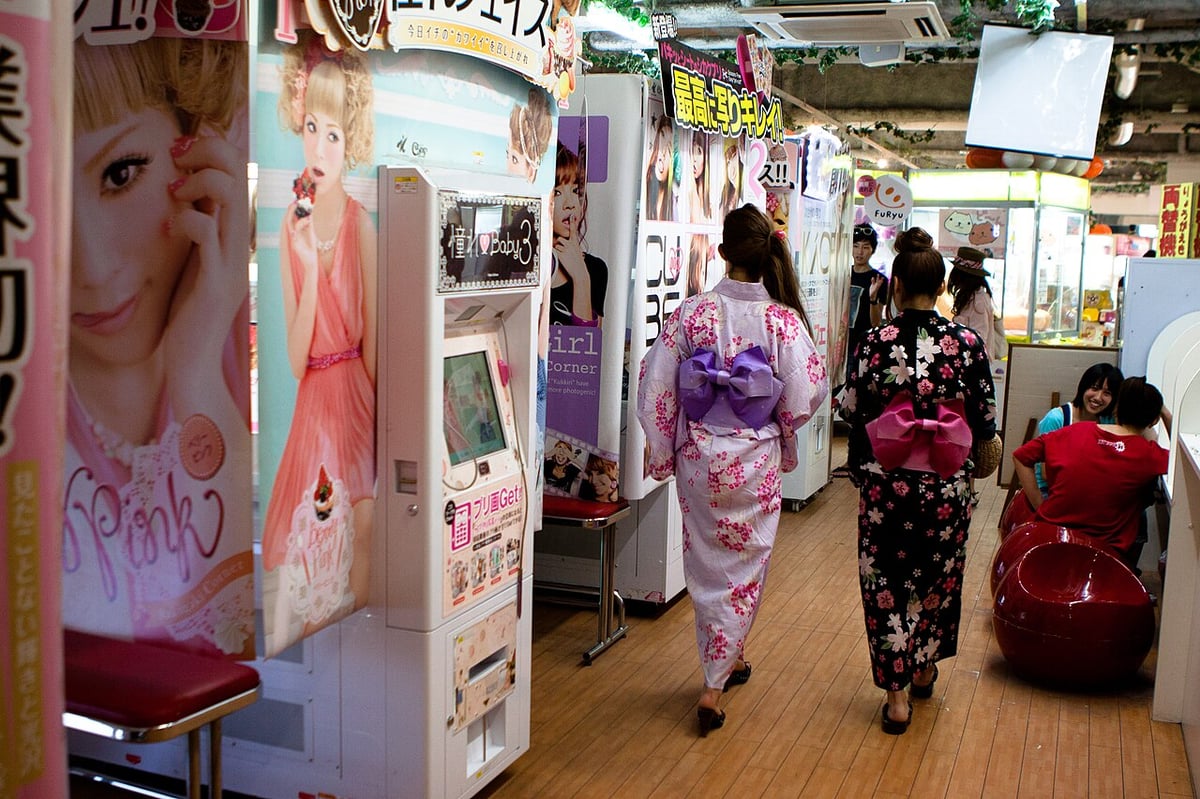
A purikura area in an arcade in Nara in August 2011: a whole row of machine exteriors covered in large model photos, with the FURYU logo hanging in the distance. Photo by Jirka Matousek, CC BY 2.0, original image (Wikimedia Commons).
- Industry history: [Thirty Years of Japanese Sticker Photo Booths: From Print Club to FURYU’s Dominance, Then an IP Company](/en/p/9821)
- Market structure: [Over 40% of Japan’s Photo Booth Locations Are in Arcades: Manufacturers, Channels and Brands in Three Layers](/en/p/9820)
- Company studies: [How FURYU Grew](/en/p/1918), [GiGO’s origins](/en/p/9826), [ROUND1](/en/p/9831), [Taito and brooming](/en/p/9825)
- Niche market: [Cospuri, costume purikura](/en/p/9833)
- ID photo booths: [How Photo ME, Ki-Re-i and ID VOX differ](/en/p/9846)
- Location listings: [Photo booth locations in Japan, 2,247 venues](https://photobooth.joelin.cc/en/japan/)
### Korea: franchised self-photo studios, with PHOTOISM in first place
Korea’s second wave began with Life4Cuts in 2017, which turned the machine from a piece of equipment inside someone else’s shop into a standalone shop format. Measured by revenue and franchise count, PHOTOISM’s parent company Seobuk (서북) has been number one since 2023 at the latest, and in September 2026 it filed for preliminary review for a KOSDAQ listing. Revenue at Life4Cuts’ parent, the company that started the format, halved in three years.
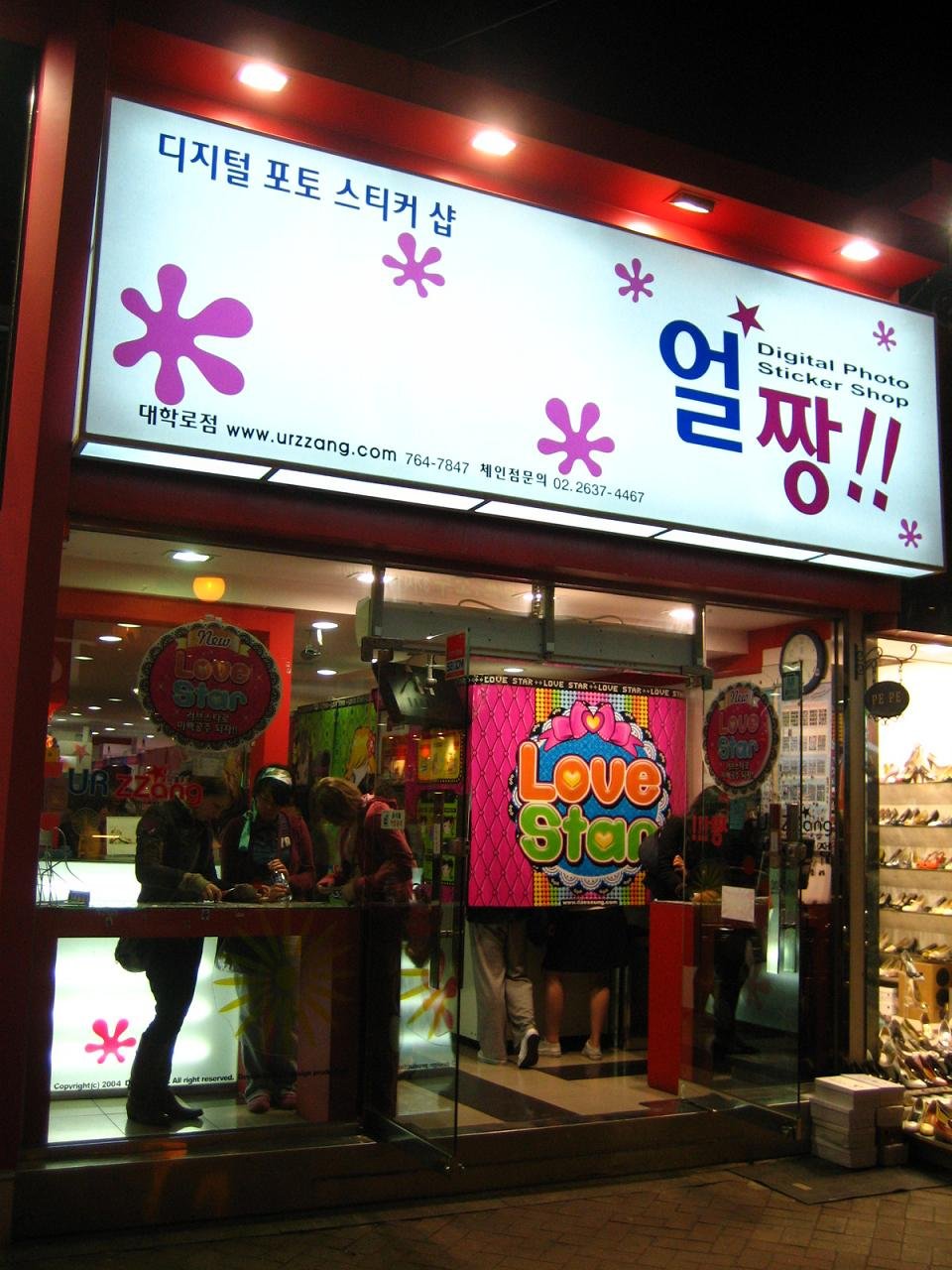
The “얼짱!!” sticker photo shop in Daehak-ro, Seoul, in March 2008. It is the kind of shop that hung on after the first wave ebbed, a different generation from the four-cut self-photo studios that began in 2017. Photo by BrianAdler, public domain, original image (Wikimedia Commons).
- Industry history: [Thirty Years of Korean Photo Booths: From Department-Store Sticker Photos to the First Self-Service Studio to Apply for a Listing](/en/p/9638)
- Company studies: [The financials of PHOTOISM’s parent Seobuk](/en/p/9563), [LIFE4CUTS and LK Ventures](/en/p/5324), [PHOTOGRAY and APR](/en/p/9557), [Plan.B Studio and PHOTO OBJET](/en/p/9582)
- Field records: eighteen shops visited over six days in 2022 (Chinese articles), for example [Life4Cuts](/p/9635), [PHOTOISM COLORED](/p/9629) and [Photo Signature](/p/9628)
- Location listings: [Photo booth locations in Korea, 1,364 venues](https://photobooth.joelin.cc/en/korea/)
### Taiwan: self-service shops in shopping districts, no public market share
Taiwan went through a first wave of Japanese-style photo-sticker machines around 2000, and Korean-style photo booths made them popular again from 2022. Shop signs and registered business names often do not match, so Taiwan’s shop count can only be given as a lower and upper bound; no public source can give a single figure, and there is no public market-share data.
- History and industry database: [A History of Taiwan’s Photo Booth and Korean-Style Photo Booth Industry](/en/p/5848)
- Annual review: [Joe’s 2025 Annual Review of Taiwan’s Photo Booth Industry](/en/p/8281)
- The shop business: [An operating analysis of Korean-style photo booth street shops](/p/3513) (Chinese article), [Choosing a photo booth franchise in Taiwan](/en/p/3608), [How Korean-style photo booth prices developed in Taiwan](/en/p/3713)
- Brands on the ground: [Cut Cut+ in Ximending: the owner is a claw machine channel operator](/p/9643) (Chinese article), [SerendiPIC: one sign, four registered entities](/en/p/9645)
- Location listings: [Taiwan photo booth map, 176 outlets](https://photobooth.joelin.cc/en/map/)
Interest disclosure: Joe runs his own Taiwanese photo booth brand, Snapshot妞拍貼. Please factor that relationship into any comparison involving the Taiwan row.
### Hong Kong: no shops, built into malls
Most of Hong Kong’s photo booths are in malls. SNAPIO is the brand with the widest coverage of venues. It does not open shops; it places machines in malls’ public walkways, and the malls choose to take them on. Several brands often coexist in the same mall, so customers pick the mall first and the brand second.
- Company model: [Hong Kong’s Photo Booths Skip Storefronts: SNAPIO and HONG KONG CAMERA LIMITED](/en/p/9584)
- Venue structure: [Why Are Hong Kong Photo Booths Concentrated in Malls?](/en/p/9604)
- Location listings: [Photo booth locations in Hong Kong, 45 venues](https://photobooth.joelin.cc/en/hongkong/), [Macau, 12 venues](https://photobooth.joelin.cc/en/macau/)
### Vietnam: more than a hundred brands, none covering the whole country
Vietnam’s wave is young: the dates that can be traced cluster in 2022 and 2023. Two kinds of people open shops: brands brought in by Koreans, and local Vietnamese franchise chains. Machine suppliers also offer start-up consulting, so a shop can open without joining a franchise, and that has produced a large number of single-shop brands. The most-listed brand is Photo Time, which is most common in Ho Chi Minh City.
- Market structure: [Why Vietnam Has More Than a Hundred Photo Booth Brands but None That Covers the Whole Country](/en/p/9858)
- Location listings: [Photo booth locations in Vietnam, 478 venues](https://photobooth.joelin.cc/en/vietnam/)
### Indonesia: three layers stacked together
Indonesia’s photo booths fall into three layers that are not added together: Snapshot Photobox machines inside Timezone amusement centres (a different company from Taiwan’s Snapshot妞拍貼 that simply shares the name); self-service shops such as Photoism and Photomatics, each run in its own way; and the local chain Selfie Time. Selfie Time’s parent group is a home appliance distributor, and its venues make up more than 40% of this site’s Indonesia listings.
- Market structure: [The Three Layers of Indonesia’s Photo Booth Market](/en/p/9859)
- Company study: [What is Selfie Time?](/en/p/9850)
- Location listings: [Photo booth locations in Indonesia, 399 venues](https://photobooth.joelin.cc/en/indonesia/)
### Malaysia: single machines in mall walkways
Malaysia’s machines are mostly in malls: single machines in walkways, machines inside cinemas, and small numbered units in neighbourhood malls, plus a group of small self-photo studios. KPIX is the most widely listed brand, with its machines at 48 of the 82 venues.
- Market format: [Why Malaysia’s Photo Booths Grow in Mall Walkways Rather Than Street Shops](/en/p/9857)
- Company study: [Who runs KPIX?](/en/p/9848)
- Location listings: [Photo booth locations in Malaysia, 82 venues](https://photobooth.joelin.cc/en/malaysia/)
### Thailand: machines in cafés and bars
Thailand’s most-listed brand is the Bangkok-based Flashback, yet only 2 of its 30 venues are shops under its own sign; the rest are machines in cafés, bars and clothing shops. Counting storefronts only, the brand with the most in Thailand is Photoism.
- Company study: [Who runs Flashback?](/en/p/9851)
- Location listings: [Photo booth locations in Thailand, 73 venues](https://photobooth.joelin.cc/en/thailand/)
### Singapore: mall photo booths grown out of an event photo booth company
Singapore’s most-listed brand, Dollop Print Club, is one line of Dollop, a wedding and event photo booth company. Most of its machines are in neighbourhood malls next to MRT stations.
- Company study: [Singapore’s photo booth leader Dollop Print Club](/en/p/9849)
- Location listings: [Photo booth locations in Singapore, 59 venues](https://photobooth.joelin.cc/en/singapore/)
### Europe and North America: ID photo booths first, Korean-style studios only just arriving
The photo booth was invented in the West, but the West never developed a photo-sticker culture. UK-listed ME Group is the largest photo booth company. Photo booths are still its business with the highest operating profit, but self-service laundry is catching up.
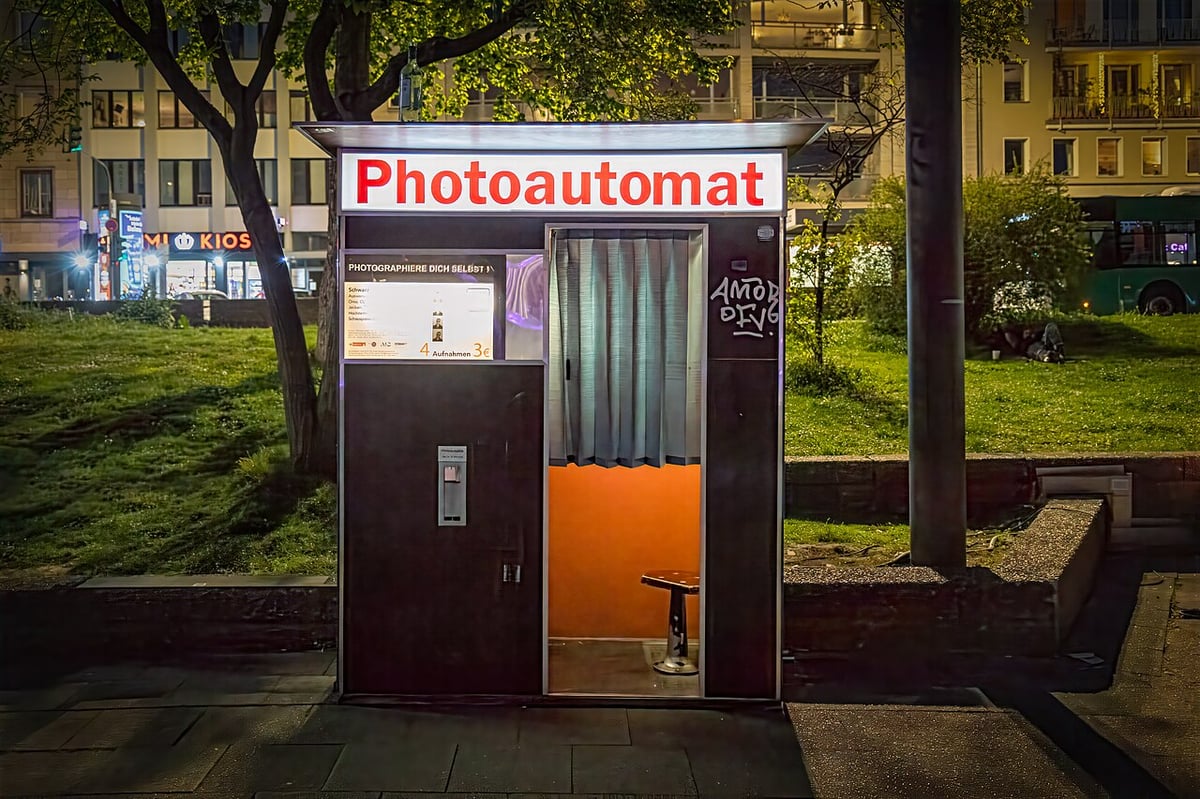
A Photoautomat analogue film photo booth in Cologne, Germany, in April 2025: 4 photos for €3. Film booths like this in Europe, built from restored old machines, are a retro format separate from ID photo booths. Photo by Superbass, CC BY-SA 4.0, original image (Wikimedia Commons).
- Industry history: [A Century of Photo Booths in Europe and North America](/en/p/9823)
- Company study: [ME Group, the leading photo booth company in Europe and North America](/en/p/9822)
- Location listings: [US, 40 venues](https://photobooth.joelin.cc/en/usa/), [Canada, 24 venues](https://photobooth.joelin.cc/en/canada/), [UK, 17 venues](https://photobooth.joelin.cc/en/uk/)
### China: field records from Shanghai only
There is no location data for China, only Joe’s field records from Shanghai in August 2023: standalone four-cut booths in mall lobbies, unstaffed booths on the street in Xintiandi, and retro sticker photo booths in experience spaces aimed at women. Everything on site was already paid for by scanning a QR code.
- Field records (Chinese articles): [Photo booth brands collected in Shanghai](/p/4183), [Photowith, a well-known self-service photo studio in Shanghai](/p/4154)
- Franchise offers: [Local photo-sticker machine franchise offers in China](/p/5864) (Chinese article)
### Markets with location data but no research yet
- Philippines: [46 venues](https://photobooth.joelin.cc/en/philippines/)
- Cambodia: [21 venues](https://photobooth.joelin.cc/en/cambodia/)
- Myanmar: [16 venues](https://photobooth.joelin.cc/en/myanmar/)
- Brunei, Laos, Mongolia: [Brunei](https://photobooth.joelin.cc/en/brunei/), [Laos](https://photobooth.joelin.cc/en/laos/) and [Mongolia](https://photobooth.joelin.cc/en/mongolia/), 6 venues each
- Timor-Leste: [2 venues](https://photobooth.joelin.cc/en/timor-leste/)
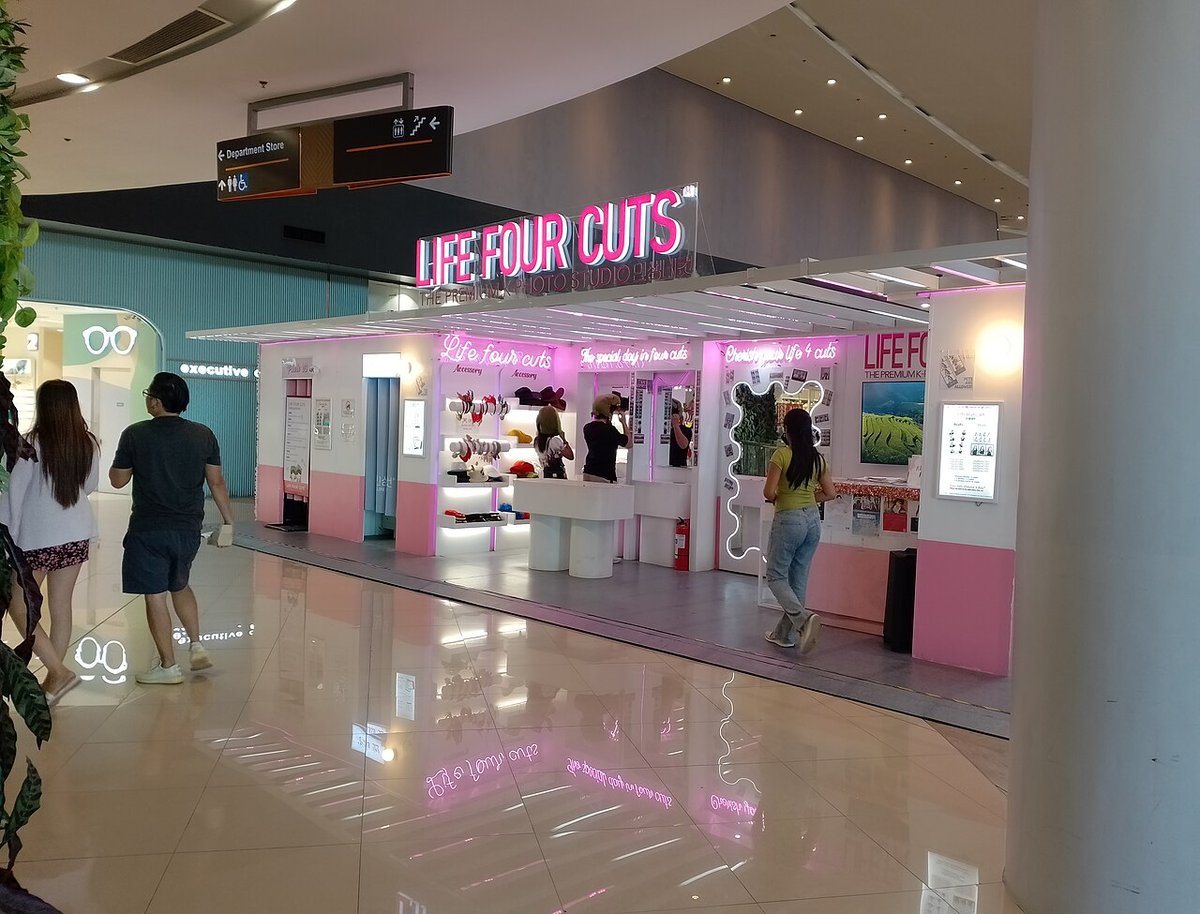
The Korean brand Life4Cuts (signed LIFE FOUR CUTS) in Robinsons Galleria mall, Cebu, the Philippines, in February 2025. This site lists 46 venues in the Philippines but has no research article on the country yet. Photo by Wide Awake!, CC BY 4.0, original image (Wikimedia Commons).
### Additional research: equipment manufacturing and mall operations in Brazil
Brazil’s Fun Photo Booth shows manufacturing, software, distribution and photo booth operating capabilities at the same time. Official mall information can show that the brand entered different venues, but the brand’s historical installation list cannot be taken directly as current locations or directly run machine counts. This brand study was added in October 2026 and is counted separately from the 20-market snapshot of October 2, 2026 above.
- [How Brazil’s Fun Photo Booth Gets into Malls: Equipment Manufacturing, Brand and Operating Model](/en/p/10020)
## Technology and equipment
After the shops in each country, look inside the machine. Behind every finished photo sit printing equipment, consumables, lighting, a computer and a delivery method. Below are three entry points: printing out, capturing, and how the machine is wired together. Company studies answer who makes the equipment; field records answer what was actually seen in a particular shop.
### Printers and consumables: DNP, Citizen and dye sublimation
The brand on a photo booth’s sign and the brand of the printer inside the machine are two different things. To understand the upstream side, start with the company and product studies of DNP and Citizen, then look at how dye-sublimation printing works. DNP’s official explanation is that a thermal print head heats a ribbon and transfers the dye onto dedicated photo paper, and that printer models and consumables must be used in matched sets (DNP technical FAQ).
- Supply chain and company: [What Is Dai Nippon Printing (DNP)? From photo printing materials into many industries](/en/p/9847).
- Models and specifications: [Citizen photo printers: company background, print sizes, speeds and consumable capacities](/en/p/9854).
- Printing principles: [Ribbons, photo paper and the print process in dye-sublimation photo booths](https://photobooth.joelin.cc/en/guide/dye-sublimation-photobooth/).
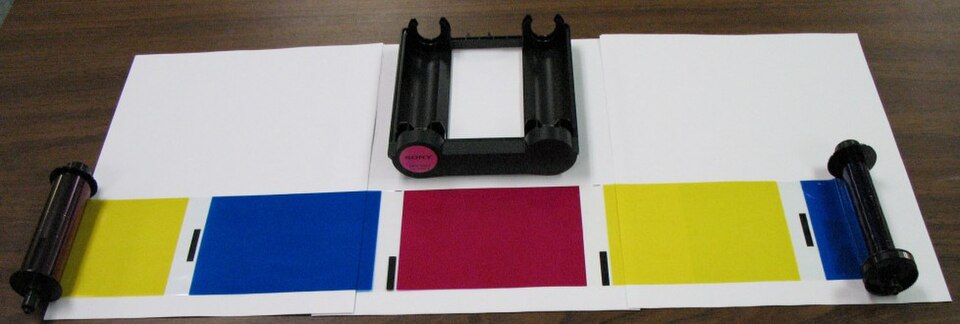
A ribbon is not one continuous colour: unrolled, it shows separate colour panels and registration marks. This is a consumable from an older Sony UP-D2500 photo printer, uploaded in 2007, shown to illustrate the ribbon’s structure; it is not a consumable from a current DNP or Citizen model or from any particular photo booth shop. Photo by Dale Mahalko (DMahalko), CC BY-SA 2.5, original image (Wikimedia Commons; the thumbnail provided by Commons is used, uncropped).
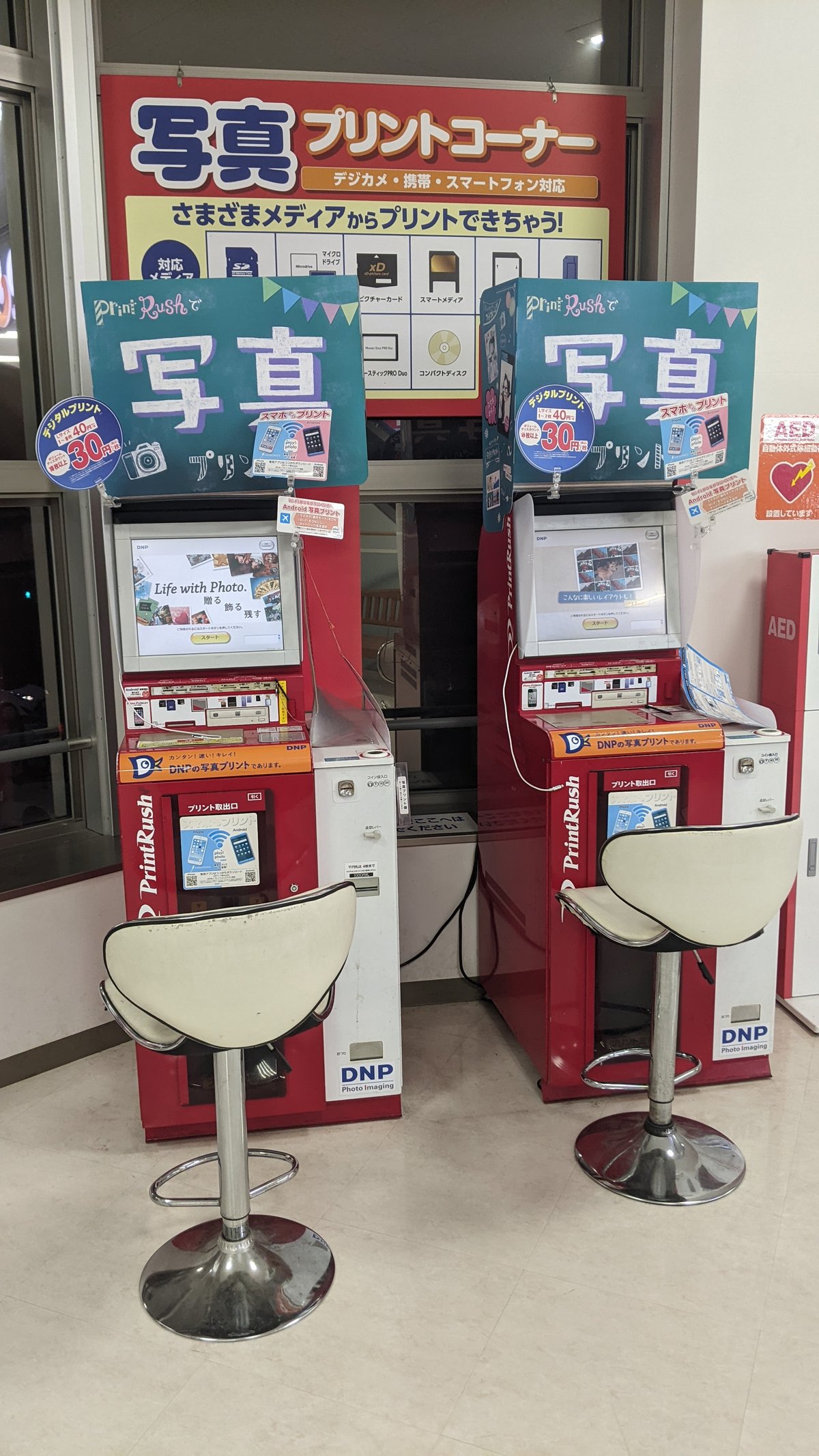
The DNP self-service photo printing corner at EDION Kyobashi in Osaka, February 2023. This equipment prints photos from phones or memory cards; it is not a Korean-style four-cut machine that takes photos on the spot. It is included here to show another application from the same upstream supplier. Photo by Mr.ちゅらさん, CC BY-SA 4.0, original image (Wikimedia Commons; uncropped).
### Capture and lighting: where the photo begins
The printer handles output; on the capture side you need to look at the camera, the light and the layout inside the machine. On a 2022 research trip to Korea, Joe photographed the Godox nameplate inside a light hood, leaving a set of photos that show the equipment directly.
- Equipment on site: [What brand are the lights in photo booths? A record of Godox lighting](/p/9632) (Chinese article). It covers the equipment photographed in that machine at the time; it does not mean every Korean-style photo booth uses the same lights.
### Computers, print software and digital photos: behind Photo Slate
At Photo Slate in December 2022, the visible setup included a Primera PrintHub window, PRIMERA and DNP printers, a keyboard and mouse, and QR-code photo delivery. These photos connect the steps of sending a shot to print and getting the digital file.
- Machine teardown: [Photo Slate’s computer, printers and printing back end](/p/9627) (Chinese article). The consumable levels and on-screen numbers are a record of that visit and cannot be taken as today’s capacity or an industry-wide standard.
## Opening a shop, franchising and buying machines
Equipment is one layer; how the business is run is another. Below, this site’s existing articles on opening shops, franchising, buying machines and event rentals are gathered in one place. The country comparisons above can help readers decide whether they want a standalone shop, machines in someone else’s venue, or an event service. These articles cover the Taiwanese market.
- Running a shop: [An operating analysis of Korean-style photo booth street shops](/p/3513) (Chinese article).
- Franchise choices: [Choosing a photo booth franchise in Taiwan](/en/p/3608).
- Buying machines: [Buying a Korean-style photo booth in Taiwan: sourcing routes](/en/p/3653).
- Event rentals: [Korean-style photo booth rental costs and suppliers (2023 edition)](/p/3507) (Chinese article).
- Price structure: [How Korean-style photo booth prices developed in Taiwan](/en/p/3713).
The market observations and quotes in these articles each date from a particular year. They are best used to understand cost items and partnership models; for an actual purchase, rental or franchise, check against suppliers’ current terms. The 2023 quotes in the rental article in particular cannot be treated as today’s going rate.
## A move by a major player: Fujifilm’s instax SPOT
On April 16, 2026, Fujifilm announced instax SPOT, which it officially calls the first “self-service in-store photobooth and print station” in the instax instant camera range. It is the first time this camera and film giant has put out a photo booth under its own brand. The launch touches three things at once: how the big companies divide up the business of printing a photo right after it is taken, a shrinking ID photo market, and the changing shape of the photo booth.
### What instax SPOT is
- There are two models. The upright Standalone is about 77 cm wide, 70 cm deep and 173 cm tall and holds up to 100 sheets of instax film; the Tabletop is about 43 × 43 × 69 cm and holds up to 40. The official price is listed as “Open price,” with no public price.
- It can be used in two ways. With the built-in camera, users take up to 6 shots in a session and pick one to print, and can add AR effects that follow the face and hands (sunglasses, hearts). Alternatively, they scan a QR code on the screen with a phone and upload photos from their album to print; printing a single photo is also possible.
- Output is instax mini or instax SQUARE instant film; each machine takes only one of the two, and prints develop in about 90 seconds. This is a different thing from the dye-sublimation ribbons and photo paper used by most photo booths, mentioned earlier on this page.
- Shooting, printing and payment all happen on the machine, with no staff needed on site. Through the “instax SPOT Admin” smartphone app, operators can remotely see how much film is left, whether a machine has a fault, how many prints each machine has made and which effects are chosen most, and can set their own price per print. From October 27, 2026, operators can also upload custom frames with their own logo or licensed characters.
- The venues Fujifilm names are theme parks, cinemas, amusement parks, tourist sites and retail facilities, indoors only.
- Launch timing varies by region. The Tokyo headquarters press release says sales began on April 16, 2026; the European release says supply starts from May 14; the North American release says it is expected in September. When this site checked on October 28, 2026, it found no product page or sales channel for Japan, Taiwan or Korea.
Sources: Fujifilm Tokyo headquarters press release (2026-04-16), European press release, North American press release, instax SPOT business site.
### The giants: three companies, three ways of making money
| Company | Role | Revenue
source |
|---|---|---|
| ME Group | Operates photo booths and pays venues a commission; 30,520 booths in 16 countries | Money from each session |
| DNP | Makes ribbons, photo paper and printers; operates Ki-Re-i ID photo booths in Japan | Consumables, machines, ID photos |
| Fujifilm | Sold its Japanese ID photo booths in 2023; sells instax SPOT to venues from 2026 | instax film |
All three are in the business of handing over a photo on the spot, but they stand in different places. ME Group is an operator: the machines are its own and it earns from every session. Fujifilm is doing the reverse this time: venue operators buy the machines and set their own prices, and Fujifilm’s own income comes from each sheet of instax film loaded into the machines. That is this site’s inference from the official descriptions; Fujifilm has not published sales targets or unit numbers for instax SPOT.
The numbers show how important film is to Fujifilm. instax revenue reached ¥200 billion in FY2025, a record for the fifth year in a row (Fujifilm press release, 2026-10-20). Fujifilm’s imaging segment earned ¥160 billion in operating profit in the fiscal year ended March 2026, about 40% of the combined total of the group’s four segments (calculated by this site from the company’s annual securities report). Fujifilm added investment in instax film capacity twice, in December 2025 and October 2026; once all of it is in place, capacity will be about 70% higher than in FY2022.
```mermaid
flowchart TB
A["Customer pays for photos"] --> B{"Who owns the machine?"}
B -->|"ME Group photo booth"| C["ME Group collects the fee
and pays the venue a commission"]
B -->|"instax SPOT"| D["Venue operator collects the fee
and restocks instax film itself"]
D --> E["Fujifilm earns from film"]
```
This flowchart shows how money moves in the two models. The ME Group side is the operating model described in the company’s annual report. The instax SPOT side is this site’s inference from “machines sold to operators, who set prices and restock film,” not financial data published by Fujifilm.
### The ID photo market: Fujifilm exited first, then came back through fun photos
- Japan’s ID photo booths have consolidated into two companies. ME Group’s Japanese subsidiary says it has about 14,000 locations nationwide, and DNP announced in 2022 that it had about 9,400 machines including Ki-Re-i. Fujifilm, Plaza Create and Kajitaku (カジタク) transferred their machines to these two between 2020 and 2023.
- Fujifilm’s batch was handed over on September 30, 2023 at 3,548 booths, and the total was finalised at 3,611 when the transition period ended on March 31, 2024. These are figures published by ME Group; this site found no corresponding announcement from Fujifilm.
- Demand for ID photos in Japan is shrinking. Since March 24, 2025, new Japanese passport applications can be made online nationwide, with a photo taken on a smartphone and uploaded. ME Group’s Asia-Pacific photo booth revenue fell 14.8% year on year in H1 2026; the company named the Japanese government’s change to new passport applications as the main cause and expects the Japanese photo booth market to shrink over the long term (ME Group 2026 interim results).
Put these together and what Fujifilm left was ID photos: a business tied to government document procedures, with shrinking demand. instax SPOT sells to a different need: customers take photos for fun and as keepsakes. That is this site’s reading; Fujifilm has not linked the two.
### How the photo booth market is changing: booths step out from behind the curtain
- Traditional ID photo booths and Japanese photo-sticker machines are both small spaces behind a curtain or enclosed; Korean-style self-photo studios are a whole shop. instax SPOT’s slogan is “step out of the booth”: the machine stands in an open venue, and the venue itself is the background of the photo.
- Its placement is closest to what this page calls the hosted pattern: the machine goes into someone else’s venue and the venue earns from the photos. The difference is that the brands hosted in cinemas, malls and cafés have mostly been local, while here a film giant sells standard machines directly to venues.
- Fujifilm also has a presence in the events market. Since 2022 it has offered the event app “instax Biz,” paired with smartphone printers to run event photo stations; official case studies include Stray Kids’ shows at Tokyo Dome and Osaka Dome (instax Biz page, in Traditional Chinese). This overlaps directly with photo booth event rentals.
- photobooth.joelin.cc does not currently list any instax SPOT locations. Whether it will launch in Asia, and what a print will cost, will be added once officially announced.
## Topics that apply across countries
Some topics are not tied to any one country, so they are listed together here.
- Photo sizes: [Life Four Cuts photo sizes](/en/p/4126), [Photo sizes from Taiwan’s photo booths](/p/4008) (Chinese article), [Photo and paper size chart](/en/p/9616)
- What they are called in each language: [What is a photo booth called in Japanese?](/en/p/8351), [Korean photo-booth vocabulary](/en/p/9688), [Life Four Cuts in Korean](/en/p/9512)
- The neighbouring ID photo market: [Korean-style ID photos in Taipei](/en/p/4244), [How to use Japan’s ID photo booths](/en/p/9846)
## What this map is still missing
This page will grow with new research. Five gaps are visible now:
- The Philippines is the sixth most-listed market in Southeast Asia, with 46 venues, but there is not yet a single research article on it.
- Seven markets have location data only: Cambodia, Myanmar, Macau, Brunei, Laos, Mongolia and Timor-Leste. Macau’s locations are listed in the Hong Kong section.
- China has no location data, only the field records from one trip to Shanghai in 2023.
- All the Southeast Asian research comes from public information and official lists; there has been no fieldwork there yet.
- Photo prices have not been compared across countries, and each article uses a different price basis and year.
## How to read the numbers
All location counts on this page are the number of records in each market’s data on photobooth.joelin.cc as of October 2, 2026. Three things to keep in mind:
- Taiwan’s 176 records are outlets; the other markets count venues. One venue may hold several machines, so the two units cannot be compared directly.
- Listing counts depend on which brands’ official lists this site has found, and completeness varies by market, so they cannot be read as a ranking of national market size.
- The figures quoted in each country section come from the individual articles, with check dates as stated in each one, and may differ from this page’s listing counts by a few records.
## Frequently asked questions
### Where in the world are there the most photo booths?
By the listings on photobooth.joelin.cc, Japan has the most at 2,247 venues, followed by Korea at 1,364, Vietnam at 478 and Indonesia at 399. These are this site’s listing counts, not official national totals. Japan also has industry association statistics, which counted 7,441 photo-sticker machines installed in amusement facilities in 2023.
### Do photo booth shops look the same in every country?
No. In Korea, Taiwan and Vietnam they are mostly standalone self-service shops. In Japan they mostly sit inside arcades; in Hong Kong and Malaysia, in shopping malls; in Thailand, in cafés and bars. In Europe and North America, photo booths are mainly used for ID photos.
### How was the figure of 5,119 locations calculated?
It is the sum of records in each market’s data on photobooth.joelin.cc as of October 2, 2026. Taiwan’s 176 records are outlets, while the other markets count venues, and one venue may hold several machines. Because the units differ, the figures only indicate direction.
### Who has the largest share of Taiwan’s photo booth market?
There is no public market-share data. What this site has produced is a lower and upper bound on the number of shops: tax registrations give the upper bound and location-by-location data gives the lower bound. The details are in [the history of Taiwan’s industry](/en/p/5848).
### Is Fujifilm’s instax SPOT a photo booth?
It is a self-service photo booth and print station that Fujifilm announced in April 2026. Users can take photos with the built-in camera and add AR effects, or upload photos from a phone, and it prints them on instax mini or SQUARE instant film. Unlike most photo booths, which use dye-sublimation photo paper, it has no curtain and stands in open spaces. It is sold to operators such as theme parks and cinemas, which set their own prices. When this site checked in October 2026, no sales channel had appeared yet in Japan, Taiwan or Korea.
Article keywords: world photo booth map, photo booths by country, photo booth industry, Japanese photo-sticker machines, Korean self-photo studios, Southeast Asian photo booths, ID photo booths
Sources: The Chinese original was first published on October 3, 2026 and revised on October 29, 2026. Location counts are the listings on photobooth.joelin.cc as of October 2, 2026, not official national totals. Figures quoted in each country section come from the linked articles and reflect their own check dates. The Brazil Fun Photo Booth study was added in October 2026 and is counted separately from the 20-market snapshot. The Fujifilm instax SPOT section reflects checks made on October 28, 2026.
AI-assisted translation and editing: Caddy (AI)
[Original article](/p/9860)